
Jump to winners | Jump to methodology
|
The Canadian Readers’ Choice Awards for HR and the 2026 winners are in – chosen by ballot, not by a panel, and showcasing best-in-class products and services |
By Canadian HR Reporter ■ June 2026
The Canadian Readers’ Choice Awards for HR carry a form of authority that no editorial panel can replicate: every winner was chosen by the HR professionals, managers, and executives who use these services day in, day out.
That distinction matters more than ever in 2026. Canadian HR departments are navigating one of the most demanding environments in recent memory, with regulatory obligations multiplying – from pay transparency rules and expanded paid leave entitlements to data privacy requirements and evolving overtime legislation – placing new burdens on teams that are already stretched.
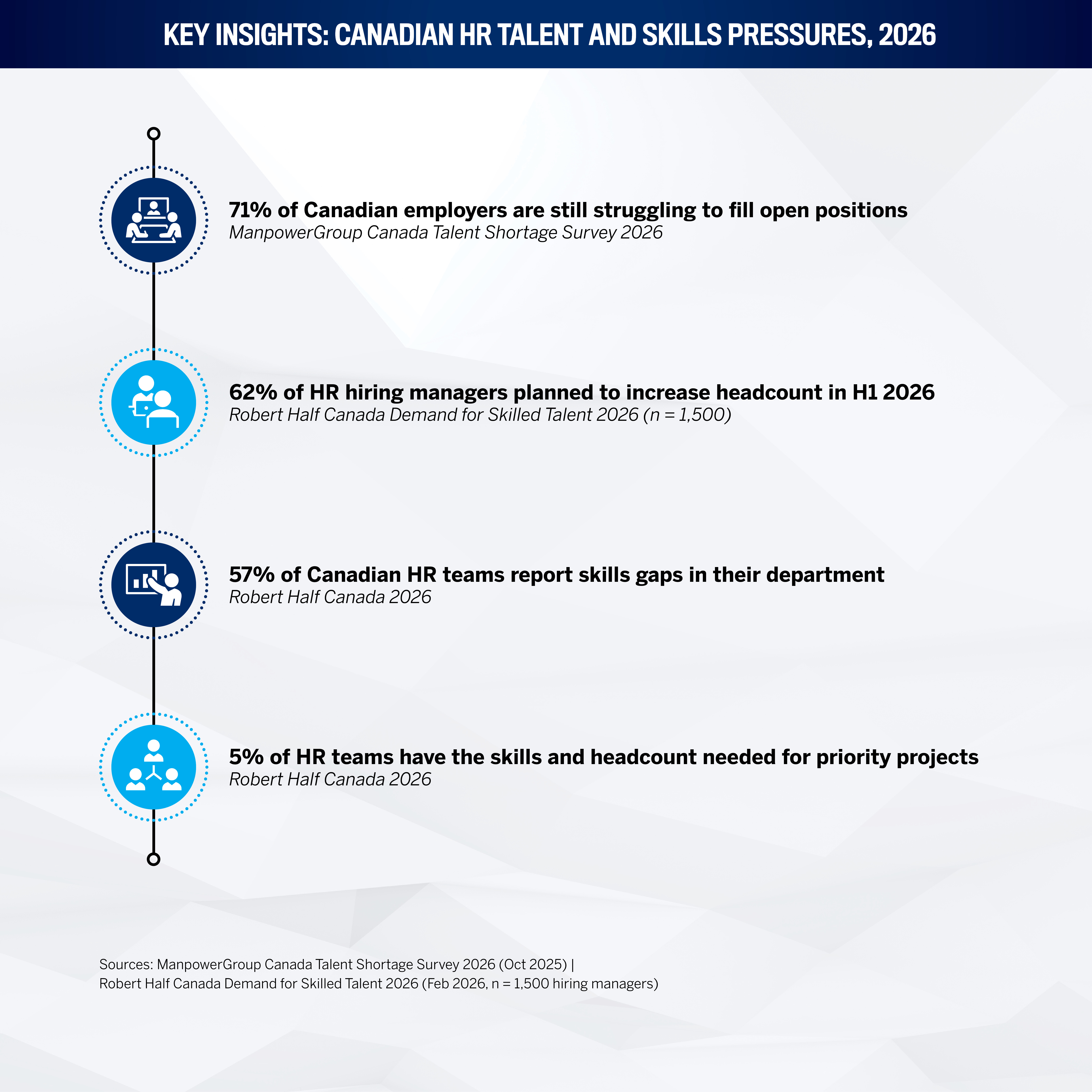
According to the 2026 Canada Demand for Skilled Talent report by Robert Half Canada, 62 per cent of HR hiring managers planned to increase headcount in the first half of 2026, yet only five per cent reported that their teams already had the skills and capacity to deliver on priority projects. Meanwhile, ManpowerGroup Canada’s 2026 Talent Shortage Survey found that 71 per cent of Canadian employers were still struggling to fill open positions – down from 77 per cent in 2025, but historically elevated.
The vendors and service providers that Canadian HR professionals trust are doing more than selling products – they are carrying part of the load. The five winners featured here were each selected by that most rigorous of juries: the practitioners who depend on them. What they share is not size, not geography, and not category. It is a refusal to be generalists. Each has identified a specific lane, gone deep, and kept earning the vote of the people who know that lane best.
The expert commentary and winner profiles in this report point to a consistent set of qualities that separate the best Canadian HR service providers from the field. Use this checklist when evaluating vendors in any category.
Measurable outcomes, not capability claims
Ask for post-implementation ROI data, not just product feature lists. Ashlee Langlois of CPHR Saskatchewan notes that “vague efficiency claims are no longer enough” – quantifiable return on investment is the new baseline expectation.
Depth of Canadian regulatory expertise
Provincial employment standards, pay equity obligations, and privacy legislation vary significantly. Evaluate whether the vendor has specialist teams for your jurisdiction, not just a generic Canadian offering.
Integration over point solutions
The strongest vendors are moving toward embedded infrastructure – unified HR, payroll, and compliance data rather than siloed tools. Assess whether the provider can connect with your existing systems via API.
Standardized core with configurable edges
Full bespoke solutions increase implementation complexity and reduce scalability. Look for providers that offer a standardized, maintained core with flexibility at the margins, not endless customization that creates its own technical debt.
AI as enhancement, not replacement
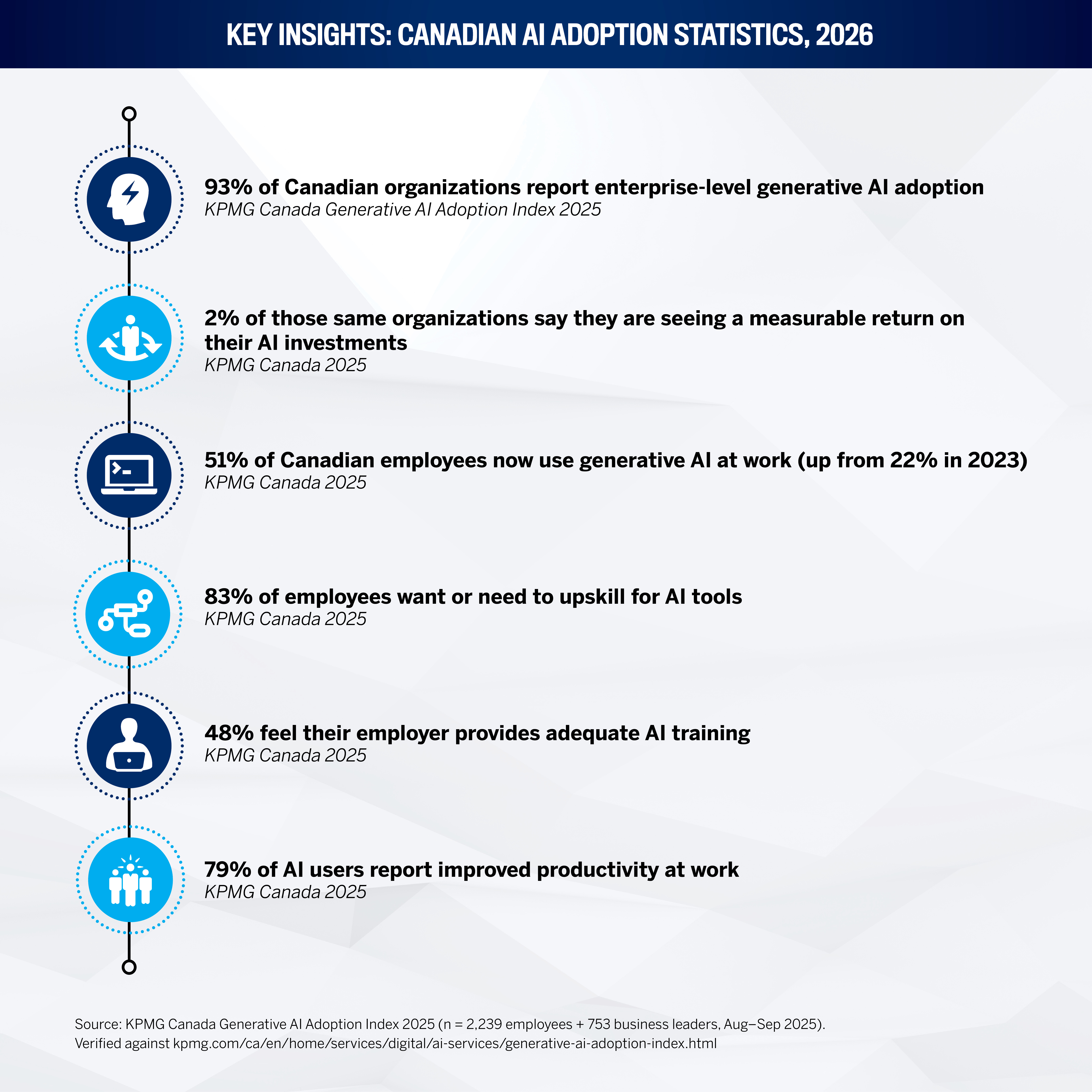
With 93 per cent of Canadian organizations reporting AI adoption (KPMG Canada 2025) but only two per cent seeing measurable ROI, evaluate how the vendor uses AI specifically and what productivity outcome it produces, not whether it has an AI feature.
Practitioner-taught training
In labour relations and employment law, the quality of a training provider’s facilitators matters more than its brand. Ask whether instructors are currently practising in the field and whether curriculum is updated continuously with recent case law and regulatory changes.
Holistic well-being, not transactional claims processing
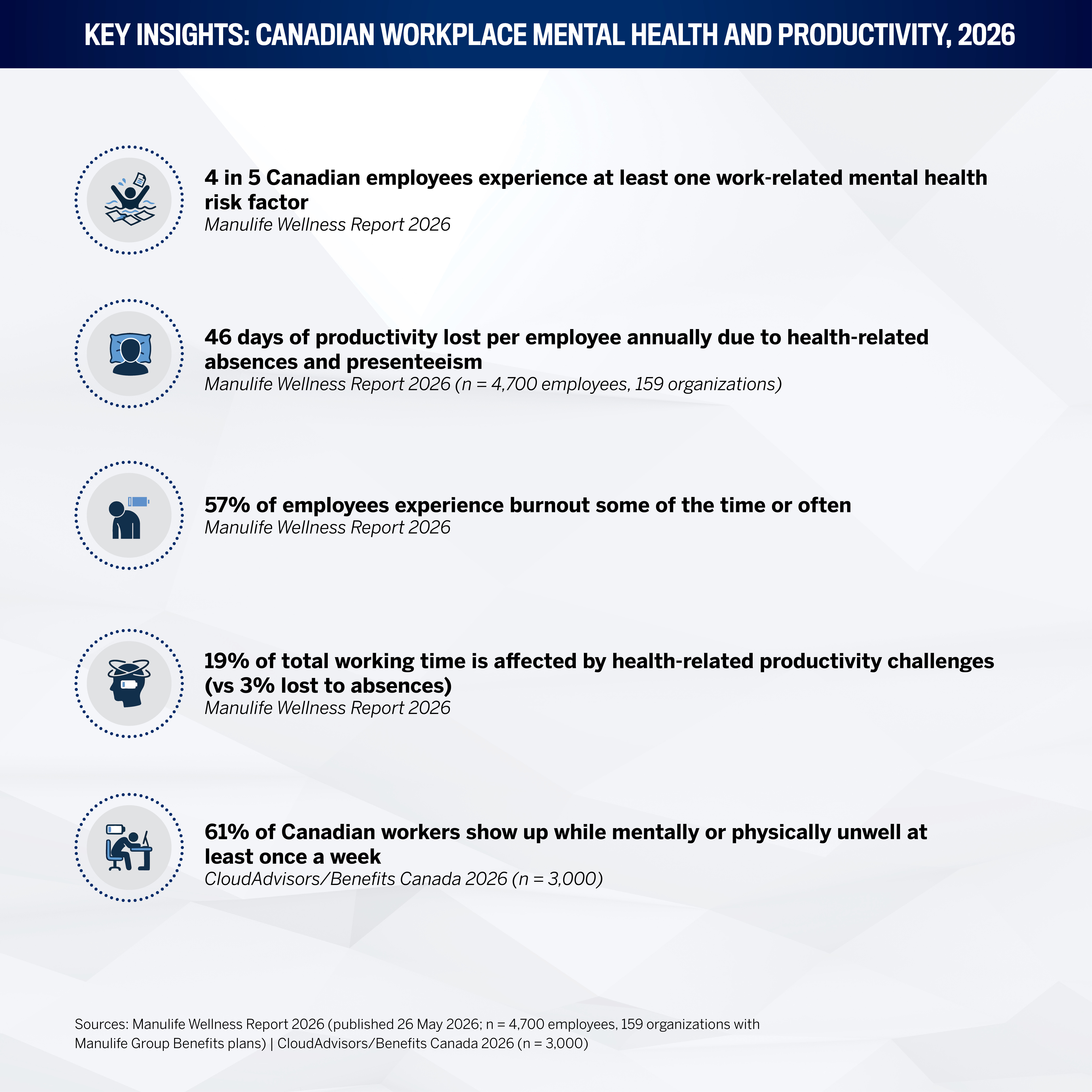
With four in five Canadian employees experiencing at least one work-related mental health risk factor (Manulife 2026), evaluate group benefits providers on the breadth of their health, mental health, and wellness services, not just drug and dental coverage.
The pressures facing HR departments in 2026 have fundamentally changed what professionals expect from their vendors and service providers. Ashlee Langlois, chief executive officer and Registrar of Chartered Professionals in Human Resources Saskatchewan (CPHR Saskatchewan), based in Regina, SK, identifies three forces reshaping the landscape: cost pressure on HR budgets, AI disruption, and rising regulatory expectations.
“AI-powered is no longer a differentiator – it’s assumed baseline functionality,” Langlois says. What buyers want now are measurable outcomes: quantifiable return on investment, post-implementation validation, and solutions that are deeply integrated into their HR ecosystems rather than sitting alongside them. The vendors who will win the next several years, she argues, “will look less like software vendors and more like embedded infrastructure partners inside a constrained, cost-conscious, and AI-saturated HR ecosystem.”
The data supports her point. According to KPMG Canada’s Generative AI Adoption Index 2025, 93 per cent of Canadian organizations report enterprise-level adoption of generative AI, yet only two per cent say they are seeing a measurable return on their AI investments.
Mark Edgar, co-founder of future foHRward in Canada, agrees the bar has risen considerably. “They need to ensure they continue to add value in an increasingly competitive environment by providing unique solutions with credible business cases,” he says. Edgar points to employee engagement and recognition as a telling example: market-leading practices in 2026 involve continuous listening systems that go well beyond the annual survey, recognition tied to organizational values, manager analytics including early attrition risk indicators, and coaching tools integrated directly into platforms.
One tension both experts flag is the pull between customization and scalability. Langlois argues that fully bespoke solutions are “increasingly a liability” outside of complex regulated environments. For most organizations, a standardized core with configurable edges delivers more value, faster, with lower implementation risk. It is a useful frame for understanding why the 2026 Canadian Readers’ Choice Awards for HR winners have all, in their different ways, built repeatable excellence rather than one-off solutions.
Ask ADP Canada’s clients to describe the company in one or two words and the answer, at the National Payroll Institute conference in Montreal, QC, and at the company’s own executive client advisory board, is consistent: “trusted partner.” It is not a tagline. It is what nearly 50 years of operating in the Canadian market – processing payroll, navigating compliance, and embedding itself in the human capital management (HCM) workflows of organizations from one-person start-ups to national enterprises – actually produces.
Ontario’s Pay Transparency Act, which took effect on 1 January 2026 for employers with 25 or more staff, requires mandatory salary ranges in all job postings, documentation of hiring decisions for all interviewed candidates, and pay equity plan maintenance – adding a new layer of compliance obligation to HR and payroll teams across the province. It is precisely this kind of legislative change – jurisdiction-specific, operationally significant, and arriving on tight timelines – that ADP’s combination of technology and regulatory expertise is built to absorb on behalf of its clients.
“The primary pressure we feel is not competition,” says Jim Lord, president at ADP Canada in Toronto, ON. “It is the risk of eroding the trust that took decades to build. When clients say ‘trusted partner’ at every touchpoint, you understand that protecting that reputation is the job.” The company’s value proposition rests on three pillars: best-in-class HCM technology, deep expertise in outsourcing, and global scale applied with local precision. That last element matters particularly in Canada, where ADP maintains specialist teams for Quebec’s distinctive regulatory environment – a market that larger international competitors often underserve.
ADP also holds what it describes as the largest HCM-related data set in the industry, combined with the domain knowledge of more than 1,800 Canadian employees with decades of regulatory experience (The Globe and Mail, December 2024). That depth allows the company to anticipate compliance shifts before they arrive on clients’ desks. On AI, ADP is deliberate. A full-day internal ‘AI-athon’ in early 2026 brought development teams together specifically to explore new capabilities, separate from daily work and focused entirely on what could be unlocked for clients. In June 2026, the company convened its first executive client advisory board, bringing eight to 10 major Canadian clients together for several days to provide direct input on product roadmaps. The philosophy is consistent: get close to the client before building, not after.
For smaller businesses, ADP has invested in what it calls the ‘Alex’ persona – a cultural initiative that trains teams to treat small business clients as the real entrepreneurs they are, not account numbers. The initiative was launched six to eight months ago and reflects ADP’s origin story: it was the very first payroll company, founded in 1949 specifically to help small businesses become more efficient by outsourcing payroll, tax, and compliance. Helping small businesses stay compliant and grow faster, as Jim Lord puts it, “is a source of genuine pride.” The initiative earned external recognition from CanadianSME Small Business Magazine in July 2025.


A: External validation like this award is how we know we’re focused on the right priorities. What the industry says about our services, our technology, and our delivery is the ultimate measure of success – not what we say about ourselves internally. This confirms we’re on the right track.
A: AI handles the nuts and bolts – the administrative work, the compliance checks, the pattern recognition. But interpreting that for a client’s specific situation, advising on strategy, building a relationship with a business owner – that still requires people. Our approach is ‘one plus one equalling something greater than two’. The technology and the human expertise together create something neither can deliver alone.
A: We created the ‘Alex’ persona to remind our teams who these clients are. They are someone’s cousin, grandmother, uncle – a person who has built something from scratch and is hiring their first or fifth employee. We slow down, we thank them, we congratulate them. That empathy is the foundation of everything.
GreenShield was founded in 1957 as the creator of North America’s first prepaid drug plan. Nearly seven decades later, it remains the only major group insurer in Canada operating as a 100 per cent Canadian non-profit, and that structural choice is not incidental to its success. It is the strategy.
JP Girard, executive vice president and head of insurance at GreenShield, which is headquartered in Windsor, ON, says, “We generate revenue like any business, but we reinvest our surplus into social impact rather than paying shareholders. That means every dollar we make goes back into better health for Canadians.”
The non-profit model creates a virtuous cycle, Girard argues: it attracts people who genuinely care about the mission, which drives better service, which drives the revenue that funds the mission further. It also helps win awards, he notes, because the same instinct that draws caring talent to GreenShield draws the votes of HR professionals in the Canadian Readers’ Choice Awards for HR who want a benefits partner with purpose.
The company’s product edge is its GreenShield+ platform, an integrated ecosystem that allows plan members to submit drug claims, access virtual medical and mental health support, and have prescriptions delivered, all in one place. GreenShield describes its position as “payer-provider” – terminology it introduced to the Canadian marketplace. It has also moved into territory larger competitors have been slower to explore, including fertility coverage and gender-affirmation benefits, staying consistently ahead of what employers are being asked to offer.
As a mid-sized, 100 per cent Canadian-focused organization, GreenShield moves faster than its larger competitors. “Our agility allows us to pivot much faster than massive organizations,” Girard says, “while maintaining 100 per cent focus on the Canadian market, where larger competitors may only dedicate a small percentage of their global resources.” That combination of mission, speed, and focus is not available from any multinational insurer.
Operationally, GreenShield runs with deliberately flat hierarchies. Any of its approximately 1,800 employees – according to GreenShield’s 2024 Impact Report – from Halifax, NS, to Vancouver, BC, can contact the chief executive directly. Hiring prioritizes attitude and cultural fit over technical skills, built around an internal mantra of “Stay humble, hustle hard.” The company met its 2025 target of improving the health of one million Canadians and has set a 2030 goal of reaching three million through an investment of more than $200 million in its social mission.
The Manulife Wellness Report 2026, which drew on responses from nearly 4,700 employees across 159 Canadian organizations, found that four in five employees experience at least one work-related mental health risk factor and that health-related absences and presenteeism together cost the average employee the equivalent of 46 lost working days each year. GreenShield’s integrated model – drug claims, virtual care, mental health support, and prescription delivery under one platform – is a direct response to that reality.

A: It validates something important: that our social mission and our business performance are not in conflict. HR professionals voted for us because of the quality of our team and the value of our platform. That recognition also helps us attract the kind of talent that keeps the cycle going. Purpose and performance reinforce each other.
A: Traditionally, a group insurer was a payer – you submit a claim, we pay it. We want to be there before the claim happens: virtual care, mental health support, prescriptions delivered to your door. Payer-provider. That is a fundamentally different offer, and it is what HR professionals are increasingly asking for from their benefits partner.
A: It is our North Star. Every program we build, every partnership we pursue, every product we launch is evaluated against whether it moves us toward three million lives impacted by 2030. We met our 2025 target and we are building the capability to meet this one. The investment is real – more than $200 million back into the mission. That is what “no margin, no mission” looks like in practice.
For an HR professional, the right employment lawyer is not the one with the most credentials on the wall. It is the one who translates what the law means for your specific situation on the day you need it – clearly, practically, and without burying the answer in qualifications. That is the standard Lorenzo Lisi has built his practice around at Aird & Berlis LLP in Toronto, ON, and it is why his employment and labour group has earned the vote of Canadian HR Reporter’s readers in the 2026 Canadian Readers’ Choice Awards for HR.
The regulatory environment that Canadian employers are navigating in 2026 has made access to practical employment law advice more important than ever. Ontario’s updated Pay Transparency Act took effect on January 1, 2026; the Pay Equity Act continues to roll out federally; telework protections under the Occupational Health and Safety Act were expanded in October 2025; and the Employment Standards Act was amended with new rules on layoffs and illness leave. Each change requires employers to update contracts, policies, and processes – often on short notice. The group at Aird & Berlis LLP has built its reputation specifically on translating these developments into clear, actionable guidance for people managers, fast.
The group has grown from scratch over more than a decade into what Lisi describes as being “known on the street for practical legal advice.” It is a team of nine to 10 lawyers, and what defines it is not its size but its culture. Following the COVID-19 pandemic, the group achieved the best office attendance of any practice group in the firm – not because attendance was mandated, but because people genuinely wanted to be there. Lisi is direct about what drives that: modelling the behaviour he expects, being honest about what the law can and cannot do for a client, and hiring lawyers whose values and working style align with the group before they learn the product.
“The secret sauce is creating an environment where people want to work, are committed to excellence, and deliver exceptional client service,” Lisi says. “That is self-reinforcing. Once the culture is right, it attracts more people who fit it, and it keeps getting stronger.” Culture is the engine, but it delivers through client-facing output. The group runs four to five webinars per year plus an annual live conference for HR professionals and employment clients – consistently drawing 1,300 to 1,400 sign-ups per session – all focused on translating legal developments into practical decisions people managers can act on the following week.
On AI, the group uses tools including Microsoft Copilot to handle commodity administrative work. Lisi is candid about the effect: it has made the strategic advice his lawyers provide more valuable, not less. “AI can handle the nuts and bolts,” he says. “But it cannot interpret the law for a client’s specific situation the way an experienced lawyer can. That is where the value sits now – and frankly, it always was.”

A: We deliberately hire lawyers whose work style, values, and beliefs align with what we have built – from internal promotions and from laterals. Once someone integrates into the culture, they naturally adopt the collaborative working style. The best office attendance in the firm since 2020 is not a coincidence. It tells you whether people actually want to be here. They do.
A: The webinars are the best example. Four to five per year, an annual live conference, 1,300 to 1,400 sign-ups each time. The content is always business-oriented: What does this legal development mean for your day-to-day decisions as an HR leader or a business owner? Not the theory – the application. What do you do on Monday morning? That is the question we are answering.
A: It tells us the HR professionals who work with employment lawyers every day have noticed something. Over the past 10 to 12 years, we have grown from scratch to become known on the street for practical legal advice. We are not the biggest employment group in Canada – we have grown deliberately, not at all costs. Being chosen by readers over larger competitors validates that going deep in a niche and being genuinely useful is the right strategy. Short-term, we focus on meeting client expectations with quality work and having the bench strength to deliver. Long-term, we focus on attracting and retaining good people doing good work. That is all we have ever tried to do.
Queen’s University’s Industrial Relations Centre (IRC), based in Kingston, ON, has now won the Canadian Readers’ Choice Award for HR in labour relations training 13 times. The figure is not just a measure of consistency – it is a measure of what the IRC has understood for almost 90 years: there is a profound difference between knowing about labour relations – the study of the relationship between employers, employees, and their representatives – and being able to practise it, and closing that gap requires an environment where the stakes feel real.
Canadian union density remains a significant context for why this training matters. Approximately 30 per cent of the Canadian workforce is covered by a collective agreement – with the public sector rate at around 77 per cent – meaning that for the HR and legal professionals who serve those workplaces, labour relations expertise is not optional. It is the core requirement.
“The IRC fills a unique gap in the Canadian market,” says Lindsay Van Zuylen, sales and marketing manager at the Queen’s University IRC in Kingston, ON. “We are one of the only institutions dedicated to comprehensive labour relations education, and we do it in a way that deliberately brings union and management into the same room.” That approach, which the IRC calls the “living lab,” is the program’s defining feature and the reason it continues to earn the vote of practitioners in the Canadian Readers’ Choice Awards for HR year after year.
The centrepiece is a five-day negotiation skills program in which participants role-play their way through a complete collective agreement bargaining process. A collective agreement is the legally binding contract negotiated between an employer and a union that governs wages, hours, and working conditions. Participants are assigned to union or management teams, coached by facilitators who have personally sat at actual bargaining tables, and put through scenarios drawn from real workplace situations. Sessions run from early morning into the evening.
“Most of our facilitators are practitioners, not academics,” Van Zuylen says. “They bring lived experience into the room and the scenarios are based on situations participants could actually face. That makes the stakes feel real – and when participants leave, they go back to work with practical tools they built themselves, not ones they were handed.”
The IRC has moved deliberately with the market. Virtual delivery – launched following the COVID-19 pandemic and now accounting for roughly half of all program participation – has opened the door to public sector employees from Western Canada who previously could not justify the cost of travel to Kingston, ON.
In response to growing demand from HR professionals navigating AI integration in their workplaces, the IRC launched its first AI-focused program in 2026, covering talent strategy, skills development, and organizational readiness. The 13th Canadian Readers’ Choice Award win is built, as Van Zuylen puts it, on decades of relationships: with participants, facilitators, industry associations, and unions across Canada.

The IRC’s programs also pursue something more fundamental than skills training. “Our goal is to break down the ‘us versus them’ culture between unions and management,” Van Zuylen says. “Both sides can have healthy relationships and reach mutually positive decisions. Demonstrating that is as important to us as any skill we teach.” It is a philosophy that distinguishes the IRC from programs that treat collective bargaining as a zero-sum game.
A: We stay close to the people we teach. Participant feedback, facilitator expertise, industry partnerships, and our own HR trends research all feed into how we design and update our programs. We also build custom programs for organizations that need something specific. The 13th Readers’ Choice win is a product of that continuous evolution – always listening, always updating, never assuming the program is finished.
A: Because understanding labour relations intellectually and being able to apply it under pressure are completely different things. When you have sat through a simulated bargaining session that runs until 9 p.m., with coaches pushing back on your positions, you go back to work with something you could not get from a lecture. The practical tools are there because you built them yourself. That experience stays with participants in a way that a slide deck does not.
A: Dramatically. We have participants joining from Saskatchewan at 6 a.m. their local time because it is worth it to them. The 50/50 split between virtual and in-person tells you that both formats are meeting real needs, just for different audiences. We have not lost anything by going online. We have gained a much wider reach.
In January 2026, Osgoode Professional Development introduced a new full session to its Labour Relations Certificate Program: “Back to the Office.” It was a direct, immediate response to a wave of employer mandates requiring full-time office attendance after years of hybrid flexibility – and the workplace conflicts, grievances, and legal questions that followed. For HR professionals and labour lawyers navigating return-to-office disputes in real time, the addition landed at exactly the right moment. The ability to move that quickly – from identified legal development to taught curriculum – is the central reason Osgoode has kept its program relevant across 16 consecutive years of the certificate’s existence.
Osgoode Professional Development is the continuing and professional education arm of York University’s Osgoode Hall Law School in Toronto – Ontario’s oldest law school, established in 1889. The Labour Relations Certificate Program is a five-day, fully online program covering approximately 34–35 hours of instruction, priced at around $5,000. It is not a credit program toward a degree, but a practical qualification for HR professionals, union representatives, and lawyers who need to apply what they learn immediately. David Thomas, program lawyer, attributes its 2026 Canadian Readers’ Choice Award for HR recognition to a single consistent principle: the faculty teach what they practised last week.
“Our faculty are practising lawyers – people who are doing this work right now, on both the union and management sides,” Thomas says. “They are not teaching theory. They are teaching what they did last week in a boardroom or at a bargaining table.”
Program director John Craig, a partner at Matthews Dinsdale in private practice in Toronto who also teaches at Western University in London, ON, and on Osgoode’s Master of Laws (LLM) program, embodies that combination of frontline legal experience and teaching rigour. The faculty, Thomas adds, are very busy, high-profile professionals who volunteer their time as a form of giving back to the legal community and to workplace professionals across Canada despite the demands of full private practice. Evaluation surveys conducted at the end of each day consistently show that participants find the content directly applicable to their day-to-day work. Many return for additional Osgoode certificates and credit the program in annual performance reviews.
The curriculum of the Osgoode Certificate in Labour Law has evolved substantially across its 16-year history, tracking the law rather than lagging behind it. Labour and employment law moves faster than almost any other legal discipline, and the program’s faculty update materials continuously. Key curriculum additions and expansions since the program’s inception include:
Privacy law in the workplace
A minor element in the early years, privacy law now occupies a full day of instruction – driven by the proliferation of workplace monitoring, employee data rights, and privacy obligations under Canadian legislation.
Workplace investigations in unionized environments
Barely covered in early iterations of the program, this topic – covering union representative roles, investigation procedures, findings, and discipline under collective agreements – now accounts for a full day, reflecting the dramatic increase in formal workplace investigations over the past decade.
Return-to-office mandates (added January 2026)
Added in direct response to the 2025–26 wave of full-time office return mandates, this session addresses the legal obligations of employers, the rights of employees and unions, grievance processes arising from mandate disputes, and case law developing in real time. It did not exist in the 2025 program.
The core curriculum – collective bargaining, grievance arbitration, labour law fundamentals, and public vs. private sector distinctions – remains the backbone of the program, but it is continuously updated with the most recent case law, regulatory changes, and arbitration decisions.
“What a participant learned here five years ago will look different from what the next cohort learns today,” Thomas says.
Like Queen’s IRC, Osgoode moved to fully online delivery following the COVID-19 pandemic, after a hybrid period in which the overwhelming majority of participants chose virtual attendance regardless of the in-person option. The shift removed a significant financial and logistical barrier for HR professionals and lawyers across Canada, particularly those in Western provinces who previously could not justify travel to Toronto. Participants receive 120-day online replay access to all recorded sessions, eliminating time-zone barriers and allowing re-viewing of complex content.

A: It starts with the faculty. We have practising lawyers from both union and management sides who are deeply embedded in the field – people litigating cases and sitting at bargaining tables right now. The program was designed from day one to be practical, not academic. And every year the curriculum changes because the law changes. Daily evaluations tell us whether that is landing, and they consistently say it is. Participants are not here for theory – they are here for what they can use on Monday morning.
A: Dramatically. Privacy law barely featured in the early years – it is now a full day. Workplace investigations in unionized environments were barely mentioned – also a full day now. We added the return-to-office session in January 2026 because employers are mandating full-time returns and the conflicts that follow are landing on HR desks right now. The law does not stand still. Neither does the curriculum. That is the whole point.
A: It validates the mission. Osgoode Professional Development as a whole grew from three staff when it was founded in 1996 to over 60 today, built largely on word of mouth. The Labour Relations Certificate specifically has been running for 16 years and has never relied on advertising – its reputation travels through the participants who carry it back to their organizations and pass it on. A win from HR professionals across Canada confirms that reputation is deserved, and motivates us to keep raising the bar.
The landscape for HR vendors and service providers in Canada is being reshaped by forces that are not going away: AI is becoming table stakes rather than a differentiator, compliance obligations continue to expand, and HR budgets are under sustained pressure. The winners of the 2026 Canadian Readers’ Choice Awards for HR already embody the posture that will matter most in this environment.
Ashlee Langlois of CPHR Saskatchewan argues that the defining competitive advantage of the next several years will not be a product feature or a price point. It will be depth of integration. Vendors that function as embedded infrastructure partners – woven into the payroll, compliance, and people-data workflows of their clients – will be far harder to displace than those who sit alongside those systems. Seamless API integration, unified HR and payroll data, and the ability to anticipate regulatory change rather than react to it are moving from desirable capabilities to minimum requirements. KPMG Canada’s Generative AI Adoption Index 2025 found that 83 per cent of Canadian employees say they want or need to upskill for AI, yet fewer than half – 48 per cent – feel their employer provides adequate training. That gap is the next frontier for HR technology vendors.
In benefits, the direction of travel is toward holistic well-being rather than transactional claim processing. The Manulife Wellness Report 2026 found that four in five Canadian employees experience at least one work-related mental health risk factor, with health-related challenges costing the equivalent of 46 lost working days per employee annually, with the vast majority of that loss occurring through presenteeism rather than absence. HR professionals are increasingly evaluating group insurance partners not on price alone but on the breadth of health, mental health, and wellness services they can offer as a single integrated solution.
In training, Edgar of future foHRward points to a parallel shift: the organizations that win will be those that can demonstrate measurable behavioural change, not just content delivery. Both Queen’s University IRC and Osgoode Professional Development are building toward this through curriculum evolution and AI-focused program additions, already moving before the market demands it. In employment law, the trajectory is toward strategic partnership over transactional advice, a shift being accelerated by AI tools that are reducing the cost of commodity legal work and concentrating value in experienced, relationship-based counsel.
Three specific developments will shape the HR vendor landscape in 2026–28. First, pay transparency obligations will expand: Ontario’s requirements took effect on January 1, 2026 for employers with 25 or more staff, and British Columbia’s phased roll-out reaches all employers with 50 or more employees by November 2026. For payroll and HCM vendors, this means another layer of mandatory functionality. For employment law practitioners, it means a new and recurring source of client advisory work. Second, the wave of return-to-office mandates is generating a body of case law that does not yet exist. Arbitrators and courts are beginning to rule on the limits of employer discretion when workers have structured their lives around hybrid flexibility – and those rulings will reshape what HR professionals need from their legal advisors in the next 12–24 months. Third, the AI skills gap will become a vendor differentiator: KPMG Canada found in 2025 that 83 per cent of Canadian employees want AI upskilling, yet only 48 per cent feel their employer provides adequate training. The vendors that build genuine AI literacy into their service model – not just AI features into their product – will be the ones that survive the next wave of vendor consolidation.
The 2026 Canadian Readers’ Choice Awards for HR winners share a quality that no marketing budget can manufacture: they have been chosen, by ballot, by the people who depend on them. ADP Canada has built trust across nearly 50 years of Canadian payroll and HCM. GreenShield Canada has made a non-profit mission into a competitive advantage in group benefits. Lorenzo Lisi and his colleagues at Aird & Berlis LLP have made a culture of practical legal excellence into a brand. Queen’s University IRC has been developing labour relations professionals for almost 90 years and is still finding new audiences. Osgoode Professional Development has spent 16 years ensuring that every cohort leaves with tools they can use the following week.
None of these organizations tries to be everything. Each has identified a specific lane, invested in genuine expertise, and kept earning the vote of the practitioners who know that lane best. In a market crowded with vendors claiming to solve every HR challenge at once, that focused, niche excellence is exactly what the Canadian Readers’ Choice Awards for HR rewards – and exactly what Canadian HR professionals need from the partners they choose.







The Canadian Readers’ Choice Awards for HR are an annual recognition program run by Canadian HR Reporter, in which Canadian HR professionals vote for their preferred vendors and service providers across dozens of HR-related categories. The top three nominees by vote count in each category, including ties, are named Readers’ Choice winners. The program has operated since 1987 and is unique among Canadian HR awards in that winners are determined entirely by practitioner ballot, not by an editorial panel or submission process.
The 2026 Canadian Readers’ Choice Awards for HR survey ran from February 16 to March 13, 2026. Canadian HR Reporter compiled a list of vendors and suppliers to the Canadian HR community and invited readers to cast confidential ballots through an online survey. Participants could vote for up to a set number of organizations per category and could nominate additional organizations not on the original list. The three nominees, including ties, with the highest overall vote count in each category received the Readers’ Choice designation.
Choice Awards for HR are voted entirely by the HR professionals, managers, and executives who use these services in their own organizations. A win reflects genuine trust and satisfaction among practitioners who experience the service first-hand – people with no stake in the result other than their own professional judgment. For HR vendors and service providers, a Readers’ Choice win is among the most credible forms of third-party recognition available in the Canadian market.
According to Ashlee Langlois, CEO and registrar of CPHR Saskatchewan in Regina, SK, the three primary pressures shaping HR vendor relationships in 2026 are cost scrutiny from HR departments seeking measurable return on investment, AI saturation (where AI functionality is now an assumed baseline rather than a differentiator), and rising regulatory expectations including data privacy, pay transparency, and expanded compliance obligations. The data reflects this pressure: KPMG Canada’s Generative AI Adoption Index 2025 found that 93 per cent of Canadian organizations report enterprise-level AI adoption, yet only two per cent are seeing measurable return on their AI investments.
AI is reshaping the Canadian HR vendor landscape differently depending on the category. In payroll and HCM technology, ADP Canada held a full-day internal AI-athon in 2026 to develop new capabilities. In employment law, tools like Microsoft Copilot are handling commodity administrative work, concentrating value in strategic advice. In group benefits, GreenShield Canada uses AI to enhance its virtual health and wellness platform. Across all categories, the 2026 Canadian Readers’ Choice Award winners are consistent on one point: AI enhances the human relationships that underpin their service. It does not replace them.
Two of the 2026 Canadian Readers’ Choice Award winners operate in labour relations training – Queen’s University Industrial Relations Centre (IRC) in Kingston, ON, and Osgoode Professional Development in Toronto, ON. Key trends shaping the field in 2026 include the wave of return-to-office employer mandates and the grievances they have generated, expanded privacy law obligations in the workplace, the growth of formal workplace investigations in unionized environments, and the implications of AI for talent strategy and workforce planning. Both institutions have updated their curricula directly in response to these developments, in some cases adding entirely new sessions to reflect legal changes that did not exist in prior years.
The vendors best positioned for the next several years are those that function as embedded partners rather than standalone products – deeply integrated into their clients’ workflows, capable of demonstrating measurable outcomes, and focused on a specific domain rather than claiming to solve every HR challenge at once. According to Robert Half Canada’s 2026 Demand for Skilled Talent report (n = 1,500 hiring managers), 57 per cent of Canadian HR teams already report skills gaps in their departments. The 2026 Canadian Readers’ Choice Awards for HR results point in the same direction: niche expertise, earned trust, and a refusal to stop improving.
The Canadian HR Reporter Readers’ Choice Awards 2026 survey ran from February 16 to March 13, 2026. Canadian HR Reporter compiled a list of vendors and suppliers to the Canadian HR community based on the editorial team’s knowledge and independent research across each award category. Readers were invited to cast confidential ballots through an online survey and could vote for up to a specified number of organizations per category. Respondents could also nominate additional organizations not on the original list. The three nominees, including any ties, who received the highest overall vote count in each category were awarded the Readers’ Choice designation.