
Nearly 3 years into legalization, employers are still trying to figure out how to mitigate the risk of workplace impairment
Background
Recreational cannabis use across Canada became legal on Oct. 17, 2018. Legalization has allowed many to avail themselves of the mental and physical health benefits of consuming cannabis without fear of being criminally stigmatized. However, this has increased the concern for employers that employees might be impaired at work and increase the risk of workplace accidents. Employment lawyer Rishi Bandhu discusses the winding legal path of workplace drug testing and possible alternatives for employers to reduce the risk of workplace impairment.
According to Statistics Canada, cannabis use has increased since legalization. COVID-19 lockdowns appear to have encouraged the trend. This warrants concern in the workplace because cannabis is a substance causing impairment — meaning it affects judgment, focus and attention. These faculties are critical in a safety sensitive environment and necessary in workplaces where professional judgment and communication with clients and customers is required.
What can an employer do to mitigate the risk of workplace impairment from cannabis?
No right to be high at work
Employees do not have a right to be impaired or use cannabis at work unless it is required as a form of accommodation and its use does not jeopardize workplace safety.
Aitchison v. L&L Painting & Decorating Ltd. is an important Ontario Human Rights Tribunal decision that illustrates the point. The employee was dismissed for smoking cannabis on a swing stage suspended 37 stories above ground. He admitted to smoking two joints during his breaks to manage pain-related symptoms, but the evidence did not reveal a cannabis addiction. He tried to argue that there was no evidence of actual impairment in relation to his work-related functions. The tribunal dismissed his application and simply accepted, without evidence, that cannabis impairs and can present unacceptable safety risks.
Impairment uncertainty
While we may know that cannabis impairs, understanding the extent of impairment is an entirely different issue.
Cannabis, unlike alcohol, presents unique challenges with respect to controlling impairment on the job. With alcohol, we can determine, with a high degree of scientific precision, when impairment will occur and how long the window of impairment will last. The same cannot be said about cannabis impairment.
Airport Termination Services Canadian Company v. UNIFOR, Local 202 is a federal arbitration decision that helpfully illustrates the uncertainty.
The unionized employee in question was a ramp agent on the tarmac at Toronto’s Pearson International Airport. His failure to follow procedure resulted in a workplace accident, causing damage and delay but no injury. A mandatory drug and alcohol test following the accident came back positive for cannabis metabolites. Further investigation revealed that the employee consumed cannabis immediately after work, but at least 12 hours prior to his shift. He did so to manage pain associated with a chronic back issue.
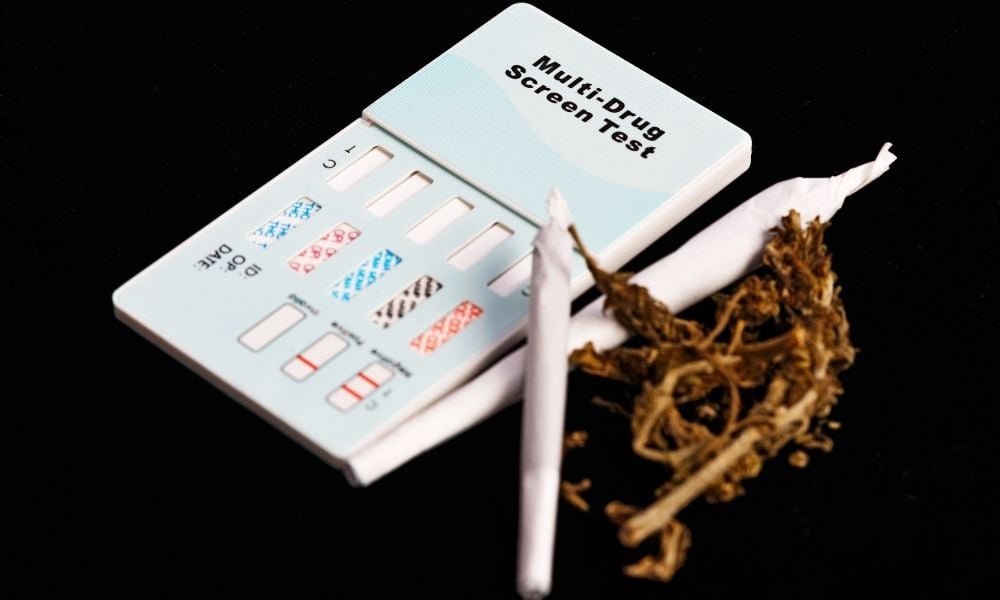
Pre-employment drug testing and random drug testing is considered discriminatory and is simply not the best or only answer to discourage use and impairment at work.
Medical evidence as to whether or not the employee was impaired during his shift was conflicting and inconclusive. The arbitrator found that there was no evidence of impairment at the time of the workplace accident, but was troubled by the lack of control surrounding the employee’s use of cannabis given the safety sensitive nature of his position. There was very little control or monitoring of the employee’s cannabis consumption, both by the employee’s doctor and the employer.
The scientific literature regarding impairment isn’t any clearer today.
Random testing not the answer
Some employers have explored the possibility of implementing randomized cannabis testing to determine use and possible impairment in the workplace. The legal answer is less than satisfactory for these employers.
The Ontario Court of Appeal’s 2000 decision in Entrop v. Imperial Oil is a key starting point.
In 1992, Imperial Oil implemented a comprehensive drug and alcohol testing policy at its Ontario oil refineries. Employees in safety sensitive positions would be subject to unannounced random alcohol and drug testing as a means of deterring impairment at work. A positive test resulted in termination of employment. Further, the policy required mandatory disclosure of a current or past substance abuse problem which would result in reassignment to a non-safety sensitive position with reinstatement to the former role under strict conditions.
The Court of Appeal considered whether Imperial Oil’s alcohol and drug testing policy was discriminatory on the basis of “handicap” (now disability), and if so, whether or not the testing provisions could be justified as a “bona fide occupational requirement” (BFOR).
Imperial Oil’s policy carried an adverse consequence for anyone testing positive on a pre-employment or random drug test, or a pre-employment or random alcohol test. The sanctions could include a refusal to hire, discipline, or termination. These sanctions applied to the social drinker or casual drug user as well. In effect, the recreational user was perceived by the employer to have a substance abuse handicap and it was assumed that the person would likely be impaired at work and not fit for duty.
Random testing was therefore discriminatory and could not be justified as a BFOR. Imperial Oil could not demonstrate that random testing was reasonably necessary because the urinalysis method used for testing was not a valid test of present impairment. Rather, it showed the presence of drug metabolites in a person’s blood, which only meant that the drug had been used sometime in the past. The test did not measure how much was used or when. Accordingly, the test had no predictive value in determining the likelihood of impairment on the job. Further, the court held that “automatic termination of employment for all employees after a single positive test is broader than necessary.”
The court held differently with respect to Imperial Oil’s alcohol testing policy. Breathalyzer testing for alcohol was a reliable indicator of current impairment. In the context of Imperial Oil’s highly safety sensitive environment where supervision was limited or non-existent, random alcohol testing was reasonably necessary — but only to the extent that individual accommodation of employees who test positive was available. This included the consideration of remedial sanctions less severe than dismissal.
As a result of Entrop, pre-employment drug testing and random drug testing is considered discriminatory and is simply not the best or only answer to discourage use and impairment at work.
Practical considerations
Employers seeking to mitigate the risk of cannabis impairment and legal challenges to its policies may look to the following measures:
- Prohibiting use during work hours. Employers, however, should avoid zero-tolerance approaches to respect accommodation obligations.
- Requiring disclosure. Anyone claiming a medical need for cannabis during working hours is obliged to disclose it.
- Implement testing alternatives. With training, objective observation tools may be equally effective as effective. Educating employees about the risks associated with cannabis use will also help mitigate use within and outside of the workplace.
Cannabis use is yet another aspect of employee conduct that an employer must seek to manage. Testing, however, is simply not the best answer to deter use, unless it is part and parcel of a post-accident investigation process. Training, education and monitoring are much better tools to control legitimate cannabis-related safety concerns.
For more information, see:
- Aitchison v. L & L Painting and Decorating Ltd., 2018 HRTO 238 (Ont. Human Rights Trib.).
- Airport Terminal Services Canadian Company v. UNIFOR, Local 2002, 2018 CanLII 34078 (Can. Arb.).
- Entrop v. Imperial Oil, 2000 CanLII 16800 (Ont. C.A.).
- Health reports: What has changed since cannabis was legalized? (Feb. 19, 2020), Statistics Canada, https://www150.statcan.gc.ca/n1/daily-quotidien/200219/dq200219c-eng.htm
- Ontario Human Rights Commission’s Policy on Drug and alcohol testing, http://www.ohrc.on.ca/en/policy-drug-and-alcohol-testing-2016
 Rishi Bandhu is an employment lawyer in Oakville, Ont., advising employers and employees on all aspects of employment and labour law. He can be reached at (905) 849-0025 or [email protected].


