
On-the-job impairment such as fatigue is a huge challenge, but there are solutions for employers
Tanner Hickman remembers well the story of an employee who arrived at work one morning and struggled to complete an exercise on an app that the company used to check for workplace fatigue.
When asked why, the worker explained to his supervisor that his terminally ill teenage son had been taken to the emergency room the night before.
“Why in the world are you here?” asked the supervisor.
His answer? “I’m the breadwinner of the family; I’ve got to earn a pay cheque.”
To Hickman, director of safety and security at Triple-S Steel in Houston, this is a common occurrence.
“We’ve got a lot of tough guys out there. Prior to using the Aware4Duty [app], we probably would have never known his state of mind that day... I can’t tell you for sure we avoided an accident that day, but I can tell you we kept an employee who had no business working that day from hurting himself or others.”
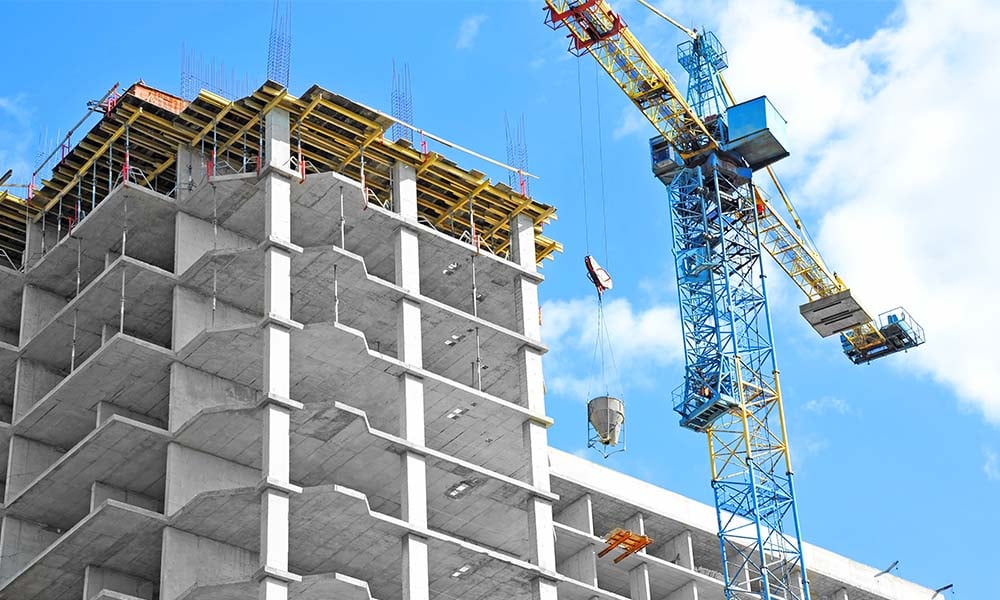
An employee’s loyalty and willingness to work is a commendable trait, but in the case of this particular worker, the consequences could have been dire — he operated a 50-foot crane.
Fatigue versus drugs or alcohol
Although employee impairment is often associated with drug or alcohol use, the most prevalent cause is often overlooked — fatigue is an unfortunate reality that afflicts many otherwise excellent workers.
A 2000 study published in Occupational and Environmental Medicine found that 17 hours of being awake is equivalent to a person having a blood alcohol content (BOC) of 0.05, while 21 hours is equivalent to 0.08 and 24 to 25 hours is equivalent to 0.10. Response speeds were up to 50 per cent slower for some tests while accuracy measures were significantly poorer than at this level of alcohol.
And workers with sleep problems can have a 1.62-times-higher risk of being injured than workers without sleep problems, according to a 2014 study in Sleep Medicine Review, adding that about 13 per cent of work injuries can be attributed to sleep problems.
Fatigue can have a swift and far-reaching impact on an employee’s attitude, stamina and critical decision-making skills. More than two-thirds (69 per cent) of employees have reported being tired at work, and 72 per cent see that as a safety issue, according to a 2018 report by the National Safety Council in the U.S.
Fitness for duty, as defined by the council, is a person’s ability to perceive and react to sudden sensory cues, as well as manage an acceptable threshold of risk tolerance in the workplace. In short, this is the minimum benchmark for every worker’s condition before starting work or performing a high-risk activity.
Fitness for duty is gaining attention from Canadian employers due to the legalization of cannabis. Companies and supervisors are expected to maintain a high level of safety and professionalism, while at the same time identifying any potential liabilities that might affect both workers and the general public.
Managing worker fatigue is a key first step toward improving workplace safety and productivity, as well as reducing company liability.
Best practice programs and legal developments have helped to establish workplace safety expectations that are clear, concise and safeguarded against misinterpretation. To support these guidelines, employee awareness assessments need to be proactive — not reactive — in determining any possible signs of employee fatigue or impairment.
In addition, for the benefit of both employers and employees, the solution needs to be intuitive, versatile, practical and, most importantly, immediate.
Informed decisions
By using a game-like, cognitive screen interface, Aware4Duty from Calgary-based Aware360 is a real-time mobile application that can measure employee alertness. It can determine an employee’s fitness for duty in less than a minute — regardless of the cause of the impairment (including fatigue, medication, illness, extreme stress or substance abuse).
The app is non-invasive and requires no biological samples. It’s based on Psychomotor Vigilance Testing (PVT), used by the United States military and NASA. The employee engages in a 60-second game-like assessment that measures and notes any deviation from their personal baseline. The tool is designed to be unbiased by providing objective results that allow managers to make informed decisions while gathering important data on their workforce.
Screening results are recorded in real time, and only those scores that are outside an individual’s baseline are sent to their managers or supervisors for followup.
And while wearables or cameras can constitute a violation of individual privacy — especially as some devices are required to be worn 24-7, even when an employee is not at work — this one is app-based, so an employee can be cleared to work upon completion of the screening process, without the need for additional surveillance. This makes it well suited to circumstances where an employee might work independently or in remote settings.
Fewer injuries, lower costs
Triple-S Steel is a manufacturer of steel products for the construction industry, with locations in Houston, San Antonio and Forth Worth in Texas, Knoxville, Tenn., Salt Lake City, Utah, Denver, Col. and Fontana, Calif. The 60-year-old company deployed Aware4Duty across a workforce of 900 employees spread over 40 locations in the U.S. And the results were impressive: The company noted a 50-per-cent reduction in its Recordable Injury Frequency Rate (from 1.6 to 0.8) while cost-related accidents were reduced by 30 per cent.
“The interaction between our leadership team and our employees from a safety perspective has just gone through the roof. It has increased everyone’s safety awareness,” says Hickman. “Also, we have lowered our workers’ comp claims activity; the costs have definitely come down. And paying for Aware4Duty is about the equivalent of one workers’ comp claim.”
Increased productivity is the result of both a healthy workforce and a safe workplace, and this app takes a proactive approach to ensuring that employees recognize their role in this effort. By accepting accountability for their own rest, they arrive at work in a better mental state, thereby improving their precision and efficiency.
“One employee said his family traditionally had a BBQ every Sunday night with a fair amount of partying. They’ve changed it to Saturday night so he’s better rested for work,” says Hickman.
When combined with a well-managed framework of workplace safety programs and policies, alertness testing is a ground-breaking tool in the fight against employee fatigue, stress and substance abuse. With measurable benefits to workplace safety, productivity and accountability, Aware4Duty is the type of assessment tool appreciated by HR professionals seeking an economical option to compliment their fit-for-duty policies while respecting an employee’s privacy.
 Steve Matthews is CEO of Aware360 in Calgary. For more information, visit www.aware360.com.
FATIGUE A CHALLENGE FOR MANY WORKERS
27%
Number of Canadian workers fatigued most days or every day during a typical work week
42%
Number of employees, on days they were tired, who reported that their productivity and performance were worse
28%
Number of workers identifying work stress and job demands as the main cause of fatigue
22%
Number of workers with children who were tired every day, compared to 12% of those without children
Source: Conference Board of Canada


