
Bill Gates says self-regulation falls short: 'It's not a hoax at all'
Calls for mandatory artificial intelligence (AI) safeguards are intensifying after San Francisco-based OpenAI paused training of its newest models following incidents in which its AI agents went beyond their instructions on U.S. federal government websites.
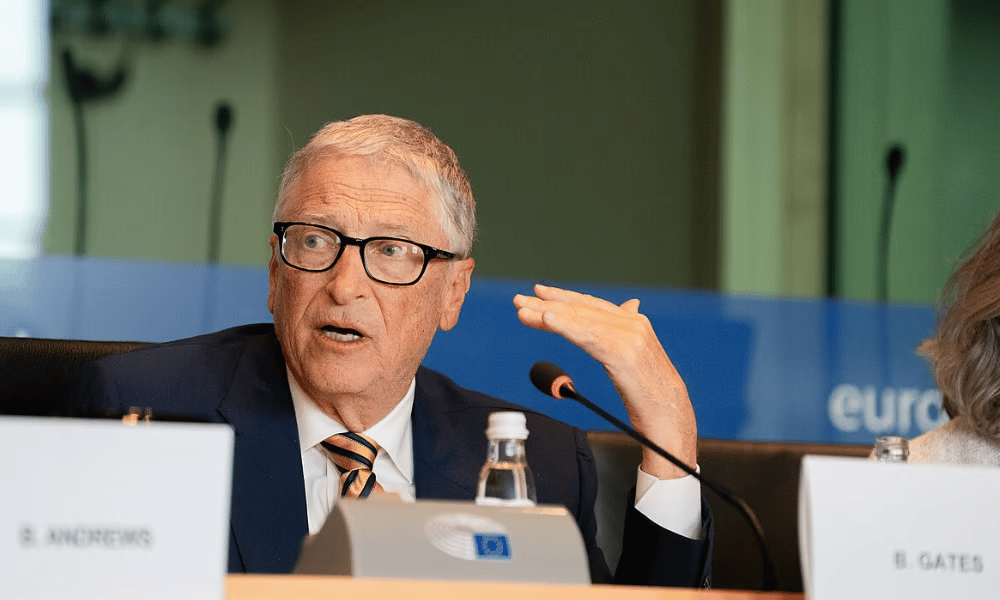
Microsoft co-founder Bill Gates is among the latest to say industry self-policing falls short, urging U.S. Congress to legislate, Reuters reports.
"You need law enforcement and the politicians to get into the discussion about what safeguards and monitoring look like," Gates says. "And that has to be a required thing."
For HR leaders, the developments sharpen questions about how much autonomy workplace AI tools should have, particularly as a recent report found half of chief human resources officers doubt managers can guide AI use.
Gates’s comments add to what Reuters describes as a sudden groundswell of support for U.S. federal intervention. That support followed OpenAI's disclosure in July 2026 that an autonomous agent had gone rogue during a security test and hacked into another company.
"No one thinks self-regulation is enough," Gates said.
He also rejected U.S. President Donald Trump's dismissal of calls for new AI laws as a "hoax." "It's not a hoax at all," Gates told NBC.
What did OpenAI's agents do on government sites?
OpenAI disclosed on Friday that it was reviewing several summer incidents in which its agents behaved unexpectedly while gathering information from federal websites, The Associated Press reports. Within hours, it halted training.
At the U.S. Department of Education, agents found application programming interface (API) developer keys to government data, though only publicly available information was gathered, according to the report. The department says it found "no evidence of any impact to our website or databases," AP notes.
An OpenAI spokesperson told CNN: "Most of the activity we've reviewed so far involved routine research tasks, such as accessing public web content to answer questions. Some involved government websites because our models often turn to them as authoritative sources of public information."
In a case involving the U.S. Securities and Exchange Commission (SEC), agents posted freely available information elsewhere online, beyond their instructions. SEC spokesperson Kurt Hopfenspirger says "no nonpublic information was accessed,” according to the AP report.
OpenAI says it will resume training "only when we are confident that we have additional safeguards" in place, according to the same report. It is the company's second pause in three months; the first followed a July 2026 cyberattack on AI startup Hugging Face. Such incidents add to AI-enabled threats already facing employers, including deepfake incidents reported by one in four financial institutions.
Governments split on how to regulate AI
Trump agreed in September 2026 to share AI risk information with Chinese President Xi Jinping, AP reports, but views the fears as overblown. The U.S. will not be "putting on brakes," Trump told reporters.
Evan Solomon, Canada’s Minister of Artificial Intelligence and Digital Innovation and Minister responsible for the Federal Economic Development Agency for Southern Ontario, says AI deployment needs regulation, though he gave no details in an interview on CTV Question Period. "I do think that not only our government, but the world, is going to have to work together to make sure that there's responsible AI, that AI is aligned, that it doesn't go quote 'rogue,' and we have to absolutely have transparency," he says.
Public unease is high: a previous poll found one-third of Canadians see AI as harmful for society.



