
TELUS survey shows mixed results around physical, mental, financial wellbeing among Canadian employees

Are Canadian managers being supportive of their employees' work-life balance?
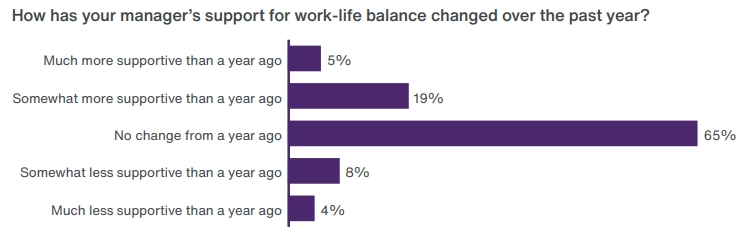
The resuts are mixed, judging by a recent survey that found 65 per cent of workers say their manager’s support for work-life balance has not changed over the past year, while 24 per cent say it has improved, and 12 per cent say it is less supportive.
Canadian workers under 40 are more than twice as likely as workers over 50 to report their manager has been more supportive of work-life balance over the past year. Parents are 60 per cent more likely than non-parents to report their manager has been more supportive of work-life balance over the past year.
And managers are twice as likely as non-managers to report their manager has been more supportive of work-life balance compared to the past year, finds the survey by TELUS Health.
Empathetic leadership improves workers' work-life balance, according to a previous report.
Physical, mental, financial wellbeing
Nearly two in five (39 per cent) workers rate employer support for their physical wellbeing as very good/excellent.
Non-managers are twice as likely as managers to rate employer support for their physical wellbeing as poor, while women are 60 per cent more likely than men to rate employer support for their physical wellbeing as poor, finds TELUS Health.
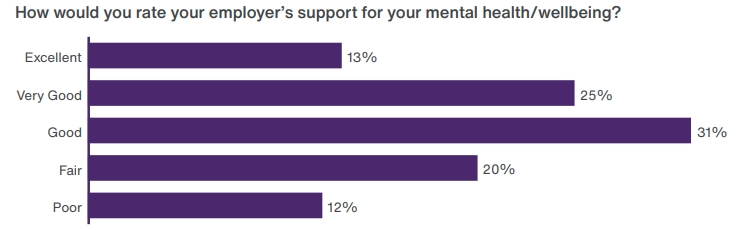
For mental wellbeing, nearly two in five (38 per cent) Canadian workers rate employer support as very good/excellent;
Non-managers are 60 per cent more likely than managers to rate this support as poor. Non-parents are 60 per cent more likely than parents to rate employer support for their mental wellbeing as poor and women are 50 per cent more likely than men to rate employer support for their mental wellbeing as poor
Three in ten (30 per cent) workers rate employer support for their financial wellbeing as very good/excellent, finds TELUS Health.
Managers are 50 per cent more likely than non-managers to rate support for their financial wellbeing as very good/excellent.
However, women are 50 per cent more likely than men to rate employer support for their financial wellbeing as poor, and workers over 50 are 50 per cent more likely than workers under 40 to rate employer support for their financial wellbeing as poor.
Data for this report was collected through an online survey of 3,000 people living in Canada who are currently employed or who were employed within the previous six months.



