
Investment will help equip employers with 'tools they need to respond to modern challenges'
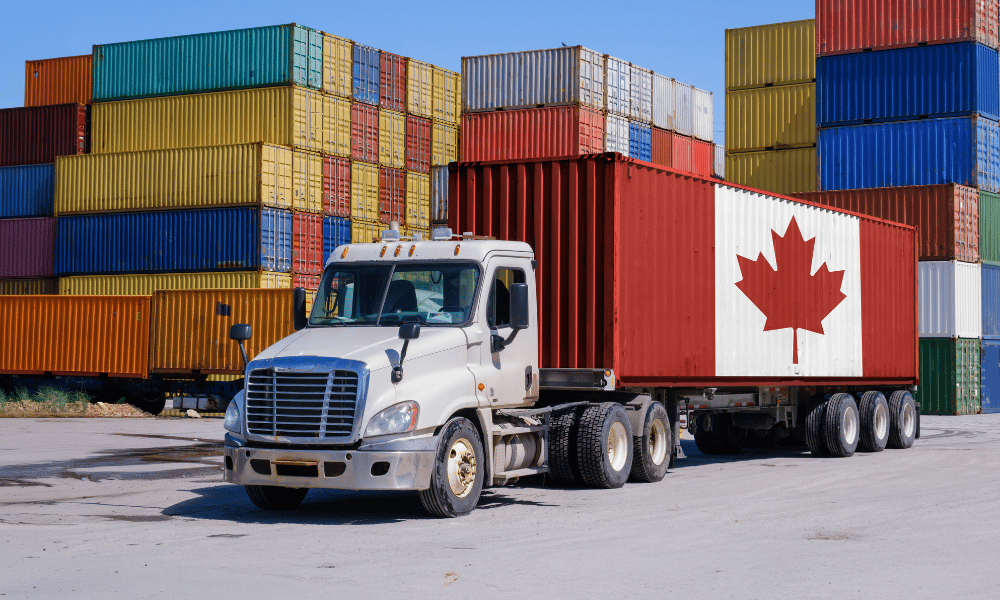
The federal government has announced an $80-million tariff-relief fund to support more businesses feeling the impact of tariffs imposed on Canada by United States President Donald Trump.
Prime Minister Mark Carney announced the funding for small and medium-sized businesses in Atlantic Canada—part of a larger $1-billion fund for Canadian businesses affected by American tariffs—on Monday.
The funding will be distributed through the Atlantic Canada Opportunities Agency.
“This funding will help equip Atlantic Canadian industries with the tools they need to respond to modern challenges. To innovate. To modernise. To expand operations and customer bases. To take full advantage of new opportunities,” Carney said, according to a report from CBC.
Carney explained that the federal government would pay for the initiative by reducing unnecessary federal spending, allowing for increased support for businesses investing in the future. He also noted that the funding allocated to Atlantic Canada is more than proportionate to the region’s population and gross domestic product. Carney highlighted potential applications for the seafood industry, including innovative packaging techniques designed for high-demand European markets.
'Vital step' for employers amid tariff uncertainties
Rhonda Tulk-Lane, CEO of the Atlantic Chamber of Commerce, said in the CBC report that Carney’s announcement "represents a vital step forward for Atlantic businesses impacted by trade uncertainties.
“We are especially pleased to see the regional focus of this announcement, as it empowers companies to pursue new markets, streamline supply chains and invest in productivity—directly addressing our region’s priorities for long-term economic stability and expansion.”
Confidence among Canadian small business owners has dropped significantly amid rising costs, according to a previous report. And nearly one in five (19%) Canadian small businesses facing tariff-related costs say they will not survive more than six months if current conditions persist, according to a separate report from the Canadian Federation of Independent Business (CFIB).
Strategic measures from Ottawa
Last week, the federal government announced that it is building a new industrial strategy that will transform the economy “from one of reliance on specific trade partners to one that is more resilient to global shocks, built on the solid foundation of strong Canadian industries, and bolstered by diverse international trade partners.”
To these ends, Carney announced a series of “new, strategic measures for workers and businesses in those sectors most impacted by U.S. tariffs and trade disruptions".
The recently announced initiatives include these measures:
- The government will introduce a new reskilling package for up to 50,000 workers, make Employment Insurance more flexible with extended benefits, and launch a new digital jobs and training platform with private-sector partners to connect Canadians more quickly to careers.
- The government will invest $5 billion through a new fund with flexible terms to help firms in all sectors impacted by tariffs adapt, diversify, and grow, with support provided to industries by new Workforce Alliances to align training and workforce needs.
- The government will introduce a new policy to ensure the federal government buys from Canadian suppliers, require local content when domestic suppliers are unavailable, extend this approach to all federal funding streams and Crown corporations, and provide a roadmap for provinces and municipalities to apply similar standards to their own procurement.
- The government will expand Business Development Bank of Canada loans for small and medium-sized enterprises (SMEs) to $5 million, provide more flexible financing through the Large Enterprise Tariff Loan Facility, and give the auto sector flexibility by waiving 2026 model year vehicles from Electric Vehicle Availability Standard requirements and by launching an immediate 60-day review to reduce costs.
- The government will introduce a new biofuel production incentive, with over $370 million for domestic producers to address immediate competitiveness challenges, amend Clean Fuel Regulations to support the domestic biofuels industry, temporarily increase the Advance Payments Program interest-free limit to $500,000 for canola advances, and provide increased funding for the AgriMarketing Program to support diversification into new markets for agricultural products.
- The government will expand support to SMEs to $1 billion over three years, with flexible terms, and increase new non-repayable contributions to eligible businesses impacted by tariffs across all affected sectors, including agriculture and seafood.
In August, the federal government also introduced the Regional Tariff Response Initiative (RTRI),which is intended to help businesses improve productivity, expand and diversify markets, and strengthen domestic supply chains and trade resilience.
Previously, Ontario announced it is investing $70 million to expand training and employment services for workers affected by U.S. tariffs and related economic uncertainty.



