
Says 'stakes are high' for Canadian workers, businesses, economy
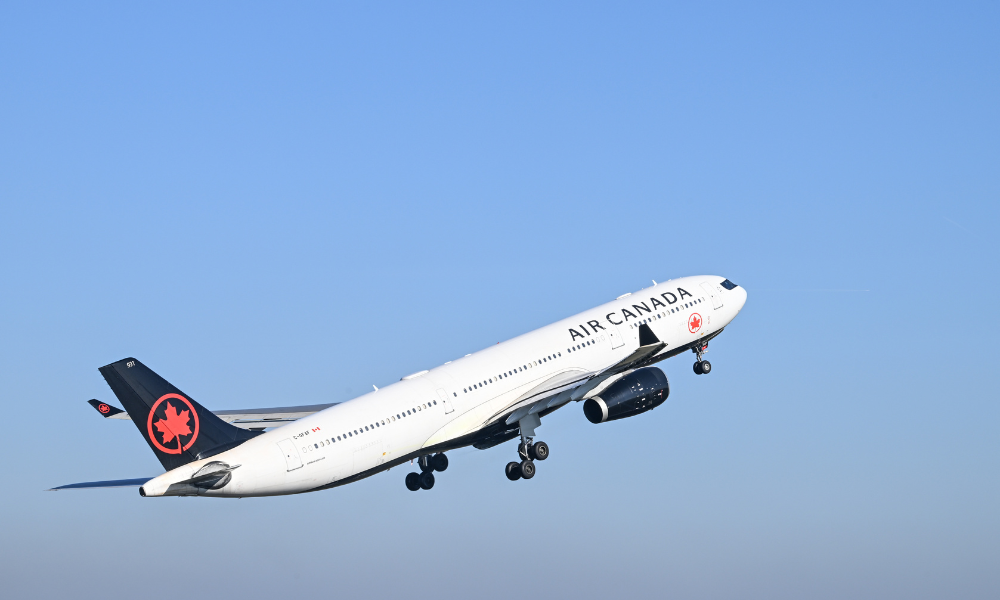
Air Canada has announced that negotiations with the Canadian Union of Public Employees (CUPE), which represents 10,000 flight attendants at Air Canada and Air Canada Rouge, have reached an impasse.
Both parties will be in a position to issue a statutory 72-hour strike or lockout notice as of 12:01 a.m. Eastern Time on Aug. 13, potentially grounding flights as early as Aug. 16.
The airline said the deadlock follows CUPE’s submission of a counteroffer seeking wage increases that Air Canada described as “unsustainable” and “exorbitant,” and the union’s rejection of the company’s proposal to enter binding, third-party arbitration. Air Canada’s proposed arbitration would have involved an independent arbitrator to impartially resolve outstanding contract issues.
“Air Canada has been negotiating with CUPE for eight months and although we have settled many items, none of which required concessions, we remain far apart on key issues,” said Arielle Meloul-Wechsler, Executive Vice President, Chief Human Resources Officer and Public Affairs at Air Canada.
“We are disappointed our proposal to resolve the outstanding items fairly through arbitration has been rejected by the union and it is instead insisting on unsustainable wage increases. We are now at an impasse in talks, with the union in a position to issue a strike notice at midnight tonight, creating tremendous uncertainty for hundreds of thousands of travellers and companies shipping critical, time-sensitive goods. Air Canada is now looking at all remaining options, including a request for government-directed arbitration, to prevent a disruption or at least remove this intolerable uncertainty for our customers.”
Business community urges swift resolution
David Pierce, vice president, government relations at the Canadian Chamber of Commerce, stressed the broader economic impact of a potential disruption:
“At a time when Canada is facing unprecedented economic challenges and trade uncertainty, a service disruption would interrupt air cargo connectivity, directly impacting Canadian businesses that are working to diversify their customers in provinces across the country. The impact on business will be felt internationally too, and would lead to losses for Canadian exporters, further compounding the impacts on industries throughout our economy.
The best deals happen when both sides sit down and negotiate in good faith at the bargaining table, he said.
"This year, especially, the stakes of these negotiations are high, not just for flight attendants and Air Canada, but for workers at our airports and for the broader Canadian economy... There is little doubt that the impact of a labour disruption at Air Canada will be felt by all Canadians."
If parties cannot reach a negotiated agreement, the federal government “should be ready to intervene to avoid a prolonged disruption to Canadian air travel and shipping,” says Pierce.
“We urge the federal government and all parties to continue to put the best interests of our country’s businesses, workers, and communities at the forefront."
Compensation increase at Air Canada
Air Canada’s latest offer—tabled on Aug. 11—includes a 38% total compensation increase over four years, with 25% in the first year, and no concessions required from the union. The proposal also addresses ground pay, improves pensions and benefits, increases crew rest, and introduces enhancements to work-life balance. The airline says this settlement would make its flight attendants the best compensated in Canada.
That same day, CUPE members held “simultaneous action” at airports in Montreal, Toronto, Vancouver and Calgary.
Despite the impasse, Air Canada says it remains available to negotiate, but time is running short. The company noted that CUPE refused to negotiate for 10 days while seeking a strike mandate. In the event of a disruption, Air Canada Express flights operated by Jazz or PAL Airlines will continue, but these regional partners carry only about 20% of Air Canada’s daily customers. The remaining 130,000 daily passengers—including 25,000 Canadians returning from abroad—could be affected.
Air Canada is now asking the federal government to refer the dispute to binding arbitration under section 107 of the Canada Labour Code, citing recent government interventions in other transportation labour disputes as precedent. The airline argues that, despite prolonged bargaining and an offer of unprecedented compensation increases, there is no foreseeable prospect of resolution, and that a disruption would have significant repercussions for Canadians, businesses, and the broader economy.
Potential impact of Air Canada strike
Air Canada operates globally to roughly 65 countries with a fleet of 259 aircraft. In the event of a disruption, customers whose flights are cancelled will be notified and eligible for a full refund, which can be obtained online or via the Air Canada mobile app. The airline has made arrangements with other carriers to provide alternative travel options where possible, but notes that capacity is limited due to the summer travel peak.
Customers are strongly advised not to go to the airport unless they have a confirmed booking and their flight is operating.
Self-service tools are recommended, as contact centre wait times are expected to be high. Under Canada’s Airline Passenger Protection Regulations, customers are not eligible for compensation for delays or cancellations due to labour disruptions, but Air Canada will inform passengers of their rights and meet all regulatory obligations.



