
Province must ensure ‘these harms become a relic of the past’
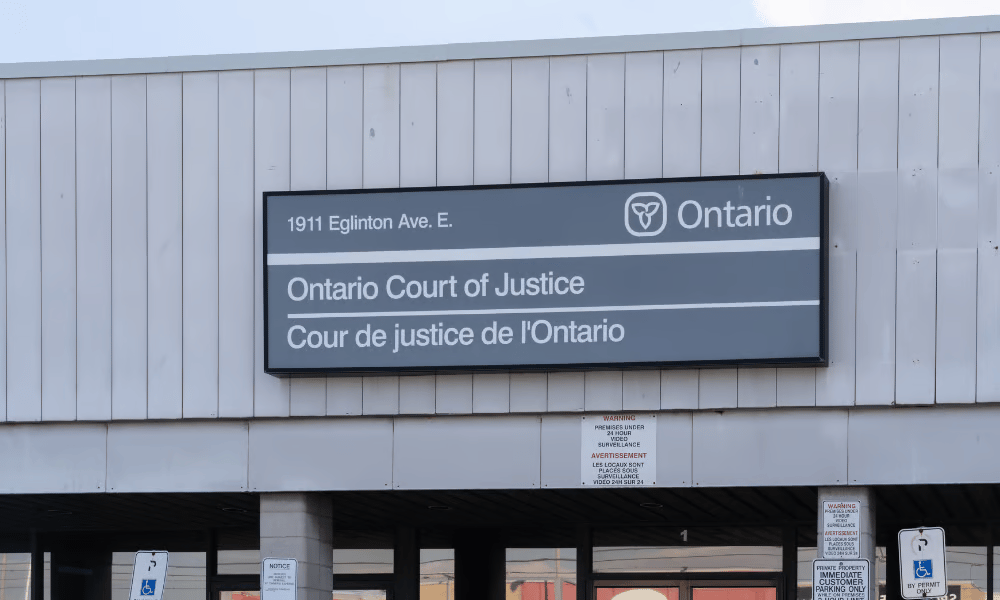
The Ontario Superior Court of Justice has approved a $60-million class action settlement on behalf of thousands of children abused at provincial youth institutions over three decades, establishing legal benchmarks on duty of care and trauma-informed accountability that HR professionals in organisations serving vulnerable populations should know.
Justice Benjamin Glustein approved the agreement on May 21, 2026, in Brown v. His Majesty the King in Right of the Province of Ontario, 2026 ONSC 2880, finding it fair, reasonable, and in the best interests of class members. Attorney General Doug Downey and court-appointed representative plaintiff Warwick Brown jointly announced the settlement's approval on June 26, 2026.
Inadequate staff training, lack of reporting
The class action, commenced in December 2017, covers all persons who resided at any of thirteen provincial Training Schools between Jan. 1, 1953 and April 2, 1984. Some residents had been detained for criminal offences; others for minor infractions such as truancy or being deemed unmanageable. Upon admission, children became wards of the province.
The action alleged systemic failures across Ontario's management and operation of the schools, including inadequate staff training, lack of reporting and accountability measures, and misuse of physical discipline and solitary confinement.
The litigation spanned nine years. The parties exchanged more than a dozen expert reports, completed extensive discoveries, and were approaching a mid-2026 trial before reaching an agreement in principle at mediation on May 6, 2025. The settlement agreement was executed January 21, 2026.
Settlement terms
Individual compensation ranges from $5,000 to $100,000 — more than double the highest amount previously available in an institutional abuse case against Ontario. Under Track 1, a class member receives $5,000 by completing a form confirming harm and identifying which school they attended. Under Track 2, class members submit a witnessed declaration, without supporting documentation, for higher amounts tied to the nature and severity of harm.
The process requires no cross-examination, no documentary corroboration, and applies a presumption that claims are made honestly and in good faith. Class members have 15 months to file claims, and up to $1,500 is available to reimburse counselling costs arising from re-traumatisation caused by participating in the claims process.
Downey, in a statement released alongside the announcement, said any abuse suffered at the schools "was wrong. It was wrong then. It is wrong now." He added that the province must ensure "these harms become a relic of the past" (Ontario Ministry of the Attorney General, June 26, 2026).
In 2025, the Ontario government announced it is investing $64.2 million over three years to expand in-class apprenticeship training.
‘Trauma-informed, survivor-centric’ process
Brown, who attended Brookside Training School in Cobourg beginning around 1963, described the personal stakes driving his involvement. "So many kids left those schools broken," he said, adding that the settlement "is about giving those kids a voice".
He said it was "extremely important" that the process be trauma-informed, survivor-centric, and designed to avoid re-traumatisation.
Justice Glustein also identified significant trial risks that shaped the settlement's terms, including the difficulty of judging historic management decisions against contemporary standards. The court cited B.G. et al. v. HMTQ, 2003 BCSC 1890, in which similar claims against British Columbia were dismissed after a 101-day trial — a reminder that systemic failures, however serious, carry substantial legal risk.
In April, federal, provincial and territorial ministers responsible for labour agreed to accelerate the harmonisation of key construction training programs and advance an interjurisdictional training approach across Canada.



