
Educator defends course content linking race and IQ scores
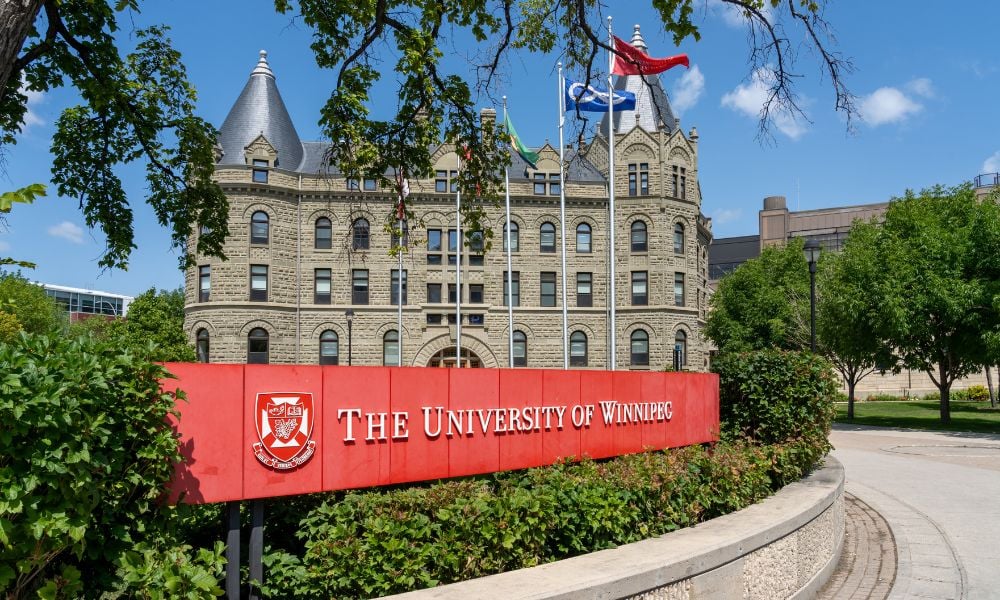
A University of Winnipeg professor’s lawsuit over course material linking race, IQ scores and murder rates is testing how institutions balance academic freedom with discrimination protections and fair investigation processes.
Psychology professor Jeremy Frimer, a tenured faculty member, is suing both the University of Winnipeg and the University of Winnipeg Faculty Association (UWFA) after a student complaint triggered a multi‑year dispute that went through internal investigation and the Manitoba Labour Board before reaching the civil courts, CTV News reported.
A student in his class alleged Frimer said “Black individuals’ IQ scores may be lower because of genetics” and presented “data showing that Black people are 4.5x more likely to commit murder than White people.” It's further claimed that Frimer “largely misrepresented” the data in a way that could amount to discrimination and harassment, according to the report.
In a statement to CTV News, Frimer confirmed he was the subject of the complaint but denied misrepresenting the research, saying his lectures were grounded in existing studies: “Every observation and data point that I described are unfortunately legitimate scientific findings. I wish it were not true, but my feelings don’t determine scientific findings. My job is to report the world as it is, not how I wish it were."
The former president and vice-chancellor of the university also sued the school over his removal from the role, alleging they breached his employment contract, mishandled the termination process and harmed his professional reputation.
Course content on genetics
The disputed content appears in Frimer’s course "Psychological Approaches to Social Issues," which examines topics such as racism, climate change, economic inequality and artificial intelligence, according to the report. He described the course as designed to help students consider multiple perspectives and develop “intellectual humility—realizing that both sides have some facts on their sides, but neither has a monopoly on the truth.”
Frimer told CTV News that, within this framework, he presents “the most uncomfortable data points in the course that concern racial differences and the hypothesized role of genetics,” while stating that he personally finds the ideas “disgusting” and situates them in a broader discussion of historic and systemic racism. He has said his great‑grandfather was murdered by Nazis who believed in genetic superiority, using that family history to underline his opposition to racist ideologies.
The course outline, as cited by CTV News, warns that it covers “sensitive and controversial topics” and that some students may find certain ideas “offensive, hurtful, or wrong.” It states that “the intent in covering these topics is to inform, not offend. Students are encouraged to bring an open mind, express their opinions, and to do so in a manner that is civil and sensitive to others’ feelings.”
Labour board process, investigation concerns
According to an October 2024 Manitoba Labour Board decision, the university notified Frimer on Jan. 19, 2023 that a disciplinary investigation would be opened into the student’s complaint, says CTV News. Frimer asked the UWFA to file a grievance on his behalf, alleging violations of his human rights and academic freedom and claiming discrimination and harassment. The union declined at that point.
In the labour board filing, he alleged the association could not defend members who do not “conform to their hard‑left political ideology” and requested an independent representative. The board dismissed his application, noting that “filing a grievance in the future was not precluded, but the investigation needed to proceed and come to a final determination… If the investigation concluded the student’s complaint was unfounded, there would be nothing to grieve,” CTV News reported.
Frimer then filed three separate applications with the Manitoba Labour Board, all dismissed. He claimed the university attempted to “censor him” for more than two years and alleged that the investigator initially viewed the complaint as insufficient but then engaged in what he described as a “witch burning, making up an extensive set of her own manufactured particulars that were not legitimate grounds for an investigation,” CTV News reported.
Civil lawsuit, health impacts and next steps
Last month, Frimer launched a civil lawsuit against the University of Winnipeg and the UWFA, alleging their actions left him without any effective forum to resolve workplace complaints and created what he calls a “lawless space,” according to the report. The claim asks the Court of King’s Bench to assume jurisdiction over his complaints, although parts of the statement of claim are redacted and some affidavits are under seal.
None of Frimer’s claims have been tested in court. According to CTV News, Frimer has been on sick leave since November 2025 because of the dispute and has compared his experience with the university unfavourably to his earlier battle with cancer.
A half‑day hearing is expected sometime after July 6 to determine whether the lawsuit will proceed.
The University of Winnipeg declined to comment to CTV News, citing ongoing legal proceedings.
Canadian HR Reporter has not seen any comments about this development.



