
Worker sued for damages related to workplace injury
A worker’s legal action against Workers’ Compensation Board decision-makers and parties who provided rehabilitation treatment is not allowed under workers’ compensation legislation, the BC Supreme Court has ruled.
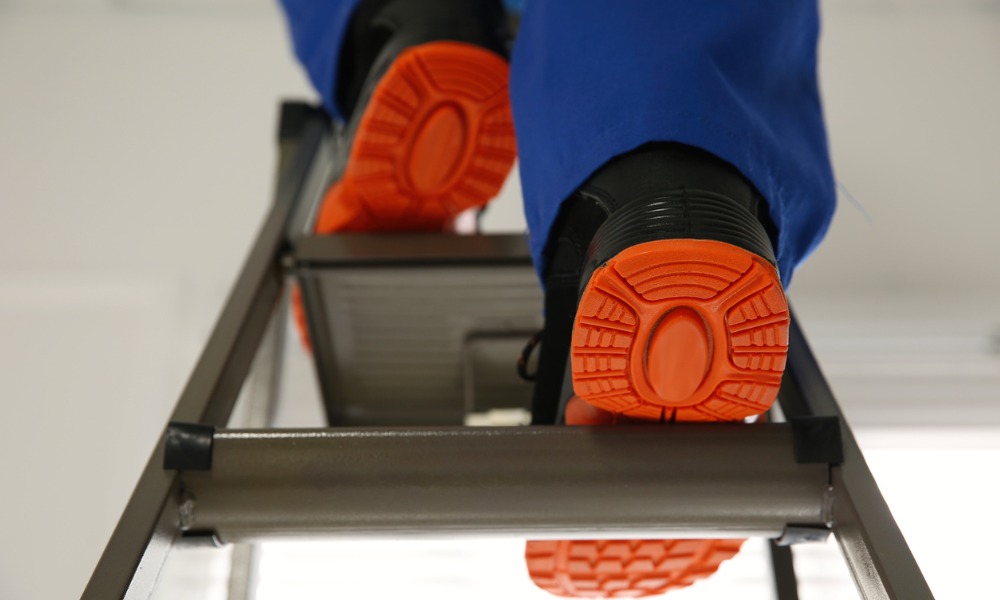
The worker was employed as a carpenter when he fell from a ladder at work on Oct. 31, 2012. The next day, he applied to the BC Workers’ Compensation Board (WCB) for benefits. The WCB approved the claim for injuries to his lumbar spine and right foot and ankle and paid him temporary total disability benefits.
The worker received physiotherapy for nearly two months in late 2012 and early 2013 until the physiotherapist determined that the treatment could no longer improve his condition. The WCB referred the worker for an occupational rehabilitation program, which the worker attended for another month until March 5, 2013. At that point, the worker was discharged from the program as fit to return to work with limitations and additional rehabilitation.
The WCB referred the worker to another occupational rehabilitation program that focused on functional exercises to meet work demands along with pain management. The worker attended the program, receiving treatment from a physiotherapist, clinical counsellor, kinesiologist, and an occupational therapist.
Additional injury
However, about one month into the program on April 18, a lumbar compression fracture was discovered in the worker’s back, leading to his discharge. The WCB referred the worker to a physician it used for medical advice. The physician found that the worker’s spine injury was likely related to the workplace accident but it was relatively minor and didn’t need further treatment. The WCB determined that the worker was entitled to benefits for this injury, as it was causally connected to the accident.
The WCB referred the worker to a pain and medication management program run by Lifemark Health Management, the company that administered the second occupational rehabilitation program. The Lifemark team issued an assessment report on May 15 indicating that the worker had chronic lower back pain.
The worker was discharged from the pain and medication management program on June 25 with the understanding that he had ongoing limitations. The WCB physician found that the worker was likely at his maximum possible state of recovery, his back pain was permanent, and he would be unable to return to his pre-injury job. As a result, it referred the worker to a vocational rehabilitation program that would allow him to re-enter the workforce as an insurance, real estate, or financial broker.
The WCB also determined that the worker was entitled to a permanent partial disability pension at 2.5 per cent. This was based on a “loss of function” basis as it found no exceptional circumstances that would calculated the pension based on loss of earnings.
Maximum level of recovery
In October 2013, the WCB refused to approve further physiotherapy since the worker was at his maximum level of recovery.
The worker sought review of the WCB’s decisions on how his permanent partial disability pension was calculated and the type of job he could perform. The WCB review division overturned the vocational plan for insurance, real estate or financial broker, meaning that the loss of earnings would have to be re-evaluated. It referred the matter back to the WCB.
The WCB issued a new vocational rehabilitation plan with the goal of a position in retail sales. The worker appealed, but the review division upheld the plan. The Worker’s Compensation Appeal Tribunal also upheld the plan.
In 2019, a medical assessment revealed a right rotator cuff rapture in the worker. The worker asked the WCB to accept the shoulder injury as being caused by the 2013 workplace accident, but this was denied because of the previous decisions, a long period of inactivity, and an intervening car accident. The review division and the tribunal both upheld the denial of the shoulder injury as caused by the workplace accident.
New vocational rehabilitation plan
In March 2021, the WCB reviewed the worker’s permanent partial disability entitlement based on his new vocational plan. Since legislative amendments had removed the exceptional circumstances requirement for calculating the pension on the basis of loss of earnings, the WCB used that assessment and determined a monthly pension of more than $2,700.
In August 2022, the worker launched a civil action against the rehabilitation providers and WCB case workers seeking damages from his workplace injury. He alleged that his shoulder injury was caused by the accident, his spine injury still required treatment, the treatment he received made his injuries worse, they all failed to accept the true extent of his injuries, and the WCB and tribunal decisions were wrongly decided.
The defendants filed an application to dismiss the worker’s action on the grounds that it was barred by statute – the BC Workers’ Compensation Act prohibited civil actions on issues that are governed by the province’s workers’ compensation scheme, such as any injury arising out of and in the course of employment.
Civil actions barred
The application was based on the act’s stipulation that an action can’t be brought against the WCB or any employee of the WCB for any act or decision that was within the WCB’s jurisdiction or that the employee believed was in its jurisdiction. This stipulation has been held to bar all actions against workers who provide treatment under the workers’ compensation regime for workplace injuries, even if the treatment was ineffective or harmful.
In addition, the BC Administrative Tribunals Act provides immunity protection for tribunals and other decision-makers for anything done or omitted in the performance of any statutory duty, with the exception of bad faith, said the defendants.
The court agreed that both the Workers’ Compensation Act and the Administrative Tribunals Act create a statutory scheme that bars civil action against anyone involved in decision-making and treatment for workplace injuries. As a result, the worker’s claim should be “struck in its entirety,” said the court.
The court also found that there were “virtually no material facts pleaded” and even if there was any aspect of the worker’s claim that might not be statute-barred, it would be based on speculation and assumption, not evidence.
The worker’s action was dismissed. See Lam v. Lifemark Health Corp., 2023 BCSC 1782.


