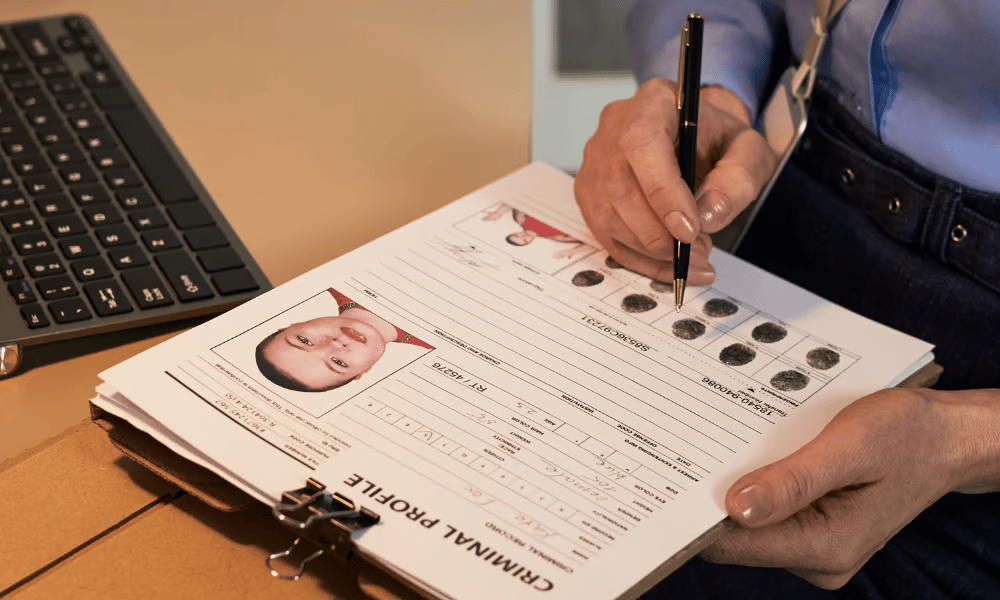
‘Mutual participation in flirtation:’ Six-year harassment case collapses over lack of credibility
A former employee's text messages calling her colleague "Habibi," Arabic for "darling," helped demolish her sexual harassment complaint against a Toronto-area licensing company, even as the case dragged on for nearly six years.
Vice chair Aslam Daud of the Human Rights Tribunal of Ontario dismissed Majd Assaf's application against Soler D&V Licensing and office manager Prashanth Prabakaran on Feb. 3, 2026, finding the pair had engaged in a consensual romantic relationship rather than workplace harassment.
Assaf worked at Soler from May to October 2019, when she went on stress leave. She alleged Prabakaran sexually harassed her and that the company failed to accommodate her disabilities.
But critical gaps in the evidence, including seven days of missing text messages during key dates, along with her own contradictory testimony proved fatal to her case.
When friendly texts turn into evidence
The tribunal heard that Assaf and Prabakaran exchanged numerous late-night text messages, many extending until 3 or 4 a.m. During cross-examination, Assaf admitted she called Prabakaran "Habibi" and "Dear" and told him "I like you." She also acknowledged suggesting they watch a movie together and purchasing tickets in advance.
The two gave conflicting accounts of the theatre outing on Oct. 13, 2019: Assaf testified she left early because Prabakaran held her hand and made her uncomfortable, while Prabakaran testified she held his hand throughout, rested her head on his shoulder and fell almost asleep.
Daud also noted that Assaf initially denied using the Signal messaging app, which features disappearing messages, but later admitted they used it after Oct. 14, 2019 for phone sex. She also denied working in 2020, only to concede under cross-examination that she held a Service Ontario position from November 2020 for two years.
The respondents emphasized that text message transcripts showed conversations occurring "mostly after work hours" and were "mostly about friendship, relationships and romantic involvement." Prabakaran testified the relationship became 'more than friendly' and that he considered it 'having an affair,' though he acknowledged feeling guilty about it.
Textbook investigation takes six years
When Assaf complained in October 2019, Soler acted within 24 hours. The company hired an independent investigator, suspended Prabakaran for one week without pay, and offered Assaf temporary relocation.
Assaf testified that although the investigation report did not establish sexual harassment, it did establish that there was "grossly inappropriate" conduct on the part of the personal respondent.
Daud found the organizational respondent "acted without delay" and noted it "initiated a third-party investigation, written communication with documented steps, and offered alternate placement." The company also maintained staffing levels ensuring Assaf "was never alone with the personal respondent."
Despite these measures, the application filed in 2020 took nearly six years to resolve. The tribunal heard evidence on April 3-4, 2025, with the decision coming 10 months later.
Witness reliability an issue
Daud's assessment of witness reliability proved decisive. He found Assaf's evidence suffered from "material omissions," "internal inconsistencies," and "inexact recollection of central events." The tribunal noted her "selective disclosure, missing messages on critical dates, contradictory testimony, and implausible denials...significantly undermine reliability."
In contrast, Daud found Prabakaran "candid, credible and reliable," particularly because "he acknowledged and did not deny his romantic relationship with the principal applicant."
The decision established that mutual romantic engagement outside work hours does not constitute sexual harassment. As Daud wrote, "The totality of evidence indicates mutual participation in flirtation and sexual communications, with the applicant's own words evidencing romantic interest and sexual intent, and no reliable proof that the personal respondent's conduct was (or ought to have been) known to be unwelcome at the time."