Policy reasonable to protect employees; worker's refusal was insubordination
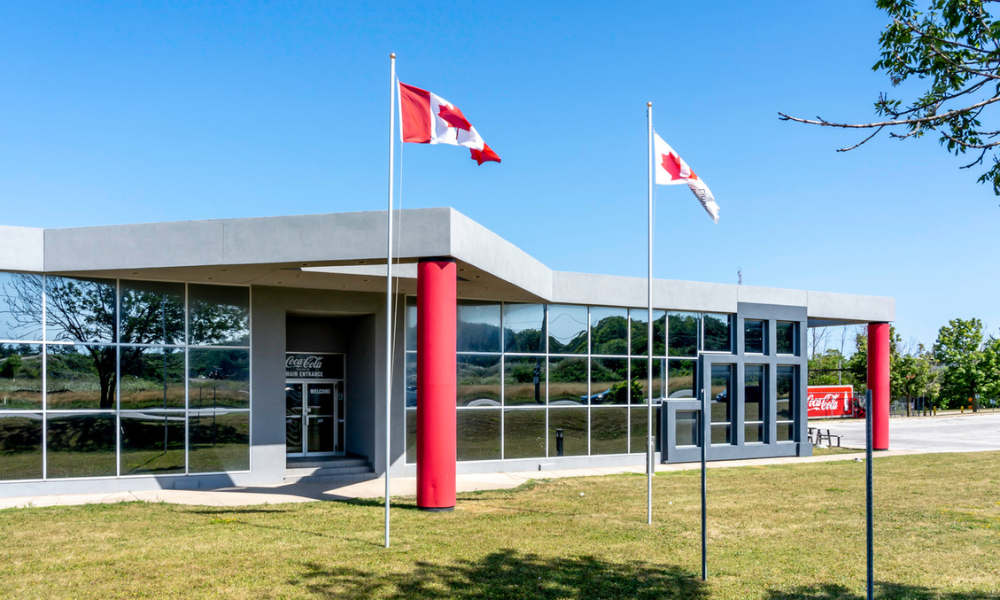
The worker was a driver/merchandiser for Coca-Cola Canada in Barrie, Ont., hired in 2014. He normally serviced between four and 15 customers each day.
When the COVID-19 pandemic arrived in 2020, Coca-Cola required all of its employees across Canada to complete a COVID-19 daily check-in before entering its facilities and starting work. The check-in required employees to disclose whether they were suffering from COVID-19-associated symptoms, whether they had been in contact with someone diagnosed with the infection, whether they had been directed to isolate, or whether they had travelled outside the country recently.
Coca-Cola also implemented safety measures such as a screening App, requiring employees to wear masks, occasional temperature checks, fobs that identified close contact with infected employees, decreased capacity in gathering areas, segregated driver routes, plexiglass dividers in lunchrooms, deep cleaning, and supplying masks, hand sanitizer, and gloves to employees.
Employees were allowed to say that they preferred not to answer whether they were vaccinated or not in the daily check-in, until September 2021 when they had to answer yes or no. The worker always stated that he preferred not to answer the vaccination question and after September 2021 refused to disclose his vaccination status. He believed that revealing his status would disclose his views on vaccination, which was private information he didn’t have to disclose. This led to one-day, three-day, and five-day suspensions.
Final warning
On Oct. 12, Coca-Cola sent the worker a final warning that explained that the vaccination mandate was a health and safety measure to protect employees. The company noted that it had had several facility closures related to the pandemic and more than 250 positive cases with at least one death at the facility. It went one to say that it could dismiss him for cause at that point, but it was giving him one last opportunity to comply by disclosing his vaccination status the next day or else he would be terminated.
The worker continued to refuse to disclose his vaccination status and Coca-Cola terminated his employment on Oct. 18 for insubordination.
A few days later, on Oct. 26, Coca-Cola issued a vaccination policy requiring employees to receive a first dose of the COVID vaccine by Dec. 1 and a second dose by Jan. 1, 2022, unless granted accommodation by the company. The policy stated that the company would educate employees about the benefits of vaccination and violations “may lead to discipline, such as suspension without pay, up to and including termination for cause.”
All employees were informed of it through crew talks with managers, emails, and postings in the workplace that continued through November. Employees who didn’t provide proof of vaccination had to participate in an education program.
Employees warned of consequences for noncompliance
On Dec. 7, the company advised employees that those who weren’t vaccinated by Jan. 1, 2022, would be required to wear face shields and later subjected to mandatory testing. In addition, continued failure to comply with the policy “will have consequences such as being subject to additional protocols and rules, including leave without pay and the possibility of significant discipline up to and including… termination.”
In January 2022, employees were advised that anyone who had not received at least one shot would be placed on an indefinite, unpaid administrative leave of absence.
In October 2022, Coca-Cola advised employees that the policy had been reviewed after consulting with a medical expert and would continue. In January 2023, the company no longer required employees to be vaccinated in order to work, but public health guidelines would continue to be followed.
On March 2, 2023, the company announced that the vaccination policy would be withdrawn on April 1. It agreed to reinstate the worker on March 13.
However, the union filed a grievance challenging the requirement for the worker to disclose his vaccination status, the appropriateness of the vaccination policy, the worker’s suspensions, and claiming back pay for the time he was held out of work.
Reasonable approach to health and safety risks from pandemic
The arbitrator found that Coca-Cola’s approach to the pandemic with its vaccination policy was reasonable and fair. It reviewed the policy on a regular basis and adapted it to the evolving conditions with expert opinons.
The arbitrator also found that the worker’s refusal to disclose his vaccination status was insubordinate and therefore deserved discipline. The requirement was related to the health and welfare of other employees, and Coca-Cola was required to do as much as was practically possible to protect its employees. In addition, the intrusion on privacy from the disclosure of vaccination status was minimal, as no other personal health information was required, said the arbitrator in agreeing with other arbitral decisions that “any privacy rights are considerably outweighed by the minimal intrusion on such rights and the enormous public health and safety interests at issue.”
The arbitrator also pointed out that Coca-Cola had suffered shutdowns during the pandemic and hundreds of employees had been infected, which affected its business, and the worker’s position involved interaction with others. This made the worker’s refusal insubordinate, the arbitrator said.
In addition, the arbitrator found that Coca-Cola took a reasonable approach to the worker’s insubordination, taking a progressive discipline approach with three gradually-increasing suspensions. When the company reached the point of dismissal, it gave the worker an additional chance to comply, but the worker refused. As a result, the dismissal was also justified, said the arbitrator.
Finally, the arbitrator determined that the worker was not entitled to any back pay after he was reinstated, since his dismissal was justified. The grievances were dismissed. See United Food and Commercial Workers, Local 175 v. Coca-Cola Canada Bottling Limited, 2023 CanLII 109733.