
Worker breached procedures and policies around leaving post, respectful behaviour
An Ontario arbitrator has upheld the seven-day suspension of a worker who left his post without a replacement and acted disrespectfully towards management.
The worker was a flexible part-time court clerk and registrar for the Ontario Ministry of the Attorney General in Toronto, hired in 2010. He had no discipline on his record.
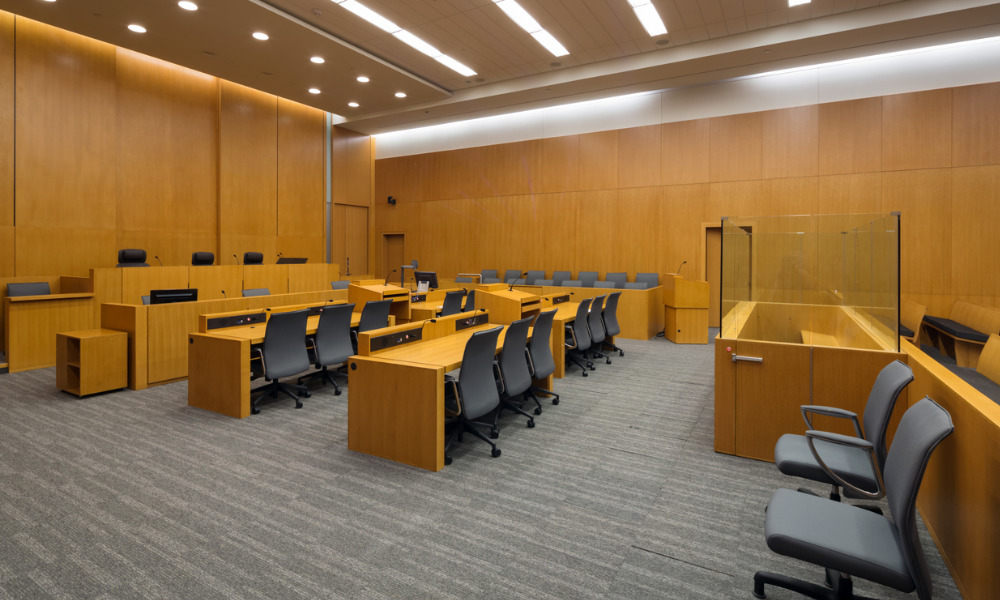
The worker’s role included tracking exhibits, maintaining and endorsing the information for each court appearance and securing the exhibits in the event of an emergency. The court clerk also had a panic button and a telephone at their desk if there was an emergency.
Court clerks were not permitted to leave a courtroom when the judge is on the bench without the permission of the judge. As court proceedings have no set start and finish time, the timing of breaks, lunch, and the end of the day was determined by the judge, as stipulated in the courtroom procedures manual.
If a court clerk had a commitment that prevented them from being in a courtroom at any time during their shift, they were required to inform the group leader as early as possible so a replacement could be arranged.
Worker wanted to leave court
On Nov. 9, 2018, the worker was walking with the judge back to court after the morning break. The judge mentioned the possibility of a special matter in the court at 1 p.m. The worker had a personal matter at that time that he wanted to handle “but not something he needed to fulfill,” but he didn’t contact the team lead because he believed it would be a short proceeding and court staff would be replaced. Shortly before 1 p.m., the special matter was confirmed to be going ahead, so the worker called his team leader then and asked to be replaced in the courtroom.
The team leader had no one to replace the worker at that point and refused. The worker called him again and then tried to reach his supervisor without success. He emailed both and left a voicemail with the supervisor asking to be replaced. About 16 minutes later, the worker got up to leave as he knew he had to be back in court at 1:45 p.m. and he needed a 30-minute lunch break for his personal matter. The judge asked him to hand her the information for the proceeding. As the worker left, the judge was heard on the audio recording to say “We do not have a clerk so that is my responsibility, I guess, right now.”
The judge also asked the worker if he was staying, to which the worker said no and that either his supervisor or team leader would be replacing him.
The worker went to the team leader’s office to say that he needed to be replaced because he had somewhere to be. According to the team leader, the worker was visibly upset and speaking loudly. The team leader said that he didn’t have a replacement and directed the worker to the supervisor.
Aggressive behaviour
The worker, who later described himself as “hyper” at the time, was anxious to attend to his personal matter and said he needed a replacement. The supervisor was calm and quiet, which the worker interpreted as not alive to his request. He stepped back and said that maybe that was less intimidating, to which the supervisor responded that she wasn’t afraid of him. He stressed that he needed be somewhere and the supervisor told him to leave. He turned and said, “Replace me, please.”
After the worker left, the team lead went to the supervisor’s office, where he found her visibly shaken. She called the manager of court operations and said that she didn’t need to go home, but needed time to get her emotions in check.
The ministry investigated and the worker said that he needed to be replaced as he had a personal engagement at lunch, and that the employer tried to “violate my rights as an employee to a lunch break.” The team leader reported that the worker was yelling and called him a snake, although he later said there was no yelling. The supervisor said that the worker was yelling and acting aggressively and got close to her at one point.
The worker claimed that he had the judge’s implicit permission to leave and lunch was normally at 1 p.m., so he had a reasonable expectation of that time. He also said that he had little notice that he would be required to be in court at 1 p.m., so he acted quickly to inform his team leader – who then refused to replace him.
Insubordinate, disrespectful behaviour
The ministry determined that the worker breached his duties and responsibilities as a court clerk and registrar by leaving the courtroom without authorization, and his “belligerent and aggressive behaviour” towards the team leader and the supervisor breached the Respectful Workplace Policy -which required employees to sustain a respectful work culture and demonstrate “standards of respectful and professional behaviour.” The ministry suspended the worker for seven days.
The union grieved the suspension, arguing that the ministry did not establish that the worker had any intent to defy the employer’s authority or refuse to obey a direction. It maintained that the seven-day suspension should be reduced.
The arbitrator found that the worker knew that he was required to be in the courtroom while the judge was on the bench and he couldn’t leave without permission. He also knew that he couldn’t expect court to end at any time and he was required to notify the team leader if he needed to leave. However, he didn’t notify the team leader at any point earlier in the day, even though he was aware of the personal matter at 1 p.m. When he finally did so, it was too late to replace him, the arbitrator said.
The arbitrator also found that if the judge implicitly gave the worker consent to leave, it was under a false representation that the worker was being replaced. As a result, the worker did not have the judge’s permission to leave the courtroom, said the arbitrator.
Lunch break not reason for departure
In addition, the arbitrator found that the worker was entitled to a lunch break, but not at a specific time, as it was established that they had to follow the court’s schedule. It was “improbable” that the reason the worker left the courtroom was the belief that he was not permitted to work through lunch, said the arbitrator, noting that the worker acknowledged that he had take part of the morning court recess as a break.
Although there were some discrepancies regarding whether the worker yelled, the evidence of both the team leader and the supervisor indicated that the worker acted aggressively and disrespectfully in contravention of the Respectful Workplace Policy. Combined with the worker’s insubordinate actions of leaving the courtroom without authorization, discipline was warranted, said the arbitrator.
The arbitrator noted that the worker had no prior discipline, but his misconduct was serious and he didn’t show any remorse or demonstrate awareness that his behaviour contributed to the situation or that his actions created potential risk in the courtroom by leaving without a replacement, due to the court clerk’s responsibilities in an emergency.
The arbitrator determined that a seven-day suspension was reasonable. See OPSEU and Ontario (Ministry of the Attorney General) (Benjamin), Re, 2023 CarswellOnt 17429.


