
Air Canada worker's discharge for insults reduced to suspension
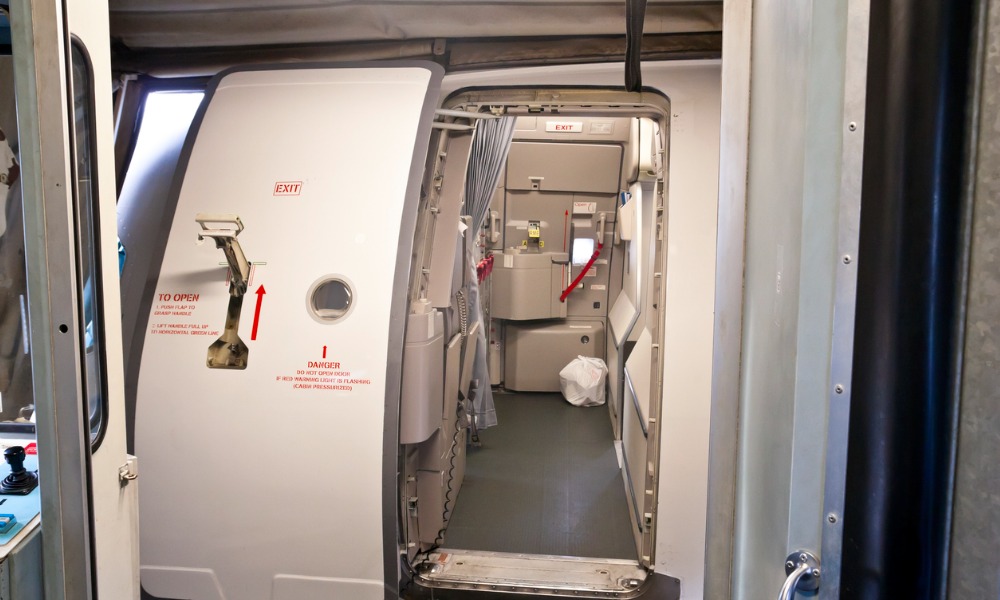
An Air Canada worker’s insulting comment towards airport security guards deserves a significant suspension but not discharge, an arbitrator has ruled.
The worker was a lead station attendant for Air Canada in Montreal who was hired in 2010.
On Sept. 6, 2022, Air Canada suspended the worker for three days for inappropriate conduct. The airline suspended him again on April 18, 2023 for similar misconduct – this time for 20 days.
On Aug. 26, 2023, the worker was asked at the last minute to take over the assignment of another lead station attendant. His colleague asked him to go to a gate for an emergency involving an unruly passenger onboard a plane, where two guards would be waiting for him to open the plane’s door.
The worker arrived at the gate, where the guards were waiting. He called his manager on the radio for further instructions, which was accepted procedure – the lead station attendance must assess the possible situations and potential risk before opening a plane door. The worker was well-versed in the procedures, as he had been in similar situations.
He was also aware that flights can have passengers sick with foreign infectious diseases or customs issues, which could result in large fines if not handled properly.
Verbal altercation
The worker’s manager told him to stand by until further information was received, so the worker didn’t open the door. The security guards asked him why he wasn’t opening it, and the worker explained that he didn’t know what was going on in the plane and he was waiting for authorization.
One of the guards replied that it was an emergency and “he was the law,” so the worker called his manager for an update, remarking that “the mall cops are getting aggressive.” Four more security guards arrived, huddled together for a few moments, and then one of them approached the worker and covered up his body cam.
According to the worker, the guard leaned close to his face and said, “We’re not mall cops, you need to respect us!”
The worker said that the guard was much larger than he was, so he felt intimidated. He asked the guard for his name and said that he would be filing a report over intimidating and aggressive comments, to which the guard replied, “It’s right here. Do you think you’re smart enough to read it?”
The worker’s manager called on the radio and said it was safe to open the plane door. The worker saw his ramp manager arrive at the gate, so he waited for him to open the door as he was getting worried about the guards’ aggressive behaviour. They opened the door as a seventh guard arrived.
The latest arrival forced his way in as soon as the worker opened the door and brushed against him. The worker then went outside to offload the plane.
Suspension and termination
Afterwards, the worker filled out an incident report and left it in a manager’s office. He tried to file a police report against the security guard who had approached him, but the police declined to take the complaint.
The worker heard nothing about the incident until Air Canada advised him that the security guards had made a complaint against him for the “mall cop” comment. The company then suspended him pending an investigation, after which he was discharged for “insubordination and use of derogatory terms paired with his prior offences.”
The union grieved the discharge, arguing that the worker acted accordingly by waiting to open the door until he received further information and the security guards didn’t hold any authority over the worker. It also maintained that the “mall cop” comment wasn’t derogatory or belittling language that justified termination, particularly since they weren’t used in an aggressive manner or directed at the guards.
The worker testified that he recognized using “mall cops” was a poor choice of words and expressed remorse. He also said that he pursued personal therapy about the way he sometimes acted towards people.
No insubordination
The arbitrator noted that insubordination had three elements – there must be a clear order, the order must be given by someone in a position of authority, and the order must not have been followed. The arbitrator agreed with the union that the security guards held no authority over the worker, so his refusal to open the door on their instruction wasn’t insubordination.
The arbitrator added that the security guards weren’t acting in lieu of law enforcement, so there was only “a limited expectancy to collaborate as they were simply a third party with no clear authority, be it by rank or legal standing.”
As for the use of derogatory terms, the arbitrator noted that “to be rude, a comment must go against general politeness and social norms of acceptability” and an insult must “attack or demean a person’s individual characteristics.” Although the union suggested that the term “mall cops” is accepted as a comedic commentary, the arbitrator found that it could demean or undermine someone because of their job. The reaction of the guards demonstrated that they saw it as demeaning and they asked the worker not to use the term, the arbitrator said.
As a result, the arbitrator determined that the worker’s use of the term “mall cops was insulting and a breach of his obligation of courtesy in his employment contract. However, the insult was not towards a client or a third party directly linked to Air Canada’s activities, so it didn’t potentially damage the company’s image or reputation that could affect its business, said the arbitrator.
The arbitrator also found that the worker recognized that his conduct wasn’t appropriate and apologized, and the use of the insulting term was part of a radio communication, making it more likely it was a lapse in judgement than an intentional attempt to hurt. In addition, the worker had 13 years of service with Air Canada, said the arbitrator in finding that termination was excessive.
However, the worker had two prior disciplinary suspensions, so discipline should be significant, said the arbitrator. As a result, the arbitrator determined that the worker should be reinstated with a 40-day suspension on his record and compensation for any lost wages and seniority outside of the 40 days. See International Association of Machinists and Aerospace Workers District 140 (lamaw) v. Air Canada, 2024 CanLII 51117.


