
Worker pointed to disagreements in religious discussions, personality clashes
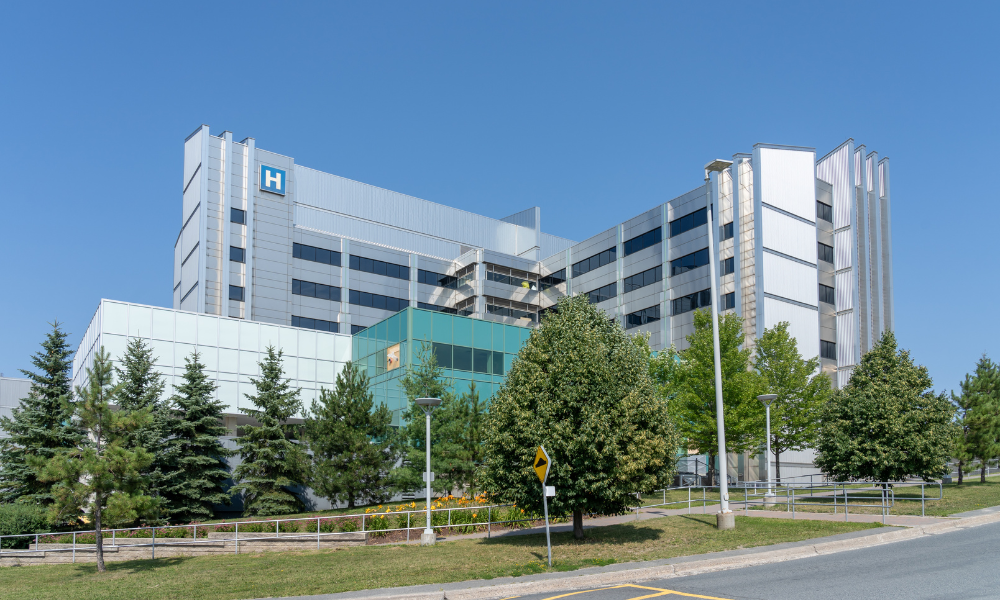
The Ontario Human Rights Tribunal has dismissed a worker’s application alleging workplace discrimination and reprisal because the worker failed to establish a sufficient factual link between the employer’s conduct and any grounds protected under the province’s Human Rights Code.
The worker was hired in February 2019 as a chaplain in the spiritual and religious care department of Health Sciences North (HSN), a regional resource and referral centre and teaching hospital in Sudbury, Ont. Chaplain services were provided by the department on a non-denominational basis.
When the worker was hired, his employment was contingent upon him obtaining a permanent certificate of registration with the College of Registered Psychotherapists of Ontario (CRPO) by April 30, 2020. Two other chaplains at HSN who were registered with the CRPO were assigned to supervise and mentor the worker during his employment.
However, the worker was unsuccessful in obtaining the certificate from the CRPO, so HSN terminated his employment on April 30, 2020.
Allegation of discrimination based on race, creed
On June 11, the worker filed a human rights application alleging discrimination and reprisal with respect to employment because of race, ancestry, ethnic origin, and creed. He claimed that the two other chaplains subjected him to “systemic harassment and discrimination” that was condoned by HSN.
The worker said that he identified as “a humanist and Canadian who is Jewish” and the other chaplains, who had been at HSN for a long time, didn’t like his “ideas, inquisitiveness and professional approach” and they only criticized him with harassment and discrimination. He referred to multiple incidents involving conflict between the Christian, Jewish, and non-denominational services within the department.
The tribunal noted that its jurisdiction was limited to enforcement of the Ontario Human Rights Code and it couldn’t make findings on “general allegations of unfairness unrelated to the code.” It also noted that every person “by virtue of their humanity” identified with at least one protected ground under the code and many would suffer adverse treatment, but the code doesn’t assume that all adverse treatment is discriminatory.
The tribunal found that, while the worker identified himself as “a humanist and Canadian,” he didn’t identify his race, ancestry, or ethnic origin or any factual basis to link these grounds to his treatment by the other chaplains or HSN. The worker mentioned that he was Jewish, but he didn’t provide evidence linking his treatment to his faith, either, said the tribunal.
Adverse treatment
The tribunal also found that the worker wasn’t happy with the mentoring he received from the other chaplains, but had no proof that it was related to a ground protected by the code. It was likely that the other chaplains engaged the worker in discussions where personal religious views could conflict with the non-denominational services of the department, but the worker would have to prove that the way they treated him was arbitrary based on his religion or creed, the tribunal said.
“It is not enough for an applicant to assert that he has an enumerated ground and has received adverse treatment,” said the tribunal. “A bald assertion that the adverse treatment he received was because of his code-enumerated ground is not enough to provide the required factual basis.”
The worker also alleged reprisal stemming from a proposed “conflict resolution” meeting following his complaints, but there was no indication, other than the worker’s own belief, that this meeting was intended as a reprisal for the worker enforcing a right or participating in proceedings under the code, the tribunal said.
The tribunal dismissed the worker’s application, noting that it didn’t have jurisdiction to assess whether the other chaplains were receptive or not to the worker’s ideas or any personality clashes led to unfair treatment, without a link to a code-protected ground.


