
Workers on leave for more than two years, but retained as employees
A British Columbia employer had the right to discharge employees on long-term disability leave who had no reasonable prospect of returning to work, but it could not due to a long-term past practice of leaving them on the payroll receiving health benefits, an arbitrator has ruled.
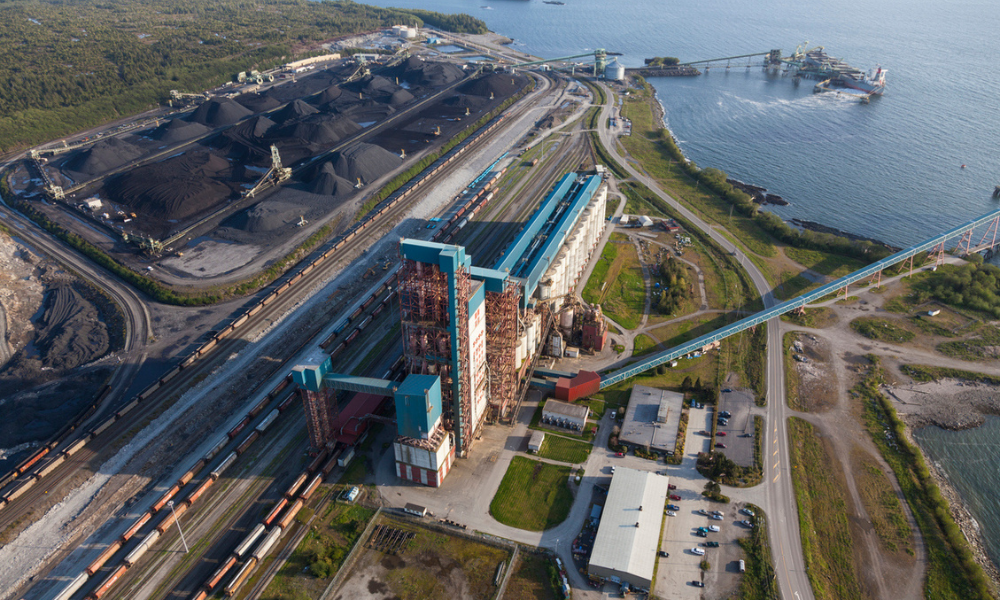
In December 2019, Trigon Pacific Terminals took over a deep-sea shipping terminal in Prince Rupert, BC. The terminal was previously operated by the federal government and there was an existing collective agreement with its unionized workforce.
The collective agreement included a definition of “regular employee” that meant all employees in the bargaining unit who had successfully completed their probationary period. It also provided for health and welfare benefits to any employee “who is customarily scheduled to work 20 or more hours per week.”
The company’s long-term disability (LTD) plan provided 70 per cent of a monthly base pay to a maximum of $6,500 per month until age 65. Since 2001, the operator of the terminal did not formally request medical updates from employees receiving LTD benefits and no employees receiving LTD benefits for more than 24 months were terminated.
Employees on LTD leave for more than two years
When Trigon became the employer at the terminal, there were six employees who had been receiving LTD benefits for more than 24 months but were still receiving benefits under the benefits plan. Entitlement to the benefits plan for employees on LTD leave wasn’t discussed during collective bargaining in 2021 and early 2022.
In 2022, after a new collective agreement was signed, Trigon reviewed the medical information it had on file for four of the employees on LTD leave and requested a medical update from their doctor either confirming that they were unable to work in any capacity or providing an estimated return to work timeline. The company advised that their employment would end for non-culpable reasons if the doctors confirmed that they were unable to work in any capacity for the foreseeable future or there was no response to its inquiries.
Trigon didn’t receive any information indicating that any of the four employees would be able to return in the foreseeable future, so it terminated their employment. Their LTD benefits were not affected, but they were no longer members of Trigon’s medical benefits plan because they weren’t employees.
The union challenged the dismissal of the LTD employees for non-culpable cause. It argued that the collective agreement “combined with a lengthy uninterrupted conduct amounting to past practice” assured that employees absent from work because of illness or injury would not be terminated for non-culpable cause and would continue to be covered by the health benefit plan. The definition of “regular employee” included employees who were customarily scheduled for 20 or more hours per week, regardless of whether they had to go off work due to illness or injury – which the employees on LTD leave were, the union said. It also argued that, in the alternative, Trigon should not be entitled to terminate their employment until the current collective agreement expired.
Employer’s right to terminate
Trigon maintained that it had the right to terminate the employment of employees who have remained off work and in receipt of LTD benefits for a significant period of time where there is no reasonable prospect of them returning to work in the foreseeable future.
The arbitrator noted that contract language should be interpreted according to their plain meaning with the intention of discovering the mutual intention of the parties. It has also been established that employers have a right to discharge workers for non-culpable cause if here was no reasonable likelihood of them returning to active employment, unless a collective agreement explicitly restricted it or the discharge deprived the employee of a benefit tied to their absence.
The arbitrator found that a reasonable interpretation of the collective agreement’s eligibility requirements for benefits was to continue coverage for employees who are eligible when absent on a leave, as indicated with the phrase “customarily scheduled,” but to exclude employees who weren’t scheduled to work 20 hours or more per week.
“I accept that there is a clear intention to continue coverage of the benefit coverage to those off work ill, but not so far as to extend that coverage despite no reasonable likelihood of return,” said the arbitrator.
The arbitrator also found that the status of “employee” was subject to dismissal for cause, including non-culpable cause.
Past practice ‘unequivocal representation’
However, the arbitrator agreed that there was a “significant, unequivocal and uniform past practice of not terminating the employment of individuals on LTD no matter the length of absence, and consistent with that information, medical updates were not requested.” Trigon argued that it was unaware of the practice when it purchased the terminal, but it knew or ought to have known at a senior level if it did its due diligence, the arbitrator said in finding that the past practice was “an unequivocal representation” that the practice would continue.
The arbitrator determined that the collective agreement did not express an intent to subvert Trigon’s right to terminate employees who had no reasonable prospect of returning to work. However, given the past practice, Trigon was not permitted to change the practice until the union had the opportunity to negotiate it in the next round of collective bargaining.
Trigon was ordered to reinstate the discharged workers on LTD leave retroactively to their dismissal dates and compensate them for expenses they incurred that would have been covered by their health benefits as employees. See Trigon Pacific Terminals Ltd. v. International Longshore and Warehouse Union Canada, Local 523, 2023 Can LII 111663.


