
CPR accommodated worker with substance abuse issues for eight years but prognosis was poor
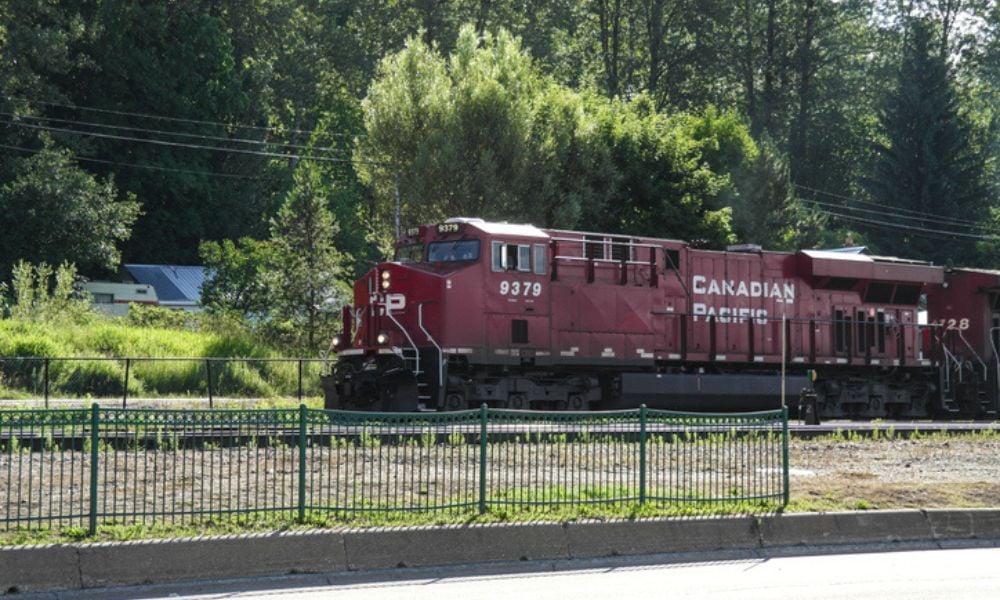
The Canadian Pacific Railway reached undue hardship after a worker with a substance abuse disorder suffered a third relapse while on a last-chance agreement, an arbitrator has ruled.
The worker was hired in 2011 by Canadian Pacific Railway (CPR) as a track maintenance foreman. In February 2022, he was found in a sleeping position while on duty, for which he received a 30-day suspension and a six-month restriction from occupying his position.
In April 2013, the worker lost his driver’s licence due to alcohol consumption. CPR accommodated him in a track maintainer position, which is safety-sensitive. However, it soon became evident that the worker suffered from a substance abuse disorder.
Four months after losing his driver’s licence, the worker entered into a “confidential contract for successful treatment” with CPR, which required him to obtain treatment for his substance abuse disorder and comply with any rules from the treatment. The agreement stipulated that he would be withheld from service if he breached the contract.
Unfit for work
The worker underwent treatment and continued to work with CPR for more than four years. However, in early 2018, an investigation found that the worker had reported for duty in an unfit condition.
CPR offered the worker a last-chance agreement in May 2018, providing for unannounced random drug testing for two years. The worker completed the two-year period without any failed drug tests.
In the fall of 2021, the worker took a medical leave for what his doctor called mental health issues. Before the worker could return to work, he had to complete a fitness-for-work assessment, which concluded that the worker needed to undergo a substance abuse professional (SAP) assessment.
The worker was resistant to the SAP interview process and refused to be forthcoming about his past or present substance issues. He got angry when the SAP questioned him and used foul language, demonstrated a lack of in sight into his problems, and told the SAP to “write down whatever would make him look good.”
Last-chance agreement
On Dec. 22, the worker, CPR, and the union executed a tripartite agreement that included a section on “relapse prevention.” This section required total abstinence from all drugs, including alcohol and cannabis. The agreement allowed CPR to terminate the worker’s employment for failing to disclose a relapse, using prohibited substances prior to an incident, or a positive biologic test. Any other violation would be cause for discipline.
The agreement also limited the scope of any grievance to be for the purpose of determining if the worker violated the agreement. If so, an arbitrator could not substitute a penalty less than termination.
On March 17, 2022, the worker informed CPR that he had relapsed two weeks prior by using alcohol, cannabis, and cocaine during his 30-day suspension for sleeping on the job. A biologic test scheduled for the next day was cancelled.
CPR terminated the worker’s employment in May for violating the agreement. The railway’s disability management staff determined that his prognosis was poor, he lacked insight into his condition, and he had entered treatment programs twice. As a result, CPR didn’t think another round of treatment would work.
The union filed a grievance, alleging that CPR didn’t meet its duty to accommodate the worker’s substance abuse disorder, which was a disability.
Statutory obligations prevail
The arbitrator noted that last-chance agreements should be given deference, but they could not contract out of statutory employment and human rights obligations when a disability is involved. As a result, the issue of accommodation to the point of undue hardship was still relevant.
The arbitrator found that the relapse leading to the worker’s dismissal was his third relapse. CPR accommodated him in a different position after he lost his licence in 2013 and then entered into a treatment agreement with CPR. These constituted two opportunities for the worker to understand that he needed to overcome his addiction to remain employed with CPR, the arbitrator said.
The worker suffered his first relapse in 2018 and CPR provided a relapse agreement – his third opportunity to remain employed, said the arbitrator. A second relapse occurred in the fall of 2021 that was discovered by the fitness-for-work assessment, leading to the tripartite agreement that provided a fourth opportunity, the arbitrator added.
In March 2022, the worker’s disclosure of a relapse was in fact his third relapse and occurred less than three months after the last-chance agreement. This showed a trend of the worker’s relapses occurring closer together, which raised questions over whether the worker was succeeding in overcoming his addiction, said the arbitrator.
The arbitrator found that, although the worker self-disclosed his third relapse, he did so two weeks after it occurred and just before a biologic test that he knew he would fail. This raised a concern that he wouldn’t report future relapses in a timely manner, said the arbitrator.
The arbitrator determined that CPR met its duty to accommodate by keeping the worker employed for eight years while he fought his addiction, and it would be undue hardship to give him a fifth opportunity to continue his employment – his disorder was considered severe, his prognosis was poor, and his relapses were increasing in frequency.
The grievance was dismissed. See Canadian Pacific Kansas City Railway and Teamsters Canada Rail Conference (Hadley), Re, 2023 CarswellNat 2979.


