
Business travel has gotten riskier with increased scrutiny from U.S., say experts speaking to Canadian HR Reporter, offering tips for employers
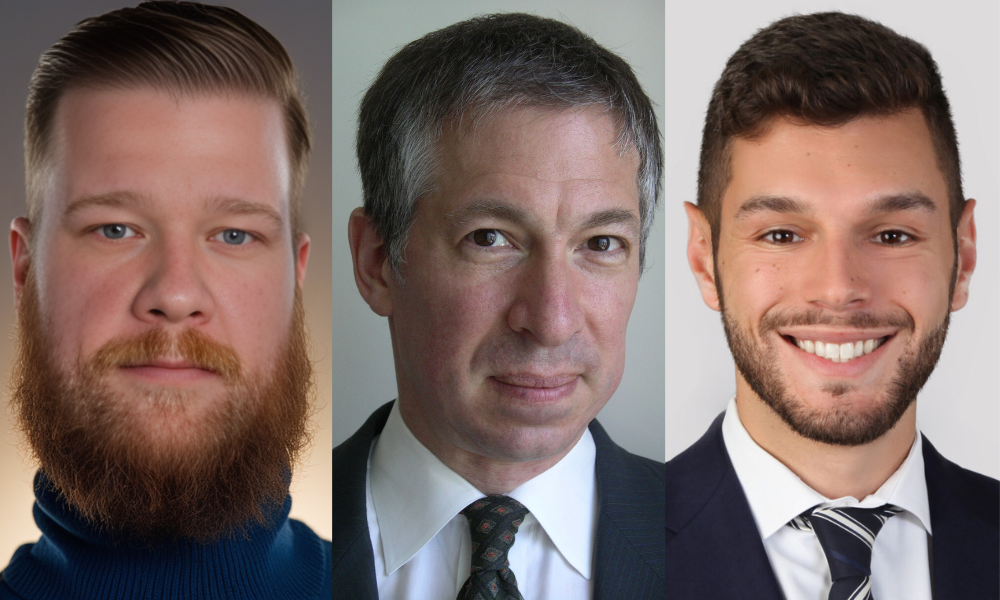
“It's going to be a rough four years,” says Kevin Duska, founder and president of the Prime Rogue, a private intelligence firm in Calgary.
So says immigration lawyer Richard Kurland, in discussing the challenges for many Canadians looking to cross the border into the United States amid increased scrutiny from that administration.
“The reality is that this summer, right into the fall, is not going to be pleasant… basically, the 10,000-metre view is that the playbook from the first Trump administration is being wheeled out for use again.”
His comments follow recent headlines that have garnered attention and concern for many considering a trip to the U.S.:
“I’m the Canadian who was detained by Ice for two weeks. It felt like I had been kidnapped” (The Guardian); “‘Breakdown of rule of law’: McGill professor cancels trips to U.S. amid immigration crackdown” (CTV news); “Trump’s stronger stance on border security leads to trouble for Canadians driving into the U.S.” (CityNews).
Just this week, the Université de Montréal issued guidelines to students and staff who will be travelling to the United States for academic purposes because of growing anxiety among members of the community.
But what does it all mean? Are these incidents being overblown and it should be business as usual — or should travellers be reconsidering their trips to the U.S.?
Three experts speaking to Canadian HR Reporter have varied responses to the current situation — but all agree that greater caution is advised.
Friendly border ‘dangerous assumption’
“It's going to be a rough four years,” says Kevin Duska, founder and president of the Skolvarg Group, a private intelligence firm in Calgary.
“We still think of the U.S. as a friendly, rules-based country, but that's a dangerous assumption.”
In ‘crawling’ about 20 different social media platforms at once, Duska’s company has seen a 250% increase in rhetoric pertaining to arbitrary detentions of Canadians at the U.S.-Canada border.
“I believe this is the new normal. Crossing into the US in 2025 is — I know this might sound hyperbolic — but it's kind of like entering Moscow or Beijing,” he says.
“I know some of this sounds alarmist, but the issue is that we're in a situation where Trump has falsely labeled Canada as a national security and drug threat via the fentanyl thing.”
‘Do not stop travelling’
Benjamin Green is more subdued in characterizing the situation.
“Look, life goes on. We're still seeing our clients go across the border every day. Visas are being issued every day. Business travellers are getting in every day,” says the senior associate lawyer at Green and Spiegel in Toronto.
But he also admits that people who normally “breeze through the border” are facing a “decent amount of questioning.”
“We do expect, and are seeing, increased scrutiny for sure,” says Green. “While the rules are the same and there have been no changes to the laws themselves, we are definitely seeing a pattern of the refs calling the game tighter. [For example] where someone had an issue in their past that they thought they were behind, all of a sudden, it's back again.”
Nevertheless, he says he is optimistic that things are going to cool off — and knowing the context behind the alarming headlines is important.
Vulnerable groups at U.S. border
“People absolutely do not need to stop travelling, we’re not there yet,” says Green — unless they fall into two buckets.
“If that's the case, maybe it's time to consider if you need to go to the States this time.”
These include people with a previous immigration or criminality issue, he says.
“Maybe you've done something in your past or recently that the administration doesn't like.”
As for political speech, a tweet here or there, or a forwarded message from a friend isn't going to affect your ability to enter, but more extreme cases could be a problem, says Green.
“The political speech that I have seen going too far — and reasonable people can disagree about this, for sure, obviously — is like ‘I left the United States and I attended the leader of Hezbollah's funeral,’” he says, citing the case of a Brown University professor who was deported to Lebanon.
No guarantees with Canadian passport
Every contact with a border officer entails risk, says Kurland, an attorney at Kurland, Tobe in Vancouver.
“In Canada, only Canadians and permanent residents and First Nations have the right to enter Canada — for everyone else, it's a privilege. Going in the other direction, if you're not a United States citizen or Green Card holder, who are you? It's up to the officer.
So, is there a risk entering the United States if you’re not a citizen or permanent resident?
“You bet. Does it make a difference if I've always been back and forth? No, it does not — and it gets worse… even though you hold a Canadian passport, if you are also a citizen of another country or you were born in another country, the incoming or existing American rules regarding foreign nationals of countries like Iran or Pakistan are going to be subject to these new U.S. interpretations and new enforcement processes.”
With different prioritizations and levels of enforcement for the intake of foreign nationals to the United States, that could have “lifelong consequences” for business travellers, says Kurland. “It's always going to be in that database.”
As part of an executive order, Trump has also brought in a new rule that will require foreign nationals, including Canadians, visiting the U.S. for 30 days or more to register.
“That's going to hoop of awful lot of people who don't realize that they had to report,” says Kurland.
Alien Enemies Act targets ‘vulnerable’
While anybody can be targeted at the U.S. border, the highest risk people are those who tend to be “vulnerable,” says Duska, such as racialized travelers, members of the LGBTQ+ community, dual citizens and anyone who has been critical of US policy online.
Plus, people who work in industries targeted by tariffs may face delays, he says.
“I would think that they might be subject to very high levels of scrutiny when crossing so there's also this industry- or sector-specific dimension to it.”
Also more susceptible to scrutiny? Canadians who travel through the U.S. to get to overseas destinations, says Duska.
“You don't need to go through U.S. immigration but you're still subject to arbitrary detention at any time when you're in that transit zone, so that's another axis of vulnerability,” he says.
The presidency is basically deploying the Alien Enemies Act, says Duska, which is a 1798 law that gives the U.S. president the power to deport or detain any foreign national from a “hostile” country — without charges, without trial and without any consular access.
“Under this directive, ICE and DHS have been empowered to hold foreign nationals based on any vague, made-up, national security concern, and that includes Canadians. So that's how you end up in a holding cell with no phone, no lawyer and no timeline,” he says.
Protecting American jobs
Another possible concern at the border aligns with the U.S. government’s heightened focus on U.S. jobs. Many Canadians cross the border with a B-1 visa for temporary business visitors, says Duska, but now may be accused of taking American jobs.
“We've seen an uptick in secondary arbitrary detention or arbitrary refusal based on that, which is completely pretextual,” he says.
“It can also affect security clearances… if someone holds a low-level security clearance working in [for example] engineering for Bombardier or DeHavilland... that could mess with their next review. So, it could affect employment in many intersecting ways.”
If you fall into a certain category, it's always advisable to get a visa if you're worried, says Green, such as a salesperson attending a conference.
“This is where we get into the gray area... What's the difference between perspective sales and the business meeting?”
Reducing the risk: pre-clearance
In looking at possible ways to reduce the risk or the concerns, Canadian travellers should consider U.S. customs pre-clearance in Canada. These are available at major international airports such as Calgary, Montreal and Toronto.
That way, if challenged by security, people can always withdraw, says Green, as with a land border.
“You can always just go, ‘You know what? This conversation isn't going my way. I'm going to go talk to my lawyer. I'm going to go talk to my HR. I'm withdrawing my admission today,’” he says. “That's always available to Canadians, but that's kind of the only lever we have is to take our ball and go home.”
Duska agrees, because if someone is in Canadian territory and then asked to go for a secondary inspection, they can simply withdraw their application to enter the United States.
“If they don't return your travel documents immediately, that's a diplomatic incident, and you can call CBSA there, because it actually becomes a law enforcement issue and an illegal detention if you're at an American point of entry. Those are liminal spaces.”
Reducing the risk: personal devices
Stories have also emerged of travellers seeing their personal devices, such as cellphones and laptops, being searched by border guards. But does that mean people should wipe their phones of all personal data, or take an alternate device?
“There's no data to support something like that,” says Kurland. “There's no data to support that political opinion results in a border officer decision one way or the other. So, in the absence of any data, now, you just can't go there.
“But if you're part of social media, a chat group, where you have stuff where you're a Hamas supporter [for example], that's a problem.”
It’s probably “extreme” to suggest people wipe their phones, says Green.
“Those device checks, per U.S. Customs and Border Patrol, happen in less than half of one per cent of all cases. So, it's not like it's a willy nilly thing that's going on every day, and it's not something that an officer will do sight unseen. That investigation happens as part of a larger narrative — maybe you don't have the right answer to something, or you've got this negative immigration history, and you're in secondary and they have you on a list.”
A business traveller going to Vegas for a conference, for example, shouldn’t face that kind of scrutiny, he says: “That happens with a larger sequence of events that can lead to it.”
But Duska advises people to never carry a device they care about, and says wiping a phone’s data won’t necessarily work because the device ID and password will still be logged.
“There's this myth that U.S. border security and ICE can't look at your cloud data. And no, they can't directly, but what they can do is they can send an immediate tasking for your cloud data to be examined by a secondary or tertiary American agency without a warrant or with a warrant that is invisible to you due to the FISA process.”
Instead, travellers might want to carry a virgin burner phone that's not logged into any email they care about, he says, and install any apps after they cross the border.
Reducing the risk: reassurances from HR
One important way to reduce the risks – and provide reassurances – is to do prep calls with employees and talk them through the circumstances, says Green.
“What is appropriate to say? When is it appropriate to say? Always instruct them to be honest and answer the questions… Nobody's doing anything illegal, but just give them that added sense of comfort of ‘I know what I can expect. I've got my employer’s support. I'm traveling on a round-trip ticket. I've got my hotel booked if they ask me.’”
And providing the traveller with a ‘pocket letter’ that outlines the legal grounding for the trip can also make people feel better, he says.
Apprising the traveller of the risk, preferably in writing and consents, is important, says Kurland.
“It's not enough knowing the risk — you have to have a plan. So, if you do not show up at your destination, if you disappear for a few days, who's taking care of the kids, the pets, watering the plants?” he says. “Who's being contacted? That's a serious thing. It hasn't been in the past, it is now.”


