
Employees protesting and expressing political views involves a balance between freedom of expression and what's appropriate in the workplace
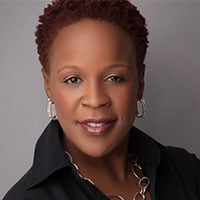
Employers often have certain standards of conduct they expect employees to follow. But in today’s often divisive political climate, more and more people are voicing their views when they don’t agree with something – the national anthem protests by professional football players in the U.S. are an example. How should employers handle situations where employees express their political views and values when it may or may not be appropriate? HR lawyer Laura Williams this hot-button issue and how it relates to workplaces away from the football field.
When NFL quarterback Colin Kaepernick began kneeling during the pre-game playing of the U.S. national anthem in 2016 to protest what he described as racial injustice towards African Americans, his actions caused an immediate stir. But few could predict the eventual furor that would sweep across the league, pit the NFL in a Twitter war with U.S. President Donald Trump and prompt dozens of other players to follow Kaepernick’s lead.
Eventually, many NFL owners began cracking down on what they deemed to be disrespectful and unpatriotic behaviour — and a potential detriment to their carefully-crafted brand — just as players continued to defy their entreaties to stand during the anthem. Because the field is the players’ workplace, owners felt a right to police the actions of their players in that milieu.
Most of us wouldn’t necessarily consider a football field to be a place of work (maybe only a venue for highly-paid play?), but indeed it is. And in a place of work the employer can dictate acceptable behaviours, culture and performance expectations. Therein lies the challenge for employees who seek to express their views or take a political or social stand in the workplace. Employers can, in any case, insist that those views be kept personal, subject to human rights legislation.
Across Canada, each province has human rights legislation that defines protected grounds preventing discrimination in areas such as religion, race, creed and disability, among many others — in Ontario, for example, the list of protected grounds totals 16. But it’s only in the following jurisdictions that political beliefs are protected:
• Newfoundland and Labrador (political opinion)
• Nova Scotia (political belief, affiliation or activity)
• New Brunswick (political belief or activity)
• Prince Edward Island (political belief)
• Quebec (political convictions)
• Manitoba (political belief, political association or political activity)
• British Columbia (political belief)
• Yukon (political belief, association, or activity)
• Northwest Territories (political belief, political association).
While employees’ right to freedom of speech and expression are enshrined in the Charter of Rights and Freedoms, those protections only apply as it relates to government action.
Employers can set reasonable limitations
Much like NFL owners prohibiting certain activity on the field of play, so, too, can employers across Canada set reasonable expectations and limitations around the expression of viewpoints — however benign or controversial — by their employees.
If, for example, an employee refused to carry about his basic employment duties to protest a political stance taken by his company or the potential social implications of that company’s business activities — or actively promoted political or social beliefs in the workplace that meant she was effectively taking on an activist stance — and if that conduct becomes offensive to the point that it constitutes harassment, her organization could be justified in taking disciplinary action. In some cases, the conduct could constitute insubordination if the employee is willfully not meeting the expectations and responsibilities set out in her role.
In addition, and depending on how vocal the protest or its nature, if those actions were to have a reputational impact on the employer — say, if the employee expressed her views on social media and those views could in some way be connected to the organization and have a detrimental effect on its brand — that could be another cause for discipline, and potentially even termination. But that connection between the expression of the employee’s views and the harm to the employer’s brand or reputational interest must be reasonably demonstrated, even if only to argue the potential for harm. If the organization has suffered a measurable loss in the form of customer defections or lost revenue, then the case can possibly be made for dismissal for cause.
Last July, a group of five Canadian servicemen disrupted a Mi’kmaw ceremony and identified themselves as members of the controversial “Proud Boys” group. Shortly thereafter four of the five (one reportedly left the military for unrelated reasons) were placed on probation for violating a section of the military’s code of conduct preventing service members from doing anything in public that could “reflect discredit on the Canadian forces or any of its members.”
Bear in mind that it’s always far easier to terminate an employment relationship for cause if workplace policies exist that explicitly prohibit certain unacceptable behaviour — a point the Canadian military clearly understood and was able to leverage in this circumstance. Conduct expectation can be effectively set through a comprehensive code of conduct and social media and off-duty misconduct policy, as well as an explicit prohibition of specific activity — from physical contact to commentary — that might be considered offensive by others. Any breach of these policies could be deemed misconduct warranting discipline.
While hate speech and other language that is widely accepted as offensive can be considered a cause for discipline or termination, employers should be careful to avoid stymying an individual`s views. Simply espousing a political or social opinion may not be grounds for action.
In fact, in many workplaces, differing views are regularly exchanged in a respectful manner. It could be a part of the business culture, or simple water-cooler talk. In that case, employers should distinguish between acceptable and lawful “shop talk” and where there is a risk of conduct devolving into unacceptable conduct that could be found to be in violation of the law or workplace policies.
To the extent that activism ends up becoming bullying, harassment, or behaviour that could spark conflict in the workplace, potentially disrupting the employer’s productivity or workplace culture, it could set the stage for discipline. In some cases, the employer may simply want to remain neutral and not have any specific viewpoint connected to its brand. That’s why it’s so important to have policies outlining how views or values should be communicated across and outside the organization and, perhaps, the specific reputational interests that could be harmed by inappropriate behaviour.
Rank in organization a factor
Another important point to note is that an employer’s level of tolerance for a staff member’s protest or expression of political views is often linked to that individual’s rank and role in the company. If an employee is the “face of the franchise” a la star quarterback Kaepernick — or, in a corporate context, a top executive or salesperson, for example — an organization would have a far easier time arguing a negative brand or reputational impact if that employee’s actions can be even indirectly tied to the business.
No matter the context, employers should still deal with the matter delicately if an employee decides to “take a knee” and make a political, cultural or social statement. But they also need to remember their rights and consider the potential harmful consequences if that opinion becomes inextricably linked to their brand. It’s a difficult balancing act that’s only made more complicated in the social media era when every employee has a platform to express his beliefs.


