
Positive urinalysis test doesn't prove impairment; proof of impairment needed for discipline
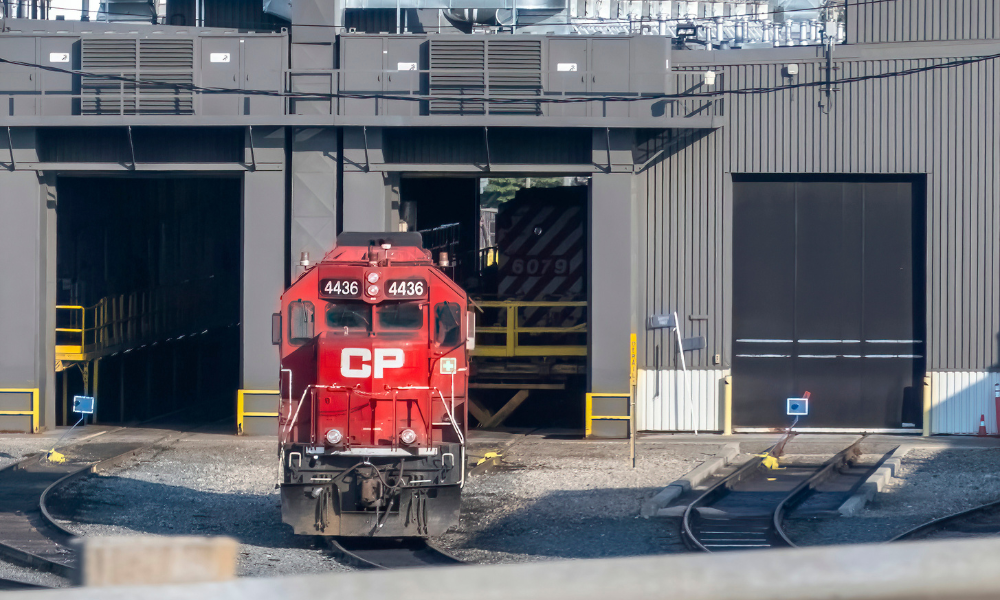
A 30-day suspension and a six-month random drug testing requirement for a railway worker whose post-incident testing was positive for cannabis use were unwarranted, a federal arbitrator has ruled.
The worker was a locomotive engineer for Canadian Pacific Kansas City Railway (CPKCR) with 28 years of seniority. He had five suspensions on his record, but none were related to drug and alcohol issues.
In 2021, CPKCR notified the union of its guidelines for positive drug and alcohol tests, which involved a 15-to-30-day suspension for a first-time violation, plus six months of unannounced substance testing. The reason for the testing was that employee and public safety were critical, so impairment on the job for employees in safety-critical positions was unacceptable.
Following an incident in which the worker failed to properly secure his train, CPKCR ordered him to undergo a standard post-incident substance test involving an oral swab, breathalyzer, and urinalysis. The worker tested negative in the oral swab and breathalyzer tests, but his urinalysis was positive for cannabis metabolites, with a quantitative level of 53 ng/ml. The worker admitted that he had consumed a marijuana candy about 16.5 hours before his shift.
Suspension after positive drug test
The company’s drug and alcohol policy banned employees from using cannabis for 28 days prior to reporting for duty, so the worker was suspended for 30 days and, once he returned, he would be subject to random, unannounced testing for six months.
The union grieved the discipline, arguing that the negative oral swab and breathalyzer test results showed that the worker wasn’t impaired while on duty, and that the presence of cannabis metabolites in his urine sample didn’t legally indicate impairment. It agreed that the worker was in a safety-critical position and post-incident testing was appropriate after the worker’s failure to secure a train, but it argued that traces of a substance shouldn’t prompt discipline or the imposition of further testing unless impairment was confirmed.
CPKCR maintained that its drug and alcohol procedure, specifically the 28-day cannabis ban, justified the suspension and subsequent random testing, arguing that employee safety in a “safety-critical” role such as locomotive engineer warranted this disciplinary response.
The arbitrator examined established jurisprudence on impairment standards, noting the long-standing principle that discipline requires evidence of impairment, not merely the presence of drug traces. The arbitrator noted that positive urinalysis alone “does not establish impairment” and prior railway arbitration decisions consistently indicated that urine tests could only show prior consumption, not current impairment or a timeframe of use.
Reasonable cause for testing
The arbitrator further referenced the Supreme Court of Canada’s decision in Communications, Energy and Paperworkers Union of Canada, Local 30 v. Irving Pulp and Paper, Ltd., 2013 SCC 34, that described the balance between workplace safety and employee privacy rights, noting that the top court determined that drug testing could only be justified with reasonable cause - such as suspected impairment at work - or if an employee was returning to work post-treatment for substance abuse. If no impairment was established, the suspension wasn’t justified, said the arbitrator.
The arbitrator also noted that random testing was applied under specific conditions - typically in instances of workplace impairment, an addiction diagnosis, or employee dishonesty during an investigation. Since the worker showed candour in admitting his marijuana use, the arbitrator ruled that further testing wouldn’t align with legal precedents justifying random testing, adding that imposing random testing “would fly in the face of the decision of the Supreme Court of Canada in Irving and [railway arbitration] jurisprudence.”
CPKCR was directed to rescind the 30-day suspension and the six-month random testing order, and compensate the worker for lost wages and other compensation resulting from the suspension.


