
Worker didn't request accommodation or provide medical information after failing assessments required for position
The duty to accommodate has two sides — it’s not just up to the employer to look for ways to accommodate a worker who says they need it.
That’s a key concept to take from a recent Canadian Human Rights Tribunal decision, in dismissing an Air Canada worker’s disability discrimination claim, says Amy Gibson, a partner at MLT Aikins in Saskatoon.
“An employee has an obligation to disclose information to the employer to allow it to fulfill its duty to accommodate — it's not enough for an employee to just say, ‘I have a disability to accommodate.’ They need to provide information, like: What needs to be accommodated? What are your restrictions so that the employer can explore what possible accommodations they can provide?”
Station attendant in Vancouver
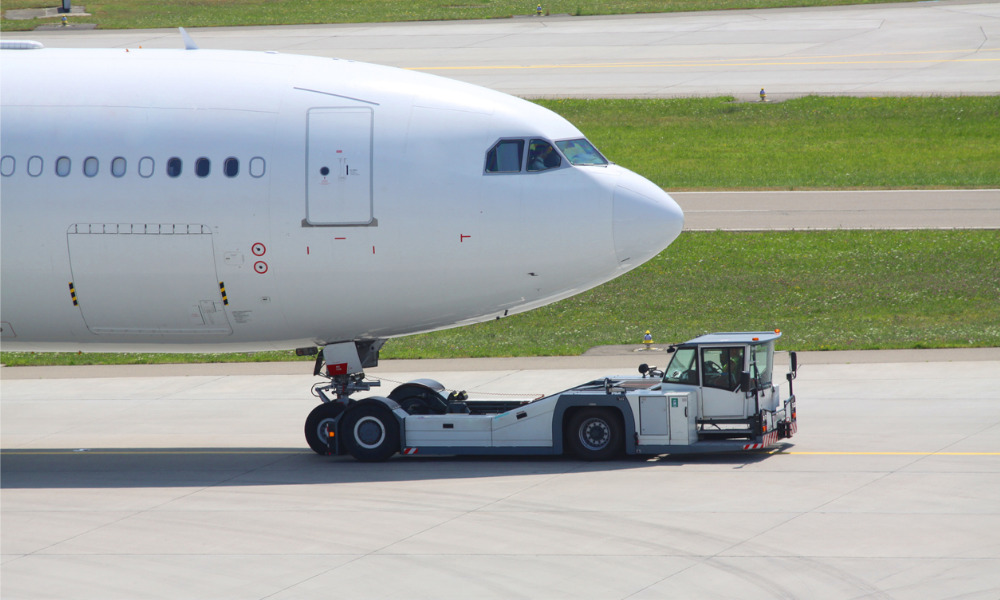
The worker was a station attendant for Air Canada at the Vancouver airport, loading and unloading cargo and baggage from aircraft as well as driving and operating ramp service vehicles. The latter included marshalling and towing aircraft between terminal gates and runways — called “pushback” in the airline business.
In 2014, the worker was involved in two motor vehicle accidents that made her nervous when driving.
In October 2015, she bid for the role of station agent – relief line, which would have her cover for absent employees. The position required her to be proficient in driving various service trucks, including small pushback trucks. She began training for these skills a month after her bid.
The worker passed all the skills tests except for the pushback test. Air Canada’s policy was that an employee had to pass the training within three attempts or it would result in administrative termination.
The worker underwent further pushback training three times between November 2015 and March 2016. Each time, she failed the pushback assessment. As a result, Air Canada administratively terminated her employment on March 7, 2016.
The worker filed a grievance, claiming that during her November 2015 pushback training, one of her trainers went home sick and this led to her not receiving her full training. Air Canada agreed to give her a fourth attempt but if she didn’t pass, she would be terminated.
The worker attended the training but once again failed the assessment. Afterwards, she told her manager that she was nervous and anxious during the assessment. The manager recommended that the worker resign instead of being administratively terminated, as this would allow her to apply for other Air Canada positions. The worker took the advice and resigned on May 11.
A duty to accommodate doesn’t mean the employee gets to choose their preferred option, says an employment lawyer.
Worker claimed disability
The following month, the worker filed a human rights complaint alleging discrimination in employment relating to disability — anxiety and post-traumatic stress disorder (PTSD) — that affected her ability to pass the pushback assessment.
The tribunal found that the worker didn’t provide any medical information that she suffered from PTSD and anxiety; her doctor had written a note stating that she had a problem with anxiety and panic attacks, but the worker didn’t provide it to Air Canada.
“If she wanted accommodation, she had a role to play and she didn't really live up to that role,” says Gibson. “While the duty to accommodate often places a heavy burden on employers, this case confirms that the obligations don't rest solely with the employer, and the employee has an obligation to participate as well, including advising their employer that they believe they require accommodation.”
The tribunal noted that the worker had been accommodated on three previous occasions for physical limitations, so she was familiar with the accommodation process at Air Canada. It also noted that “situational anxiety” was a common ailment that “is excluded from the concept of a disability” without medical proof otherwise.
That proof was needed to distinguish the worker’s condition as a disability under the Canadian Human Rights Act, says Gibson.
“[The worker] didn't provide any evidence to say [there was a disability], so I think a big factor in this case is that she didn't raise it with the employer at all,” she says. “They found her testimony, to that effect, not to be credible and they also noted that the doctor's notes that she put forward at the hearing were not provided to the employer.”
The tribunal agreed that the loss of her job was an adverse impact on the worker, but it disagreed that her anxiety was a factor in her failing the pushback assessments. Pushback required a worker to drive a tractor to push or tow an aircraft at a slow pace and the worker was unable to demonstrate her ability to do it. She passed all of her other assessments and didn’t raise a disability after any of the first three failures of the pushback assessment, said the tribunal.
The tribunal also noted that when the worker initially grieved her termination, it was because she didn’t receive full training for her first session, not for any claimed disability.
The tribunal determined that there was insufficient evidence that a disability played a role in the worker’s failure to pass the fourth pushback assessment or subsequent termination.
An employer isn’t required to accommodate an employee who acknowledges that she can’t work, the Ontario Human Rights Tribunal found.
Bona fide occupational requirement
The tribunal also found that, even if there had been a disability, the relief line of work for which the worker bid required her to fill in for absent station agents, so she had to be able to fulfill any of their duties, including operating all the types of vehicles. This was a requirement for the position that was rationally connected to the performance of the job, adopted in good faith by Air Canada, and was reasonably necessary to fulfill the purposes of the job, said the tribunal, adding that the worker understood the requirements and didn’t request accommodation at any point.
“The tribunal in this particular case went further and said, even if she had established a disability, Air Canada had demonstrated a bona fide occupational requirement,” says Gibson. “There's a three-part test set out within the decision and it established that Air Canada had met that requirement and wouldn't have been able to accommodate her.”
The tribunal’s dismissal of the complaint serves as a reminder about the responsibilities of both sides when it comes to accommodation, says Gibson.
However, employers may have to take the initiative if they think an employee might need accommodation.
“This was touched on in the decision — it’s not enough for an employer to read into something, and had the employee provided additional information maybe they would have had to look into it further,” says Gibson. “The takeaway for employers is to be conscious of the fact that the duty to accommodate could arise in performance or discipline issues and there could be circumstances where it would trigger an employer's duty to inquire about a disability requiring accommodation.”
“The best way for an employer to find out if that's triggered is to have a discussion with the employee about that performance or disciplinary issue to get their side of the story.”
See Sampat v. Air Canada, 2021 CHRT 38.


