
Vancouver hotel 'caught red-handed and decided to comply'

The B.C. labour board recently ruled an employer was guilty of hiring replacement workers during a long and protracted strike.
Radisson Blu Vancouver Airport Hotel will also have to allow in an outside party to ensure no further breaches are committed.
Not only was the hotel formally sanctioned, a special investigating officer will be brought in to “randomly inspect” the premises, according to the union, Unite Here, Local 40.
“This is part of the remedy that we had negotiated with the company through the board to say that, given the number of breaches, they were willing to agree to the inspection, which we think is the right way to go here,” says Michelle Travis, spokesperson for Unite Here in Vancouver.
For B.C. employers, when a walkout happens, no replacement workers are allowed to be hired and organizations must take note of this type of ruling, says Jennifer Fantini, partner in labour relations and employment law at BLG in Vancouver.
“What happened is that there was an unfair labour practice complaint brought by the union and the employer admitted to the breaches and entered into some consent orders to resolve it,” she says.
“They were hiring replacement workers to try to get up and running again, and got caught so, clearly, they were in breach of the labour code in B.C. It happens from time to time that employers have these bad ideas and it looks like that’s what happened in this case, and the employer put their hands up and said: ‘You’re right, we’re in breach of the act.’ They got caught red-handed and decided to comply, which was wise in the circumstances.”
Fight to protect long-term jobs
The strike began in 2021, and revolves around the termination of 143 long-term workers, says the union.
Radisson Blu was also trying to impose a “deeply concessionary contract” says Travis, even though it was earning money through the federal government as a quarantine hotel during the early days of the COVID pandemic.
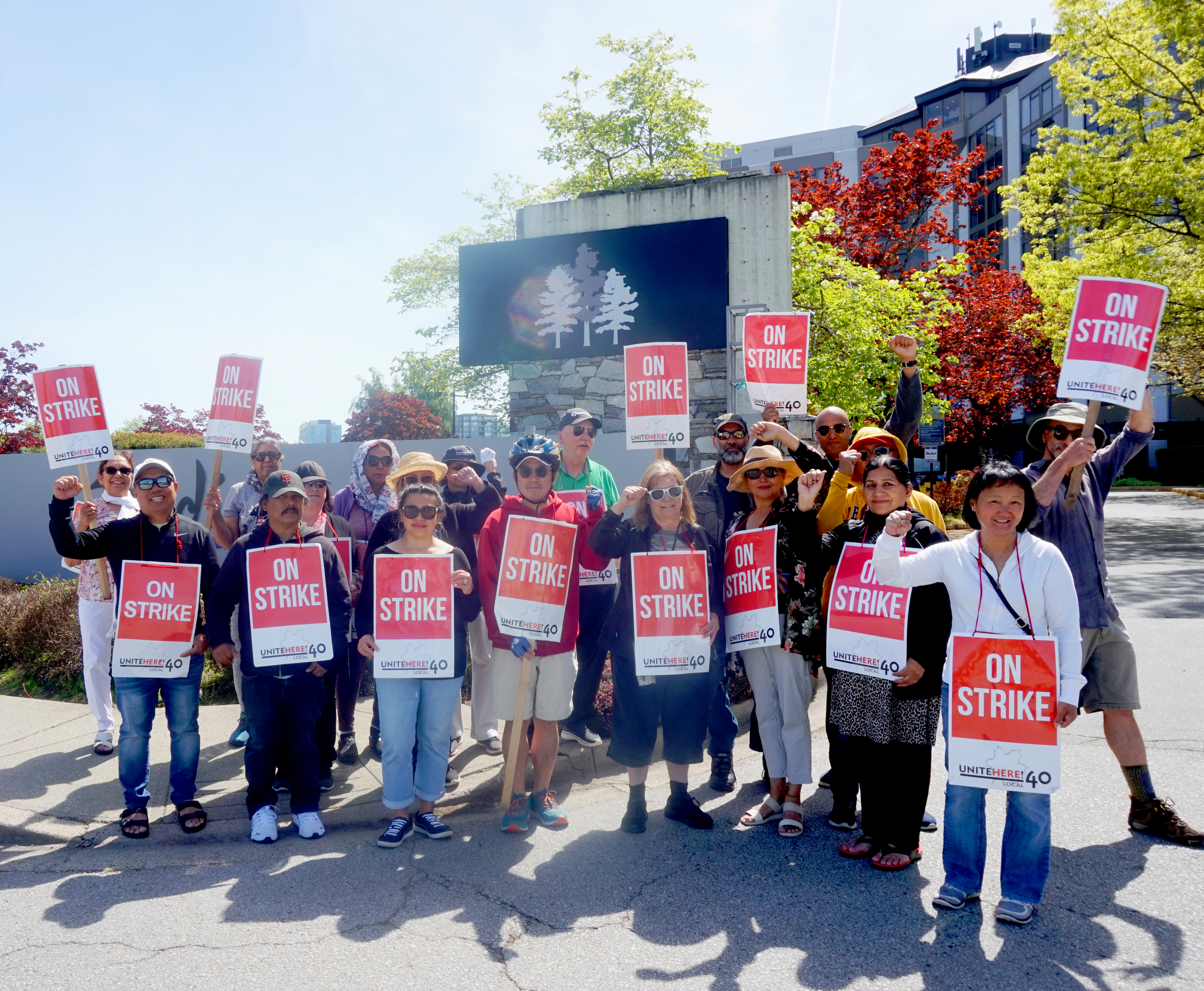
“Workers went on strike to push back against the terminations. These are folks who been working in the hotel for over 40 years and, the average worker there has long tenure inside the hotel. Workers are very concerned about what they were seeing [and] about what’s happening to their coworkers and, frankly, they saw their employer try to take advantage of the pandemic to force out unionized workers and undermine their collective agreement," says Travis.
What are the rules around replacements?
The ruling illustrates some of the pitfalls B.C. employers may face during a job action, according to Fantini.
“An employer can’t use the services of person who is hired to do that work after a notice to bargain is given or bargaining has actually started. Once a union and employer either enter into a first collective agreement or after collective agreement expires, one of the parties will serve notice to bargain to get together and bargain a collective agreement.”
“So once that has happened, that employers can’t then hire new people to do the work of the striking employees,” she says.
Earlier this year, another hotel was found to be using six replacement workers, which illustrates the “constant struggle” between employers and striking employees, says another lawyer.
No outside replacements allowed
Employers are also forbidden to bring in workers from another location, says Fantini.
“They also can’t use replacement workers who normally work at another of the employer’s place of operation so if the employer had a different hotel that it was running, it couldn’t bring in employees from that hotel to the Vancouver airport hotel and have them do the work of the bargaining unit employees.”
In addition, organizations are not allowed to employ an outside organization to replace the striking workers.
“Going to a third-party contractor or temp agency and hiring those people to do the work of bargaining unit employees, that would also be a breach of the code,” says Fantini.
While this case was decided under provincial rules, the government also recently put in similar provisions for federally regulated employees.
“Under the Canada Labour Code, there is a prohibition on replacement workers and the provision basically states that an employer cannot for the demonstrated purpose of undermining a trade union’s representational capacity, use the services of a person who is not an employee in the bargaining unit on the date on which notice to bargain was given and was hired after that date to perform part of an employee in the bargaining unit,” says Fantini.
Raddison Blu and Unite Here have been embroiled in the strike for more than two years and in July, the employer lost another B.C. Labour Board decision trying to limit the amount of picketing on site.
For now, the union and employer are working with a mediator to sign a new contract.


