
Assertions, belief of discrimination not supported by evidence of adverse impacts
The Alberta Human Rights Tribunal has upheld the dismissal of a worker’s discrimination complaint for a combination of a lack of timeliness and evidence of any discriminatory factors or adverse treatment.
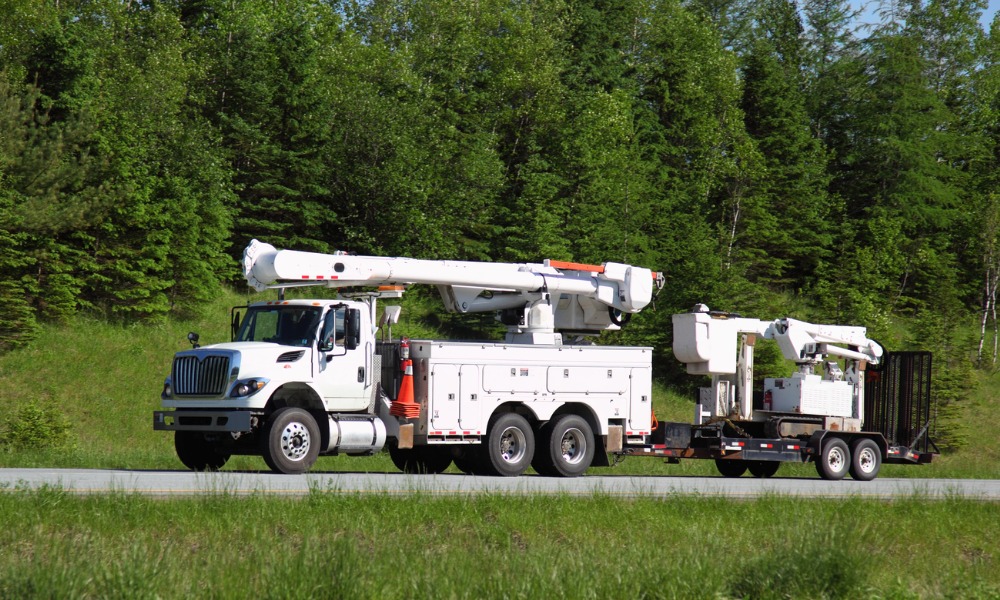
The worker was employed with Epcor Utilities, a utility company based in Edmonton, as a boom truck operator. He was of Croatian descent.
In 2017, Epcor provided the worker with a Croatian-English dictionary during his training to help with English translation and his understanding of the training. However, the worker felt that he was being treated differently because of his accent and other employees were making fun of him. He also alleged that his manager expressed a preference for people who speak “mother English.”
In February 2021, the worker applied for a position of relief foreman. Epcor interviewed four candidates including the worker and scored them on their performances in the interview. The scores ranged from 54 per cent to 92 per cent, with the worker scoring 58 per cent. During the interview process, emails from the worker appeared to show that he was uninterested and irritated by the questions management asked him. The candidate with 92 per cent was offered the position.
Epcor distributed overtime work to its boom truck operators based on its collective agreement. In 2020, the worker worked 250 overtime hours, while two others did 306 hours and 32 hours, respectively. However, the worker felt that he was denied overtime shifts while others received them.
Safety incident
In March 2021, the worker reported a safety incident. He met with management to discuss the incident, but he said that he wasn’t feeling well. According to the worker, he “collapsed at work due to stress.” His manager drove him to a medical centre, but the worker couldn’t get an appointment with the doctor, so the manager drove him home. The worker was later able to book an appointment with his family doctor.
On March 30, 2021, the worker made a human rights complaint alleging discrimination in the area of employment on the protected grounds of ancestry and place of origin. He alleged that he was treated differently than other employees because of his accent, he wasn’t selected for the relief foreman job because of his place of origin, and he was essentially disciplined for complaining about unsafe work.
The Director of the Alberta Human Rights Commission dismissed the part of the worker’s complaint relating to the Croatian-English dictionary and the manager’s comment about “mother English,” as they allegedly happened during the worker’s training in 2017. These were beyond the one-year limitation for human rights complaints outlined in the Alberta Human Rights Act. As the worker’s complaint was filed on March 20, 2021, events that occurred before March 30, 2020, could only be considered “for contextual purposes only,” said the Director.
As for the worker’s application for the relief foreman position, the evidence showed that the successful candidate scored much better than the worker and Epcor had concerns about his attitude. The worker asserted that his ancestry or place of origin were factors in the hiring decision, but more than an assertion “or even a sincerely held belief” were needed to support a discrimination complaint, said the director.
No evidence of discipline
The director also found no evidence supporting the worker’s claim that he was disciplined for reporting a safety incident. The worker was driven home when he reported not feeling well, but this was not discipline, the director said in dismissing the worker’s complaint.
The worker requested a review of the director’s decision, maintaining that he was discriminated against, although he didn’t provide further evidence.
The tribunal agreed that the dictionary incident and the manager’s comment allegedly happened more than one year before the worker filed his complaint, so they could not be a basis for the complaint.
The tribunal noted that in order for a complaint to be referred to it, the worker was required to provide information supporting the claim, which included “facts alleged, which the complainant proposes to prove through the calling of evidence, which can reasonably be taken to show a link between adverse treatment and a [protected ground].”
No adverse treatment, discriminatory factors
However, the evidence supported that the worker wasn’t hired as a relief foreman because there was a candidate with better qualifications and experience, and the worker scored well below the successful candidate. Combined with the emails regarding the worker’s attitude, there was sufficient evidence showing that the worker’s protected characteristics were not a factor in the decision, said the tribunal, adding that the worker provided no evidence supporting any discriminatory factors.
The tribunal also found that the worker didn’t suffer adverse treatment with regards to overtime allocation, as he received significantly more overtime than one of his colleagues and a comparable amount to another.
As for the safety incident, there was no information indicating that Epcor disciplined the worker, either in his original complaint or his request for review, said the tribunal.
The tribunal upheld the Director’s decision to dismiss the worker’s complaint due to insufficient information to support it. See Knezevic v. Epcor Utilities Inc., 2023 AHRC 114.


