
Nova Scotia bus driver unable sought help for trouble sleeping, fatigue
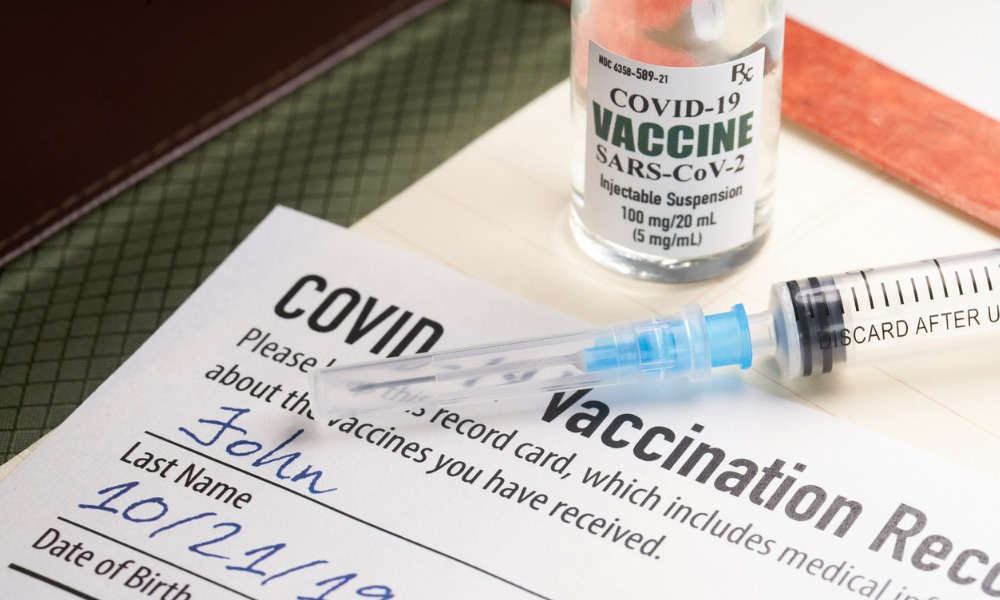
A Nova Scotia employer improperly moved a worker from paid sick days to an unpaid leave of absence at the deadline for working employees to provide proof of COVID-19 vaccination, an arbitrator has ruled.
The worker was a bus driver for the Tri-County Regional Centre for Education, a school board covering the counties of Digby, Yarmouth, and Shelburne in Nova Scotia. Hired in 2002, the worker drove school buses Monday to Friday during the school year, with split shifts covering the morning and afternoon runs for taking students to school and home again.
In October 2021, the province implemented a mandatory vaccination protocol for high-risk settings, which included school buses. The protocol required all personnel to provide proof of partial or full COVID-19 vaccination by Nov. 30. Employees who did not provide such proof would be placed on unpaid administrative leave until they provided it. Employees who were already on a leave of absence were required to provide proof on the date of their return to work or be placed on unpaid administrative leave.
The worker expressed concerned about the vaccination requirement, but he didn’t want to lose pay over it so he scheduled a vaccination appointment for Nov. 30.
Around the same time, the worker had difficulty sleeping along with fatigue. On Nov. 23, he fell asleep at the wheel of an empty school bus and woke up on the other side of the road. He decided that he needed to stop driving until his problem was diagnosed and treated.
An employer’s vaccination policy that didn’t consider changing circumstances was unreasonable, an Ontario arbitrator ruled.
Paid sick days
The worker took five sick days over the next week. He didn’t provide a sick note, but they weren’t required for illness-related absences of fewer than five days. Because of the sick days, he cancelled his vaccination appointment and planned to get vaccinated once he was ready to go back to work.
Under the collective agreement, workers earned 1.5 days of paid sick leave credit per month to a maximum of 150 days and were permitted to use them “as a form of insurance to provide protection for an employee from loss of earnings due to illness or injury which prevents an employee from performing work.”
On Nov. 26, while the worker was off sick, the school board sent him a letter confirming that he had not shown proof of vaccination under the provincial protocol. As a result, he would be placed on unpaid administrative leave on Dec. 1 until he provided proof of vaccination.
The worker replied that he was on medical leave that he expected would extend beyond Nov. 30, so he would provide proof of vaccination when he returned to work, which was unknown at that time. The school board responded that he could only use sick leave if he was an active employee who would otherwise be available for work, and if he didn’t provide proof of vaccination, he would no longer be an active employee.
The worker insisted that he didn’t have to provide private medical information until he returned to work and it was an assumption that he was unavailable for work. However, the school board said that only employees on a leave of absence – such as maternity, parental, or short-term disability leave – could delay providing proof of vaccination until their return. Using sick days wasn’t considered a leave of absence, the board said.
Employers may be wondering when it’s time to make changes to their vaccination policies and mandates.
Unpaid leave of absence
The school board sent the worker another letter on Dec. 1 stating that he was “currently on a leave of absence” and it hadn’t received proof of vaccination from him, so he was required to provide it before he returned to work.
The school board discontinued the worker’s sick leave pay. On Dec. 6, the worker provided a medical note that stated he was unable to work due to medical reasons starting Nov. 24. He was off work until April 11.
The union filed a grievance alleging that the school board violated the sick leave provisions in the collective agreement and that the worker was on sick leave as of Nov. 24, and he was still on that sick leave on Dec. 1. As a result, vaccination protocol did not require the school board to place the worker on an unpaid leave of absence and stop the sick pay on Dec. 1.
The arbitrator noted that the worker had an illness that prevented him from working and had been off for five days as of Dec. 1, which was understood as sick leave under the collective agreement. Placing the worker on an unpaid leave of absence at that point under normal conditions without the vaccination protocol would have breached the agreement, said the arbitrator.
Legislative protection of health information doesn’t apply to vaccination status, the Ontario Labour Relations Board has said.
Intention of vaccination protocol
The vaccination protocol’s intent was to ensure that unvaccinated employees did not work in high-risk settings until they were vaccinated, and it didn’t intend to change existing terms and conditions of employment, said the arbitrator. In addition, the protocol was trying to balance the interests of employers and employees, the arbitrator said.
The arbitrator found that the protocol’s reference to “leave of absence” should be interpreted as including an employee who was off work on Nov. 30 for a reason authorized by the terms and conditions of employment and remained off work. This applied to the worker, who was off work on approved sick days, said the arbitrator.
While an illness of a few days wasn’t the same as a longer-term leave of absence, it was still an absence from work that could be considered a leave under the protocol, the arbitrator said. Changing the worker’s status and rights under the collective agreement was not absolutely necessary, as the protocol’s goal was still met with the worker using sick days and providing proof of vaccination before he returned to work, the arbitrator said.
The arbitrator determined that the worker’s continuing absence from work due to an illness that prevented him from performing work was a leave of absence under the vaccination protocol. The school board was ordered to pay the worker for the sick days for which he had been denied after being placed on an unpaid leave of absence.
See CUPE, Local 964 and Tri-County Regional Centre for Education (Watkins), Re, 2022 CanLII 109498.


