Law clerk said deactivation of workplace fob related to harassment complaints
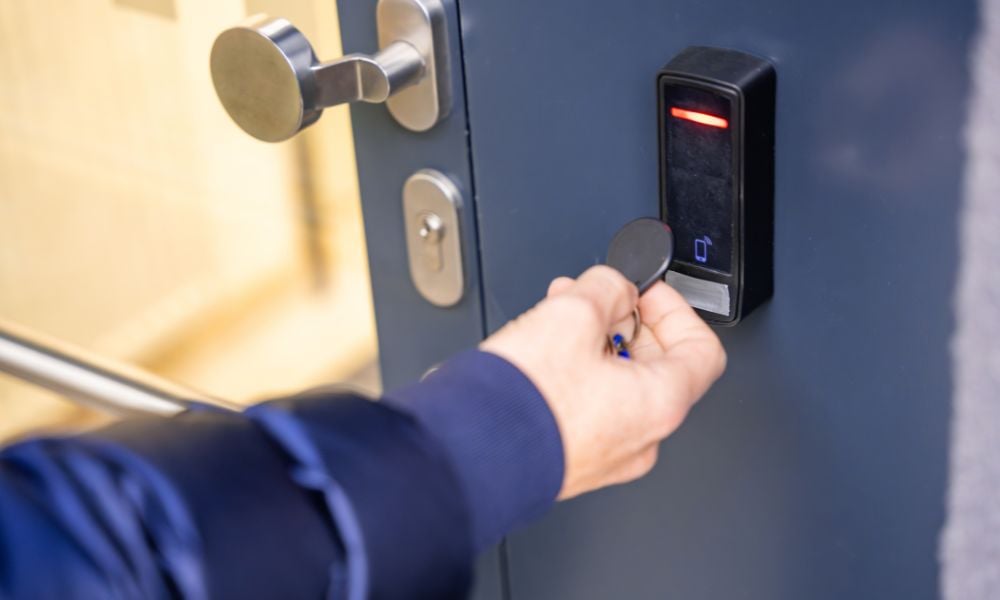
The Ontario Labour Relations Board has dismissed a worker’s claim that the deactivation of his security fob to enter his workplace was linked to his harassment complaints and led to constructive dismissal.
The worker started employment as a law clerk on May 9, 2023, at Sokoloff Lawyers, a personal injury law firm in Toronto. The firm’s office occupies an entire three-storey building, with access beyond the front door and reception area requiring a key fob.
In October, the worker started filing complaints with the law firm alleging that a colleague was harassing him. He said that the colleague was rude, wouldn’t speak to him or help him, laughed at him, and made unwelcome comments that he smelled when he had to go upstairs to use a printer, causing him to sweat. He also said that another colleague was rude to him.
The worker also complained about not having access to a convenient printer near his desk.
According to the principal lawyer, who was also the firm’s owner, she addressed the worker’s complaints by speaking with the individuals involved and arranging meetings to resolve conflicts. She also claimed that some of his allegations were unknown to her at the time.
Locked out of workplace
On Dec. 7, the worker returned to the office from lunch and found that his security fob didn’t work on a door in the east corridor, which led to the back stairway, archive room, computer equipment storage, and offices. According to the worker, the maintenance person told him that his security fob had been deactivated with the permission of the principal.
Reception staff let the worker into the offices and he returned to work for the rest of the day. He tried his fob on all the security doors in the building, but it didn’t work. As a result, he couldn’t access the archive room or any of the lawyers’ offices. Security fob records showed him attempted to access various doors over the course of the afternoon.
Over the course of that afternoon, the worker sent several emails to the principal and the maintenance person asking about why his fob didn’t work. He asked the principal if it meant he could work from home, and the maintenance person said he and an IT person had decided to restrict his access to the file room, not the front door.
The principal was home sick and not checking her email, so she didn’t respond for a few hours. The worker continued to insist he would be working from home going forward. When the principal finally responded, she said that she didn’t know or was consulted and it shouldn’t have been done.
She confirmed that he was not to work from home – he had requested multiple times in the past to work from home - and he was expected to come into work on the following Monday, while the maintenance person confirmed he would give the worker access again and “all valuables will be removed from the file room to ensure safety.”
Records show that the worker was able to get access to the main lobby door later that afternoon.
According to the principal, the worker had been seen in the area of the basement near the archive room where computer equipment belonging to the third-party IT provider was stored, so the maintenance person took it upon himself to remove the worker’s access.
Refused to return to work
In another email, the worker accused the maintenance person of lying and told the principal that “I will tolerate this abuse no longer,” claiming it was harassment. He said he wouldn’t come in on Monday while he wasn’t allowed in the building. The principal said that the restriction had been lifted and that it shouldn’t have happened. The maintenance person wasn’t disciplined.
The worker was off work the next day, a Friday, and the principal called him every day over he next three days, but he didn’t respond to the calls or emails.
The worker didn’t show up at the office the following Monday, Dec. 11, so the principal emailed him to call her. The spoke that evening and the worker discussed the alleged harassment but he didn’t want to talk about his previous day in the office. The principal told him that if no one liked him he should work elsewhere, and the worker believed this meant she had fired him.
The principal followed up with an email saying that there was no point in discussing anything further because he was clear that he didn’t want to return to work. She wished him luck in his next position, as she was under the impression that he had resigned.
Reprisal allegation
The worker filed an application under the Ontario Occupational Health and Safety Act (OHSA), alleging that his security fob was deactivated in response to harassment complaints he had made regarding his colleagues. He argued that this effectively locked him out of his workplace, constituting constructive dismissal, and he didn’t quit.
The law firm disputed the allegations, stating that the worker had sought permission to work remotely, which was denied.
While it was undisputed that the worker’s security fob was deactivated, the law firm maintained that this was done without the knowledge or approval of the principal.
The board noted that s. 50 of the OHSA prohibits employers from imposing any penalty upon a worker for acting in compliance with the act, such as raising safety concerns. For there to be contravention of the OHSA, there must be three elements – the employee engaging in a protected activity under the OHSA, an adverse consequence for the employee, and a connection between the activity and the consequence.
Causal connection
The board found that the worker engaged in a protected activity by filing harassment complaints. However, there was insufficient evidence to establish a causal connection between his complaints and the deactivation of his security fob, it said.
The board pointed out that the worker wasn’t locked out of his workplace entirely, as he was able to continue working on Dec. 7, 2023, when other staff let him back in and access was restored later that day. In addition, it was the maintenance person, not the principal, who had restricted his access, and it wasn’t taken as a form of reprisal, said the board.
The board further noted that it didn’t have jurisdiction to rule on whether the worker had been constructively dismissed or he experienced harassment, as such matters were outside the scope of the OHSA and would be more appropriately handled through civil litigation.
The worker’s application was dismissed, as the board found no violation of s. 50 of the OHSA.