'People are not preparing well enough for the revolution of AI coming our way': HR panelists discuss the future of AI at HRFutureFest
Artificial intelligence (AI) is becoming a critical tool in the modern workplace, but fear and uncertainty still loom large – with HR often on the front line dealing with the tension.
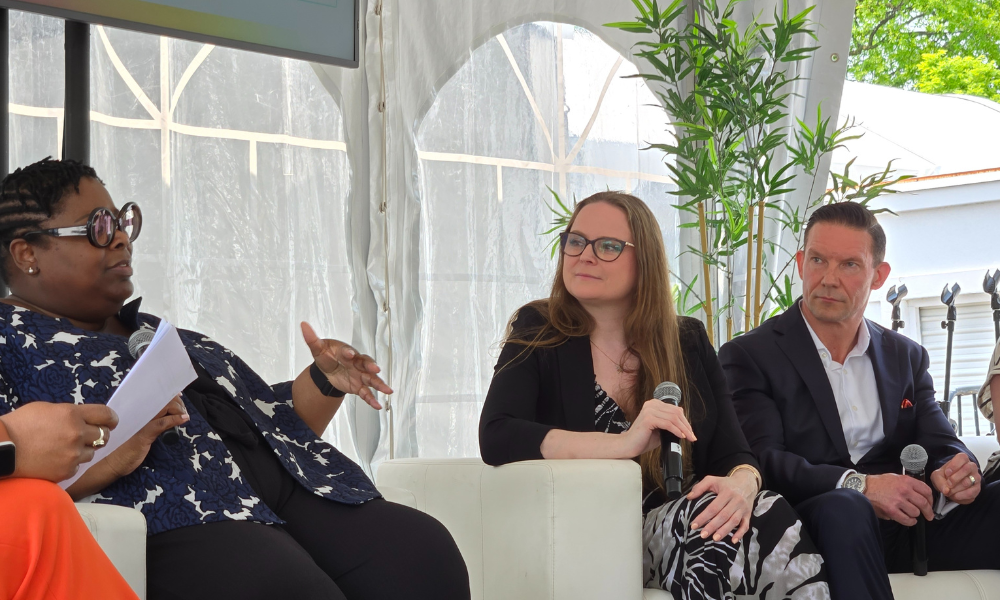
AI, and how HR is adapting and should be looking to the future, was the main topic of discussion at “Humans vs Algorithms – 3 Ways AI is Nailing HR,” a June 3 panel at HRFutureFest at the Toronto Event Centre.
“Every conversation everywhere, what people, what customers, want to hear from us is, ‘How did you take out cost? How are you more productive?’” said Adrienne Day, Vice President of HR at Microsoft.
“And we’re like, ‘Hey, let’s actually talk about how we’re using technology,’ to actually reduce the mundane activities in the day-to-day workload, so that people can actually unlock a higher level of creativity, a higher level of effectiveness and impact in the organization.”
The panel, which brought together HR executives and tech leaders from Scotiabank, Microsoft, Ford, and Workwolf, acknowledged that AI adoption often begins from a cost-cutting mindset—but the long-term implications are more human than they might first appear.
A tsunami of change
Kalifa Oliver, executive advisor and Global Director of EX Analytics Strategy at Ford Motor Company, moderated the discussion that drew a standing-room only crowd.
“AI is a solution that is constantly searching for problems,” Oliver said. “What are you seeing in your role with your company, what are people trying to solve when they want to use AI?”
The pace of change is accelerating rapidly, posing real risks for companies that don't act fast enough, panelists agreed. Erik Simins, CEO and Co-founder of Workwolf, Toronto-based tech recruitment company, stressed the importance of moving from talking about the tools to actually using them.
“The change is exponential at this point, and it’s really actually hard for us to see just how fast that is,” he said.
“If you don’t have people playing with it, experimenting with it, trying new tools that are out there... it could be devastating for our business in, let’s say three-to-five years from now, if we all haven’t caught on and started at least adopting it internally.”
Simins urged HR professionals to encourage hands-on experimentation with generative AI tools and predictive models, not just strategic planning: “Play with the prompts, play with it personally, and get comfortable with it.”
Leisse Wilcox, Founder of Leisse Wilcox Consulting, warned that many organizations aren’t preparing seriously enough, likening the coming of AI to an approaching tsunami.
“I feel like we are standing on the shore and we’re looking out and we’re like, ‘Oh yeah, there’s a tsunami coming. You guys want to get another drink?’ I feel like people are not preparing well enough for the revolution of AI coming our way,” Wilcox said.
“From my perspective, which is always rooted in emotional intelligence, we know beyond a shadow of a doubt that the only thing we cannot automate is relationships.”
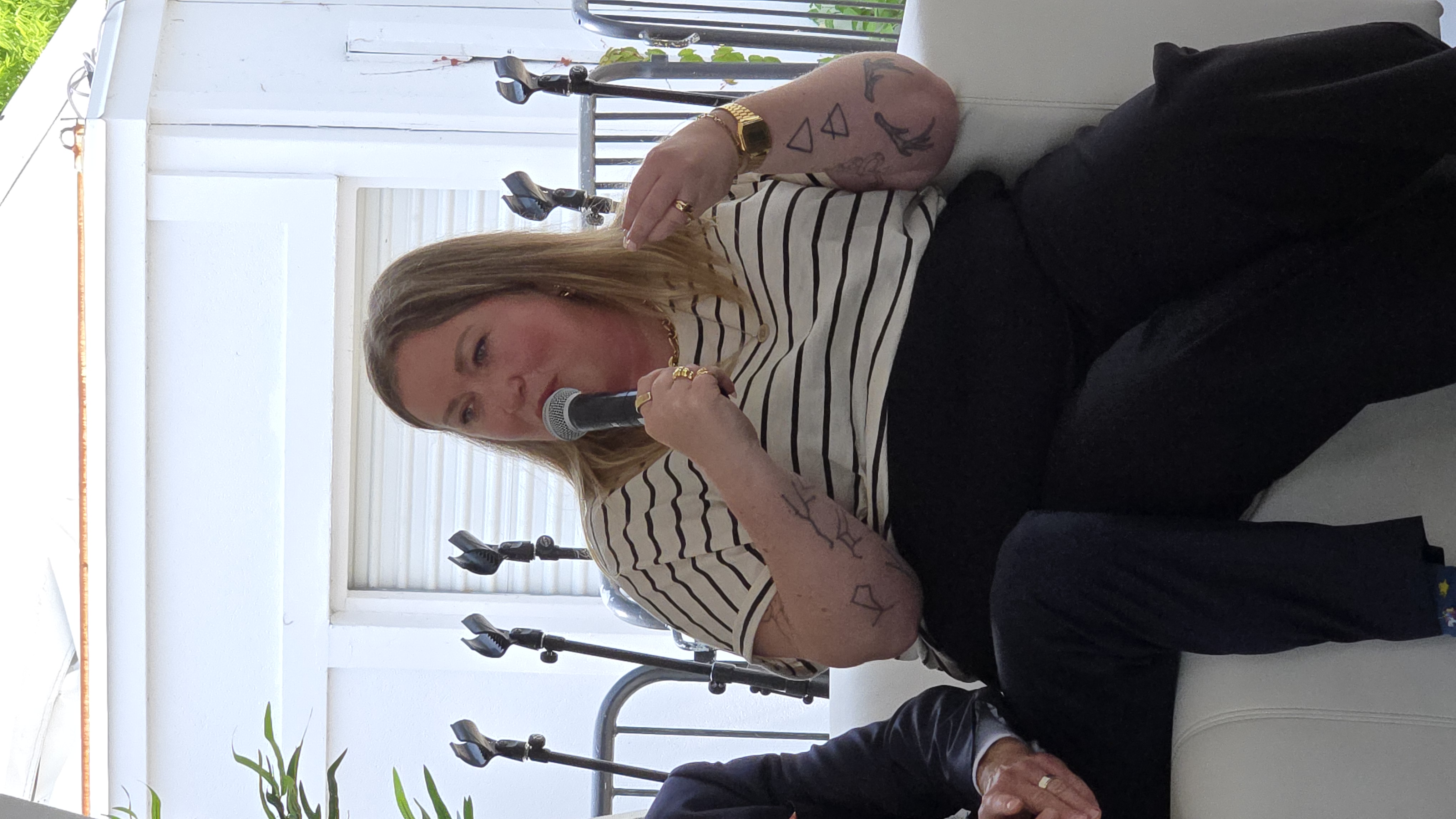
Leisse Wilcox. Photo: Stacy Thomas
HR and AI: more human, not less
To address the pace at which AI is currently automating technical and administrative work, the panelists discussed the growing importance of soft skills, especially communication and emotional intelligence.
Wilcox posited that this will potentially free up time for more meaningful work in HR, such as relationship building and communication.
“AI is going to take care of everything else for us … I think it’s going to make us so much more human and so much more creative, and really bring us back to this place of a four-day work week, and we can just do what we like to do because it feels good,” said Wilcox.
“And the way that we start preparing for that is doubling down on the not-so-soft skills of emotional intelligence, communication and really, those interpersonal, intergenerational relationship skills.”
This doesn’t mean eliminating HR jobs – as Simins pointed out, AI will evolve the HR function into a more interpersonally-focused role, freeing up time for deeper work.
“Some of the tools that are out there now can actually predict performance as good or better than an interview would,” Simins said.
“It doesn’t mean that HR is going to go away. It means that you’re going to have way more time to do those qualitative feedback sessions, behavioral interviews with people, as opposed to going through hundreds of thousands of resumes.”
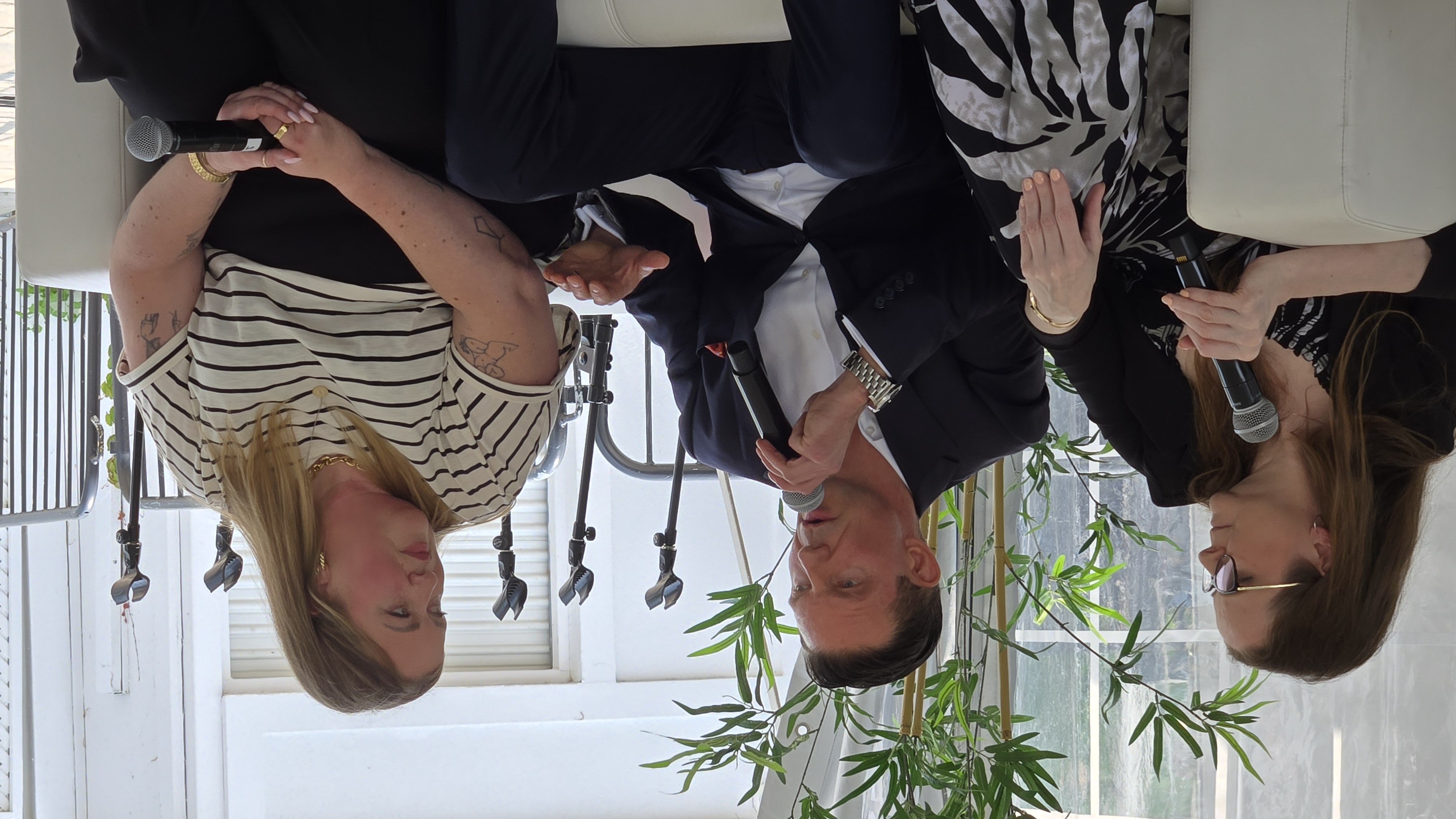
Rhea Kolanko, Erik Simins, Liesse Wilcox (L to R). Photo: Stacy Thomas
Leading through uncertainty
For HR leaders, this moment also presents a critical leadership challenge: managing fear across the workforce while fostering adaptability – in fact, building a culture of adaptability was identified as a crucial aspect of organizational resiliency.
Rhea Kolanko, Director of Employee Access and Collaboration Technology at Scotiabank, addressed the need for businesses to embed adaptability directly into their workplace culture.
“I think we have to have that exploratory mindset, and within the business, there's a lot of risks that … we have to manage that within the organization,” she said.
“Every space of HR, there is a solution through AI to help us move faster, to help us evolve how we deliver work, how we deliver impact. So think about how all the challenges that you have from an HR perspective, there's a way to think about, ‘Hey, AI can help move you forward.’ And so let's do this in parallel, as we're helping the rest of the company evolve.”
Simins introduced the concept of “adaptability quotient” (AQ) – a trait he believes should become a hiring and development priority going forward.
“It measures how quickly you can adapt to scenarios that you haven't been exposed to before. I think that adaptability quotient is something that we should all be looking at more closely within our organizations, and something that we should start playing with,” said Simins.
“Put people in scenarios and see how they run, and maybe build that into our organization, so they can build adaptability into our cultures, because it's essential for us in terms of our growth and maintaining a culture that's going to thrive in the new generation.”
Wilcox echoed this sentiment, adding that in order to alleviate employee concerns around adopting AI into their roles, HR and leadership should be frontloading information rather than holding it.
“They’re so afraid to actually get out in front and say, ‘Yeah, you know what? Some jobs are going to go away. Some jobs are going to evolve. Most jobs are going to evolve,” she said. “Here’s how we’re going to support you and your growth.”
Encourage AI early adopters to drive largescale uptake
In Kolanko’s view, HR teams should be running experiments and encouraging early adopters to lead the way on new technologies; “We encourage mistakes... and then we regroup, and then we re-strategize, and then go again,” she said of innovation cycles.
Early adopters and visionaries are key to broader buy-in, she stresses; even if there is slow uptake at first, allowing word to spread organically about the beneficial uses of AI in people’s roles is key.
“Some people are very excited about it. You have these innovators and visionaries who are going to be all over this tech, they're going to want to learn about it,” Kolanko says.
“Eventually you end up with this really interesting curve, where now all the early adopters are on board, and then you get the people that were like, ‘AI, I don't like it’ – now they're kind of paying attention as well, because … it's becoming part of the work culture. And so you end up now having these products or technology services that are now being adopted much more broadly in your organization.”
According to Kolanko, every HR challenge can be met with an AI-driven solution, if the organization is willing to evolve. “Think about how all the challenges that you have from an HR perspective, there’s a way to think about, hey, AI can help move you forward.”