Retraining initiative will work with 120 schools across China to retrain workers in robot maintenance and servicing
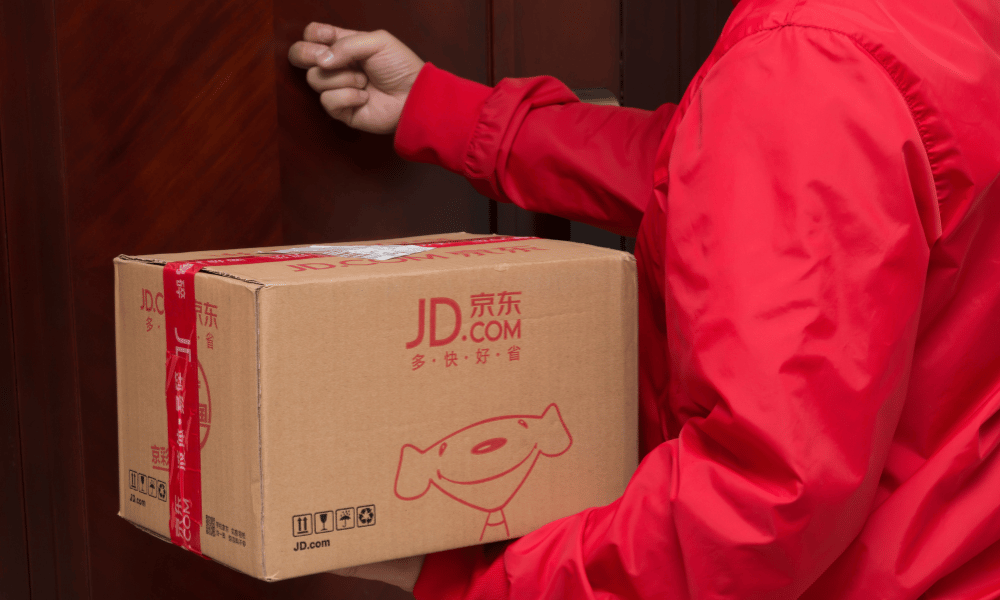
JD.com founder and chairman Richard Liu told a major international business forum on Sunday that robots will eventually replace all of the company's delivery workers.
"In the future, deliveries will be made by robots. There will be no need for delivery workers," Liu said at the 2026 APEC China CEO Forum. "But I don't want our 700,000 employees to be left without jobs or income."
A retraining initiative, called the "Nirvana Plan," will also pair JD.com with 120 schools across China to retrain workers in robot maintenance and servicing, according to TechNode.
But the company’s three-year conversion target covers only 10,000 workers — roughly 2% of JD.com's blue-collar workforce of 500,000, according to BigGo Finance.
Robots across warehouses
The remarks were not hypothetical. By December 2025, JD Logistics had more than 20 automated warehouses operating across China and had deployed hundreds of autonomous robots at its first overseas facility in the UK, according to AI CERTs News.
In October 2025, the company announced a five-year procurement plan covering three million robots, one million autonomous vehicles, and 100,000 drones.
In April 2026, it launched a "Robot Ambulance" repair and maintenance service in Beijing — the precise job category it now proposes to retrain its couriers for — with plans to expand to more than 50 cities, according to TechNode.
As Canadian HR Reporter reported in March 2026, humanoid and general-purpose robots are already entering Canadian workplaces — from Toyota Motor Manufacturing Canada's pilot of three humanoid robots handling internal logistics, to Canadian Tire's early deployments.
Automation in China
Liu's remarks landed in a country already grappling with what automation is doing to its workforce. China's gig economy — the pool of workers doing ride-hailing, deliveries, factory shifts and other blue-collar platform work — is estimated to reach 320 million people this year, up from around 200 million five years ago, according to a report by the China New Employment Forms Research Centre cited by Human Rights Watch.
Gig workers now represent a substantial share of urban employment in China, and many of them are there because more stable work has disappeared.
Reuters reported in March 2026 that policymakers have been stressing job stability alongside the country's AI rollout. The government's latest five-year plan places robotics at the heart of its industrial strategy — China installs one in every two industrial robots deployed globally, according to the World Economic Forum's Future of Jobs Report 2025.
At the same time, in January 2026, the Ministry of Human Resources and Social Security announced it would issue official guidance on managing AI's impact on employment. Chinese courts ruled in Hangzhou in late April that employers cannot justify dismissing workers simply because AI can perform their jobs more cheaply. And earlier this year, Beijing formalised gig worker protections covering more than 200 million platform workers, with binding algorithm-transparency requirements.