
One employer sees success in offering a mobile learning platform to retail workers
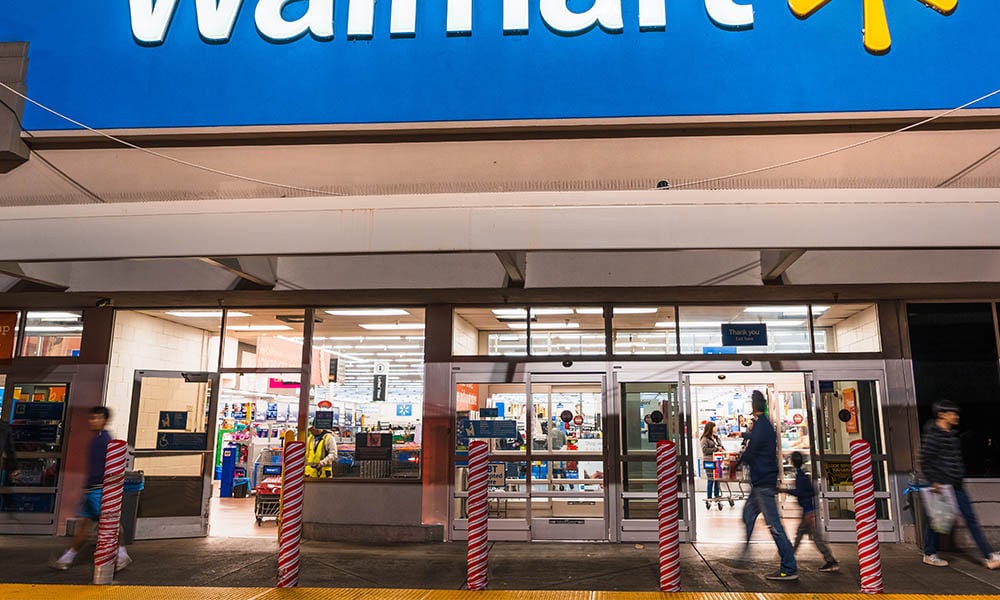
When it comes to employee training, retail companies have their work cut out for them. High turnover rates, onboarding seasonal employees and expanding in a fast-paced industry are among the challenges that can obstruct a consistent experience across multiple locations.
There’s also the challenge of preserving and disseminating the most up-to-date product knowledge, maintaining compliance and engaging digitally native workers among generation Z and millennials.
To engage those generations, retail companies must be equipped with learning technology that allows them to deploy quick and effective staff training. Space for the learner’s attention — and where to offer the training — are as limited as coveted shelf space.
OSL Retail Services in Mississauga, Ont. provides professional services and training for retail operations across North America. It helps retailers such as Walmart and Sam’s Club connect consumers to brands through superior customer service and a range of third-party services such as running sales and inventory.
Online, microlearning popular
Learning and development as a function within retailers has changed significantly, and today, employees don’t need to suffer through a monotonous and boring in-person training session. Learning has gone online and, when done properly, reflects the experiences employees see on popular social media platforms.
But the move to digital has its challenges, especially in retail. Store locations don’t have the space for desktop-based training. For that reason, in 2019, OSL decided to make the move to Docebo’s AI-powered learning platform to enhance its training offerings via mobile devices.
“We needed something that was mobile-friendly,” says Hassan Farooqi, director of learning and development at OSL. “We are in a lot of stores that have limited space, so we can’t put desktops and laptops everywhere.”
Most e-learning platforms are developed to boost formal, structured learning, but Docebo’s platform allows organizations to implement an informal learning approach into their holistic learning plan. So, companies like OSL can create streams of topics that include assets uploaded by subject-matter experts and learners, along with courses and learning plans that provide access to content in channels of different topics.
Earlier this year, OSL significantly ramped up its use of channels, “as formal, linear courses are becoming a thing of the past,” says Farooqi. "As the Ebbinghaus Forgetting Curve suggests, most learners experience a decline in memory retention over time. A learner can consume a course on a Monday and, come Friday, could potentially forget 70 to 90 per cent of the content they consumed. Coupled with the fact that traditional courses are longer, we wanted to move to a microlearning strategy. Anything beyond two to five minutes is too long. The majority of our in-house course building is done with videos and animations in a more informational and bite-sized digestible format."
For example, when OSL launches a new product, it provides the relevant material in one channel. For all job and training aids, it has created a quick video that provides a brief on the product. In the cellular space, instead of putting an entire Samsung “Unpacked” event in front of learners — where the company shows off its latest devices — the OSL team will break it down into the most important information relevant to the learner’s jobs.
AI more than buzzword
Prior to the implementation of more advanced learning technology, retailers would have to send a trainer to the store, do a one-day session and hope that the employees retain the information. But with hundreds of stores, how do you bring training into the digital age and make content available at the point of need, while reducing the reliance on in-person training?
With an expansive library at employees’ fingertips, it can often be overwhelming. OSL is using the Docebo AI engine to organize and distribute content while ensuring the right information and material gets in front of the right people.
“The AI is fantastic — I love how it gives the suggested content and recommended content. The learner experience is simple and powerful. For an admin, it’s amazing — it’s a powerful engine,” says Farooqi.
Training needs to be done with purpose, and too often learners are required to take long-winded training that doesn’t support two-way conversations and collaboration to ensure the learning sticks. OSL is flipping that script and using technology to ensure that, before an employee is done with the course, they have a chance to put what they’ve learned into practice, demonstrating that they’ve understood what they’ve been taught.
“Because we’re in retail locations across North America and it’s costly to send trainers to every location, we’re able to use Docebo Discover, Coach and Share, which gives learners a way to upload a video of themselves doing a role-play and putting what they just learned into practice. The video goes through a peer and manager review process and, once it’s approved, the learner is able to move to the next module in the training.”
OSL is leveraging the learning platform to train between 4,000 and 5,000 monthly active users and is looking to increase that number this year, while adding more content and locations.
“In Canada alone, our completion rate is 96 per cent for over 60 courses per user,” says Farooqi. “When a new course comes out, it gets done almost immediately. It’s easy to do, it’s easy to access, the user experience is great, the rating scales are great and the ability to do Q&A within the content is excellent.”
For a learning program to be successful, accessibility is key. All content needs to be available to the learner and that is a one of the things that OSL is finding useful with Docebo’s AI when looking for new ways to bring information to users.
OSL is currently assessing how it will put Docebo’s AI-powered virtual coach into practice and looking to release it for learners later this year.
“I believe knowledge and learning should live on the same platform. We have a knowledge base and SOP [standard operating procedures] guidelines currently living on a separate platform, so we’re sending users across different platforms,” says Farooqi. “This year, we will upload that content into Docebo, place those job aids into a channel and then tie it into our new employee training as new courses they may want to check out. Thanks to auto-tagging and AI, the platform will recommend those aids as suggested content the learner may want to check out.
“It is a completely seamless experience for the learner and the best part? They can do it all from their mobile devices.”

Rob Ayre is public relations manager at Docebo in Toronto, a SAS learning management system. For more information, visit www.docebo.com.
BIG PLANS FOR MOBILE LEARNING
55%
Number of CLOs (chief learning officers) who plan to increase their use of mobile learning (in 2018).
76%
Number of CLOs delivering e-learning on mobile devices (compared to 12% in 2014).
54%
Number of CLOs who say a major driver of mobile learning is its ability to reach a large audience with few resources.
36%
Number of CLOs who say the second biggest driver of mobile learning is cost savings.
Source: CLO Magazine



