Long-term incentives drive increase, while ESG metrics see slight decline

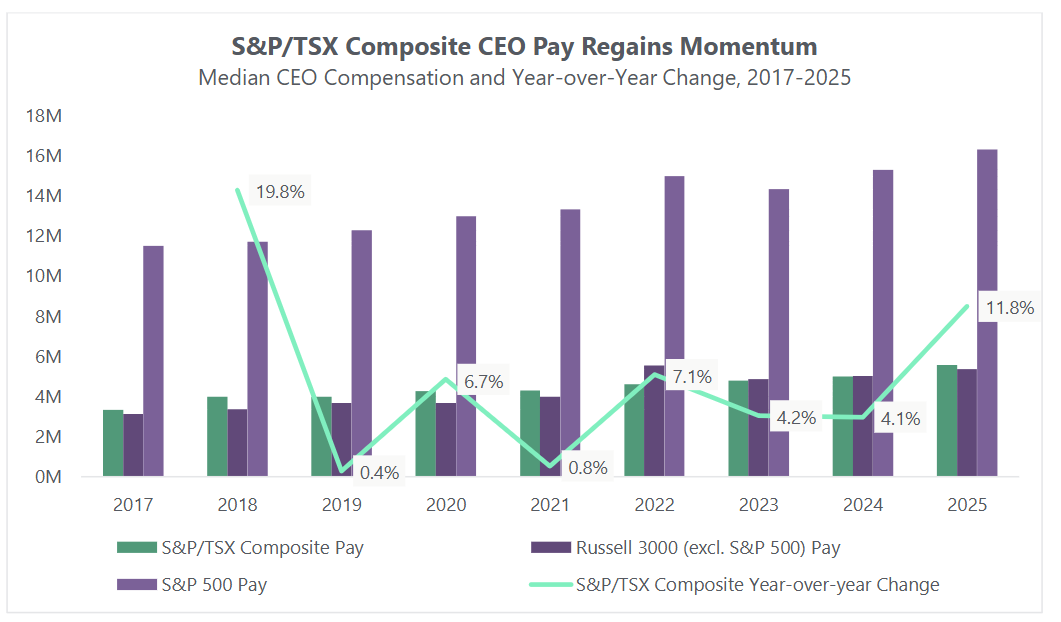
Median CEO compensation at companies in the S&P/TSX Composite Index rose 11.8 per cent in fiscal 2025, the largest annual increase since 2022, and shareholders overwhelmingly endorsed the pay packages, according to an analysis released today by ISS-Corporate.
The median CEO among those companies was paid roughly $6 million in fiscal 2025. The jump follows what ISS-Corporate described as more modest increases in 2023 and 2024.
Higher long-term incentive awards were the main driver. Those awards made up about 60 per cent of median total CEO pay, which ISS-Corporate said is consistent with boards placing more emphasis on performance-based compensation and long-term retention.
Base salary accounted for a relatively small share of the total.
ESG metrics hold on in Canada
Environmental, social and governance (ESG) metrics remain a common feature of executive incentive plans in Canada, even as their use has dropped sharply in the United States, according to the analysis.
In fiscal 2025, 64 per cent of S&P/TSX Composite companies included at least one ESG metric in their executive incentive plans, down from a peak of 69 per cent in 2023. By comparison, 35 per cent of S&P 500 companies and 21 per cent of Russell 3000 companies outside the S&P 500 did so, ISS-Corporate said.
The firm said the recent moderation in Canada may reflect a shift toward fewer, more material metrics with clearer links to strategy and financial and business performance, rather than a reduced focus on sustainability goals.
ISS-Corporate, which provides software and advisory services to companies, is a subsidiary of Institutional Shareholder Services Inc. (ISS) and part of the ISS STOXX group, which is owned by Deutsche Börse Group.
Human resources and people‑strategy leaders are among the best‑paid executives in the provincial public sector, with several HR execs earning well over $350,000 in 2025.
Shareholders signal approval
Despite the sharp rise, shareholder support for executive pay held firm. Say-on-pay support reached 96 per cent in the 2026 proxy season, and only one company's advisory vote on executive compensation failed, the analysis found.
ISS-Corporate said the results suggest investors did not see higher pay levels or changing incentive practices as grounds for widespread opposition. Still, 12 issuers received less than 80 per cent shareholder approval, a sign that investors continued to raise concerns about compensation practices at a meaningful number of companies.
"Support for executive compensation programs remains resilient, even as CEO pay increases and compensation structures continue to evolve," said Chan Pedris, managing director at ISS-Corporate.
Pedris added that investors remain focused on pay-for-performance alignment, equity plan dilution and transparent disclosure. "The findings underscore… the importance of compensation programs that are clearly linked to long-term value creation.”