Permanent resident stream waits fall by half, says ESDC

Employers planning to hire high-wage temporary foreign workers should file Labour Market Impact Assessment (LMIA) applications even sooner these days.
That’s because the average high-wage waits reached 98 business days in September, up from 90 in August, according to Employment and Social Development Canada (ESDC).
The low-wage stream held at 82 while the permanent resident stream fell to 79 from 156, the agricultural stream to 22 from 25, and the Seasonal Agricultural Worker Program rose to seven from six.
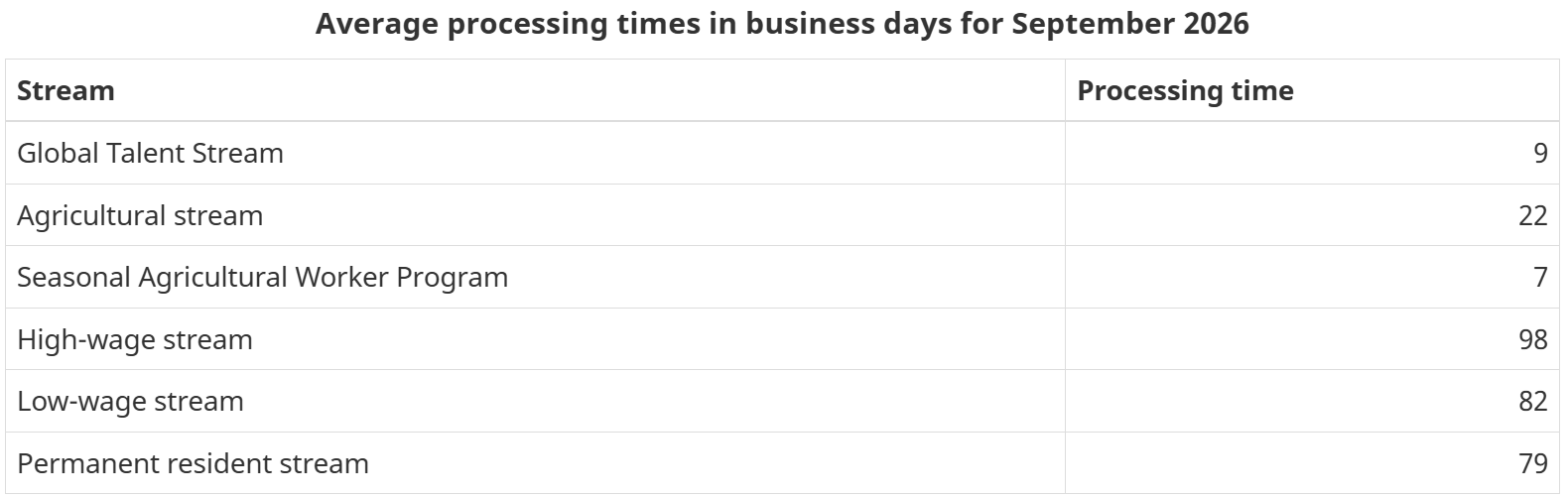
LMIA processing times represent the average number of business days required for Service Canada to assess an application and render a decision once all required information has been received.
Low wage vs. high wage
The wage being offered for the position will determine if an employer needs to apply for an LMIA under the stream for high-wage positions or the stream for low-wage positions.
Employers should compare the wage they’re offering for the position on their LMIA application with the hourly wage threshold shown in the Hourly wage threshold by province or territory table below.
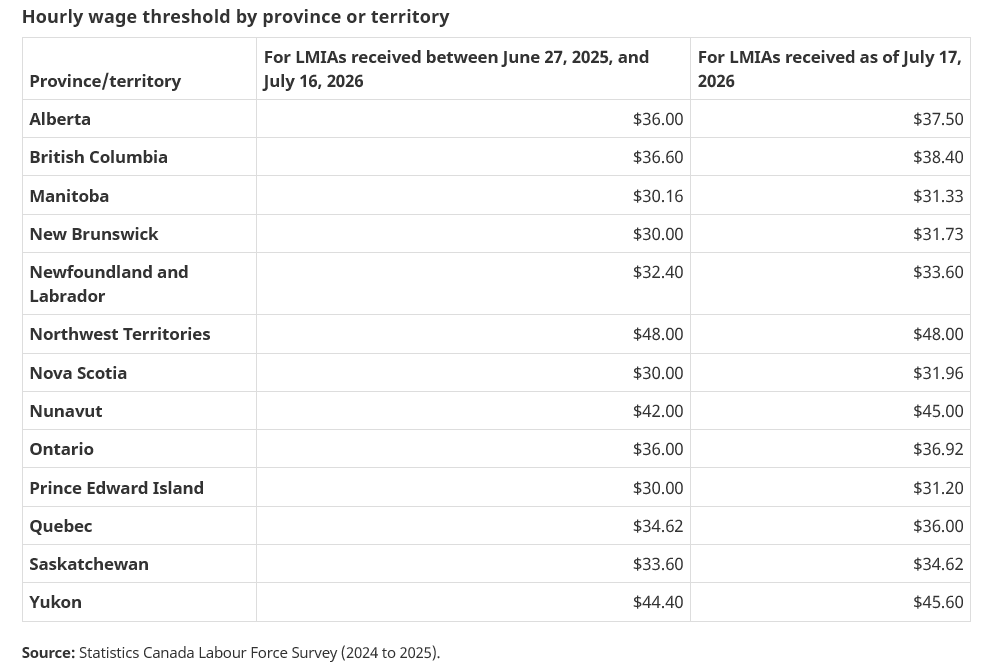
If the offered wage is:
- at or above the provincial or territorial hourly wage threshold, they must apply under the stream for high-wage position.
- below the provincial or territorial hourly wage threshold, they must apply under the stream for low-wage positions.
Rural employers gain low-wage flexibility
ESDC will not process low-wage LMIAs in census metropolitan areas (CMAs) with unemployment of 6% or higher and caps most employers’ low-wage foreign workforce at 10% – a rule tested by an Ontario Tim Hortons franchise where foreign workers held most jobs.
From April 1, 2026, to March 31, 2027, Ottawa’s time-limited changes allowing a 15% low-wage cap cover rural employers outside CMAs in participating jurisdictions, for new LMIAs only. Five jurisdictions, including Manitoba and Nova Scotia, adopted both the higher cap and the right to keep existing levels; British Columbia and Quebec allow the latter only. Alberta, Ontario and Nunavut opted out, as provinces pushed back against changes to the Temporary Foreign Worker Program.
“Canadians must always be first in line for available jobs, but in some rural regions employers are facing persistent labour shortages,” said Patty Hajdu, federal minister of jobs and families, announcing the measures on March 13, 2026.
ESDC finalized 1,488 compliance inspections between April 1, 2025, and March 31, 2026, found 12% of inspected employers non-compliant, issued more than $10.2 million in penalties – more than double the previous year’s $4.5 million – and banned 30 employers.