‘Employers want to offer PTO in a way that fits people’s lifestyles’

Employers are refining their short-term disability (STD) and long-term disability (LTD) benefit structures to accommodate the changing needs of employees, according to a Gallagher report.
Most companies maintain a 17-week STD benefit, but more are extending coverage to 26 weeks to align with public programs, notes the report.
Employers are tailoring elimination periods and income replacement formulas to better suit workforce needs.
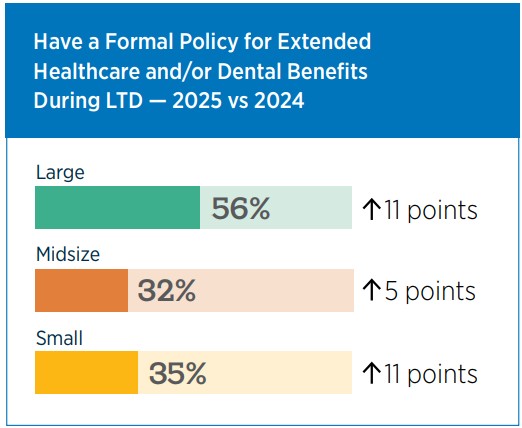
For LTD, 93 per cent of employers continue to offer coverage, but there is a trend toward cost containment and plan transparency, with more organisations codifying LTD policies and capping extended health and dental benefits during LTD to manage long-term costs.
The report shows a growing reliance on data analytics to inform absence management. By analysing claims data, employers are uncovering actionable insights that help prevent absences and improve programme effectiveness. Gallagher reports that “the emphasis is shifting toward building resilient, data-informed and employee-centred absence management programmes,” with 78 per cent of employers now including STD processes and plan provisions in written HR policies.
While the share of employers citing the use of programme data to address disability issues as a top concern declined from 18 per cent in 2024 to 13 per cent in 2025, Gallagher suggests this may reflect “growing confidence in the advanced tools and analytics now available, which are helping organisations better manage absence and disability challenges.”
Recently, a Manitoba government employee launched a lawsuit against the province and Canada Life after her application for LTD benefits was denied.
Paid time off
Paid time off (PTO) policies are also evolving, according to Gallagher’s survey of 546 organisations across Canada.
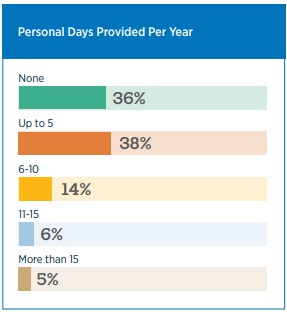
In 2025, 64 per cent of employers offer at least one personal day annually, and many are introducing wellbeing-specific days and leave for life events such as fertility treatments or pregnancy loss.
“Employers want to offer PTO in a way that fits people’s lifestyles,” said Diane D’Silva, Associate Vice President at Gallagher.
Part of the Gallagher report reads: “In 2025, 64 per cent of employers offer at least one personal day annually, up from 59 per cent the year prior. Some employers are going further by introducing wellbeing-specific days to encourage rest and recovery. Among larger employers, these programmes are increasingly common and are often tied to efforts to position the organisation as a destination employer.”
Previously, the Federal Public Sector Labour Relations and Employment Board ruled that a federal employer’s application of its attendance management plan was discriminatory against a worker with a disability.
Mental health and wellbeing programs
Mental health conditions have become the primary driver of long-term disability (LTD) claims, accounting for 52 per cent of cases, and are also a significant factor in short-term disability (STD) claims at 65 per cent.
Gallagher notes that the percentage of employers identifying mental health as a top cause for LTD claims has risen by five points since 2024, reflecting the growing complexity and prevalence of mental health issues in the workplace.
However, just 29 per cent of employers have a comprehensive wellbeing strategy focused on whole-employee health, and 15 per cent have a strategy with traditional options focused on physical health.
Over two in five (41 per cent) do not currently have a strategy for wellbeing but provide some wellbeing resources, and 15 per cent do not currently have a strategy for wellbeing or any wellbeing resources.
According to employers, the top challenges related to wellbeing initiatives are:
- Budget
- Participation
- Geography and/or multiple locations
- Remote or hybrid workforce
- Communication
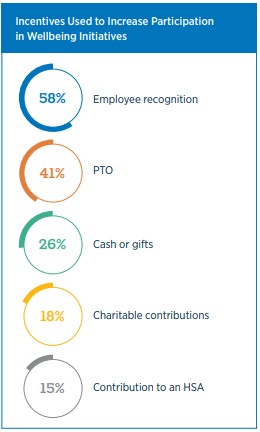
But some employers are doing their part to encourage workers to participate in their wellbeing initiatives.
“To help ensure sustainable results, employers should evaluate population health needs, employee preferences and budget constraints to design programmes that are most likely to succeed,” says Gallagher. “By curating initiatives that resonate with employees and address their unique challenges, employers can create a healthier, more engaged workforce while reducing overall health-related costs.”