
What’s the cost of losing workers?

HR professionals and employers that don't try to close a widening gap between compensation for loyal employees and those who switch jobs risk losing top talent.
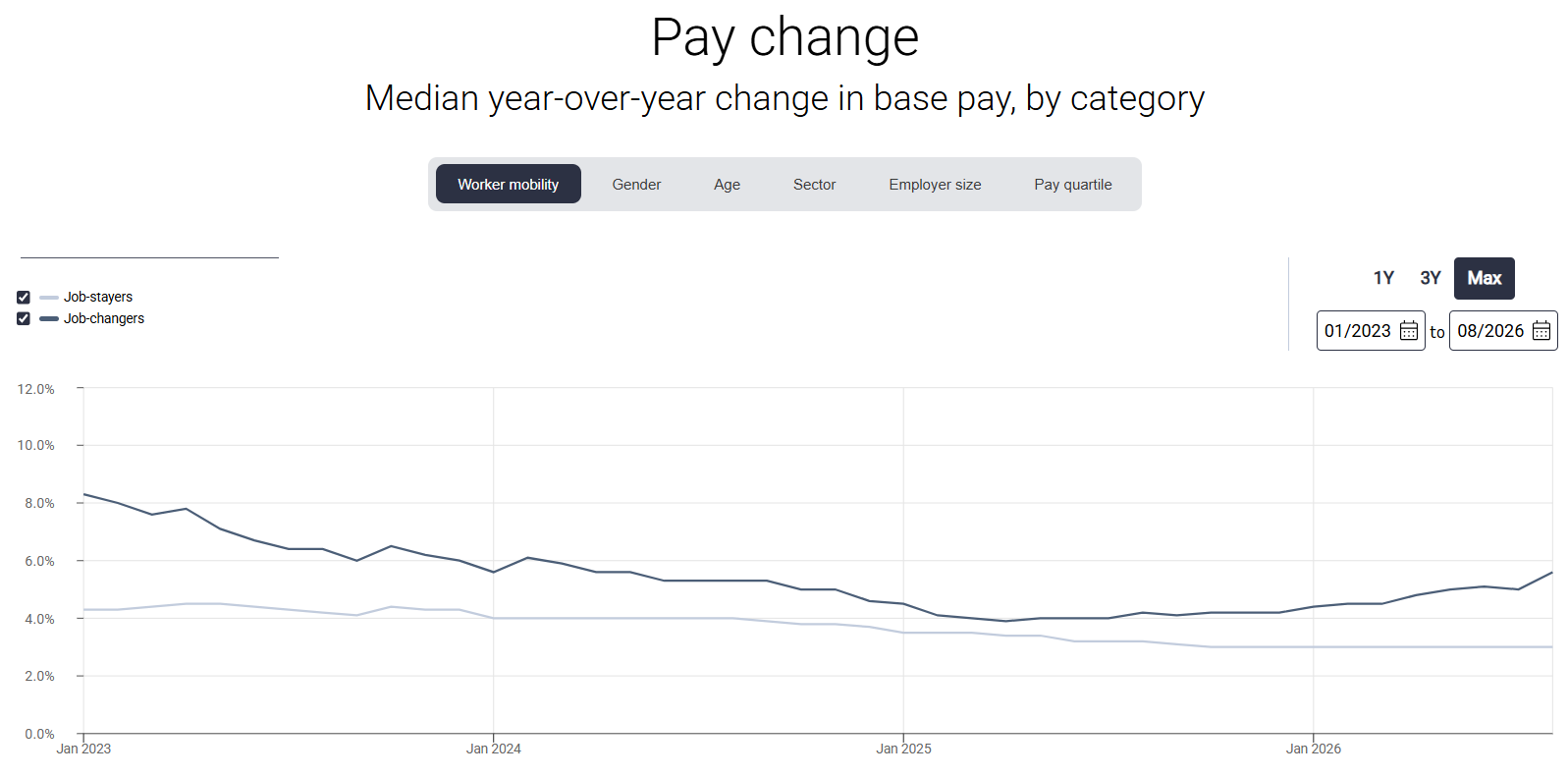
New data shows base pay for job-stayers grew just 3.0 per cent year-over-year in August, compared with 5.6 per cent for job-changers, according to the ADP Canada.
The research draws on the anonymized payroll data of roughly 1.6 million Canadian workers, tracked monthly through a matched sample over a rolling 12-month period, according to ADP.
On a gross pay basis, which includes overtime and bonuses, the divide widened further: job-stayers saw gross pay rise 4.4 per cent, compared with 9.6 per cent for job-changers, the report states.
The average cost of turnover has risen to $30,680 per employee, up from $29,234 a year ago, according to an Express Employment Professionals survey released earlier this year.
Sector, province and firm-size trends
Base pay growth for job-stayers clustered near the 3.0 per cent national median across most sectors, with education and health services posting the highest increase at 3.3 per cent, followed by professional and business services and manufacturing at 3.2 per cent each, per ADP.
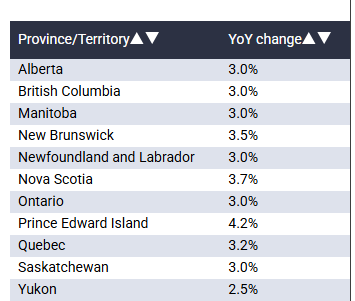
Provincial results varied more widely. Prince Edward Island led the country at 4.2 per cent, followed by Nova Scotia at 3.7 per cent and New Brunswick at 3.5 per cent, while Yukon recorded the lowest increase at 2.5 per cent, according to the report. Ontario, Alberta, British Columbia, Manitoba, Newfoundland and Labrador, and Saskatchewan all matched the 3.0 per cent median, and Quebec came in at 3.2 per cent.
Firm size showed no differentiation: employers with 1 to 199, 200 to 499, and 500-plus employees all reported identical 3.0 per cent base pay growth for job-stayers, the data show.
Workers aged 25 to 34 saw the largest base pay increase among age groups, at 3.6 per cent, followed by those aged 15 to 24 at 3.1 per cent, according to ADP Canada Pay Insights.
Workers aged 35 to 54 matched the 3.0 per cent national median, while those aged 55 to 85 recorded the smallest gain, at 2.8 per cent, a pattern HR teams may want to factor into generational pay equity reviews.
Replacing workers who would leave simply because their employer cannot provide better wages is costly to organizations:
|
Cost/Finding |
Details |
Sources |
|
Canadian per-employee turnover cost |
Canadian employers lose an average of $29,234 per employee annually in direct rehiring expenses and lost productivity, with costs for skilled or senior talent far higher |
Groom Associés, "2025 Employee Retention Benchmarks by Industry (Canada)," citing Mercer Canada, HRPA, Conference Board of Canada, and Statistics Canada |
|
Canadian replacement-cost range |
In the Canadian market, total turnover cost typically runs 50% to 200% of an employee's annual salary once recruitment, training, and lost momentum are factored in |
Employment Hero Canada, "The True Cost of a Bad Hire in Canada" |
|
Cost of disengagement (downstream risk) |
Low employee engagement — a common response to perceived pay inequity — costs the global economy roughly $10 trillion a year, or about 9% of global GDP |
Gallup, State of the Global Workplace 2026 |
While increasing wages is posing a significant challenge for employers, it is a critical retention tool, one expert previously told Canadian HR Reporter.



