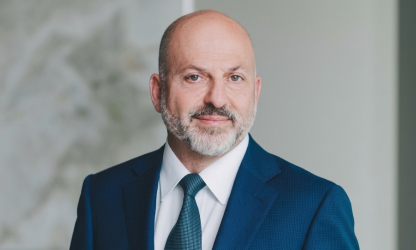
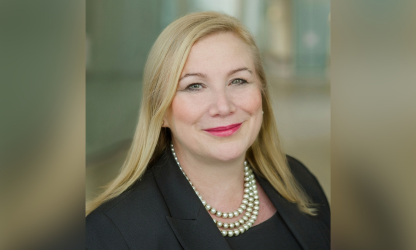
Roundtable: HR leaders at IKEA Canada, Algonquin College and Centurion Asset Management discuss work design, AI’s impact and data-informed support
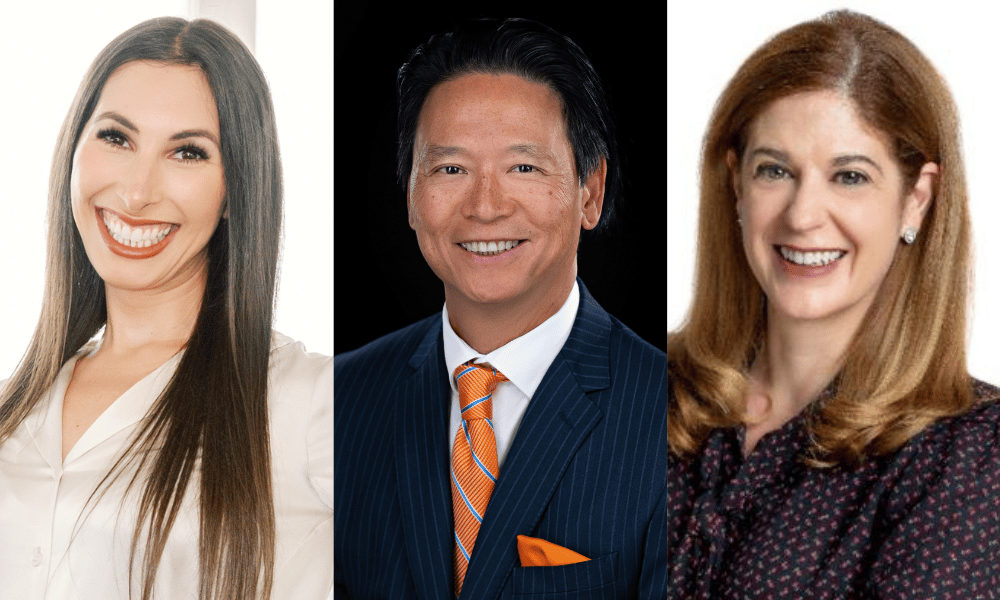
"Up until now, workplace mental health has primarily focused on helping people cope with the workplace,’" says Laura Salvatore, executive vice-president of human capital at Centurion Asset Management.
"I really think the next evolution is also asking, ‘What is it about the workplace that we're asking people to cope with?"
That question ran through a recent virtual roundtable on mental health in the workplace with Canadian HR Reporter, featuring Salvatore alongside Tanja Fratangeli, chief people officer at IKEA Canada, and Kin Choi, vice-president of people and technology at Algonquin College.
Work design and mental health
Centurion's approach has evolved in a way that likely mirrors the broader evolution of workplace mental health, says Salvatore. The first stage focused on access: benefits, an EAP and professional support. The second was acceptance, addressing stigma and whether people felt psychologically safe enough to ask for help.
"I think we're actually moving into a third stage now, which is really interesting, and that's architecture: ‘How have we actually designed work?’" she says.
Even exceptional mental health benefits only go so far if the way people work is creating chronic stress, according to Salvatore.
"We also have to look at the work itself. Are people overloaded? Are expectations clear? Do they have enough control over how they get their work done?"
That doesn't mean advocating for a pressure-free workplace, she says. The distinction is between the pressure of difficult, meaningful work and friction that has been unnecessarily designed into how that work gets done.
"High standards are not the problem, but poorly designed work really can be," she says in the virtual roundtable with Canadian HR Reporter.
Proactive, data-informed support
For Choi, who began his career at Health Canada and has served as chair of the Canadian Centre for Occupational Health and Safety, the past 30 years have brought tremendous progress in policies, programs and supports.
"All that to say, I've had a lot of experience of getting it wrong," he says.
The support side is now well developed in society, according to Choi, and now it’s about evolving to look at “how do we actually address it more systematically around the workplace?”
He says he has been pushing to make mental health a routine practice rather than an episodic one.
"The best time to get counseling services is actually when you feel great, right?" And the best time to … have practical tools… all the coping mechanisms,” says Choi. “I would love to see us get better at the uptake of these types of services, and make it into a routine and make it into a hygiene like we do with other parts of our health, like dental or vision and so on."
At IKEA Canada, the approach is grounded in breaking down stigma and creating an environment where people feel comfortable bringing their whole selves to work, according to Fratangeli. That commitment began during the pandemic and has since become “more proactive, data-informed and integrated into the overall employee experience,” she says.
The organization has provided tools, resources and support to employees, such as The Working Mind to provide mental health education and practical coping strategies to both employees and leaders, says Fratangeli.
“It's important that we just continue to regularly review all of our data, our disability data claims, and our wellness insights to make sure that what we decide to commit to from a benefits perspective and from a program perspective really resonates with our coworkers today,” she says.
“It’s about keeping our finger on the pulse of how that’s evolving, and I think it’s evolving much more quickly than it probably ever has.”
Rethinking sick days at IKEA Canada
HR’s focus has also broadened to a holistic view of well-being, including workload, flexibility, connection and financial well-being. This past year, IKEA Canada introduced a wellness coworker resource group, which she says was well received.
One initiative IKEA Canada is particularly proud of is its change from sick days to wellness days in 2020, just before the pandemic hit, according to Fratangeli, adding the change initially met some resistance before being widely adopted.
Part-time coworkers receive eight days and full-time coworkers receive 12, which can be used for mental health, self-care, caring for a family member, volunteering, observing a non-statutory religious holiday or attending to personal responsibilities, says Fratangeli — even spending time with a newly adopted pet.
"We really believe giving coworkers that time and flexibility to prioritize their well-being is an important part of creating a healthy and sustainable workplace," she says.
Supporting mental health with rise of AI
On AI, Choi says much of the media focus has been doom-laden, which he considers unhealthy, and employees are understandably anxious about job losses. Algonquin has been investing heavily in training and is using tools that examine how groups, not individuals, spend their time, to identify where meetings or other low-value activities could be redesigned.
"This is where AI can augment and help," he says.
Meeting recordings and automated summaries are one simple example, according to Choi, giving people their minutes very quickly.
“That’s a huge advantage from what we used to have before. So, the key to it now is when you have that extra time, how are we supporting people to use it so that they’re not going beyond the scheduled time that they have, right?” he says.
Choi says his own role, which combines HR and technology, was created to address exactly that kind of question about the overall design of work. Many organizations are taking a piecemeal approach instead.
"I think AI, we're seeing a lot of incrementalism going on. So, we're fixing something to get faster to the next queue, but we're not necessarily improving the whole lot of things," he says.
IKEA Canada has approached AI from a global perspective and has been deliberate in communicating that the technology is not about replacing coworkers, says Fratangeli. Much of today's work combines older ways of working with some technology, and in busy, large-format stores, the aim is to unlock capacity so coworkers can focus on meeting customers.
The company has invested in a learning program that explains not just how to use the technology, but why.
"This isn't about replacement, it's really about unlocking that capacity so that ultimately you can do your work in a smarter way," she says.
Assessing cognitive workload
For Salvatore, one of the questions that she says she’s interested in isn't just what can they automate, but what do they want the human job to look like after they automate?
“I think the implementation of AI is going to force us to confront something we haven't really talked about yet. Which is who gets the productivity dividend?”
If AI cuts a five-hour task to three hours, organizations must decide what happens to the remaining two hours, according to Salvatore. They could fill them with more work and tighter timelines, or reinvest some of that time into learning, creativity and more meaningful relationships, while still capturing productivity gains for the organization.
Or they could look at making the workload more sustainable, she says.
“Some of the newfound capacity should absolutely lead to greater productivity for the organization, 100%. But if AI enables employees to work faster, And our response is simply to give them more work, eventually, that higher volume becomes the new normal,” says Salvatore.
"And AI won't reduce workplace pressure. It will accelerate it.”
There's another assumption worth questioning, according to Salvatore: that removing routine work automatically makes jobs psychologically better. AI could remove all the easy work and leave people with eight hours of incredibly complex tasks, such as making exceptions, judgment calls and difficult decisions.
"That's not necessarily a lighter job. It may actually be more cognitively demanding. We may have to start thinking about cognitive workload the way we've historically thought about physical workload," she says.
The well-being question isn't simply whether AI saves time or what work it can take away, according to Salvatore: "It really is ‘What kind of work are we creating for humans with the time that AI saves?’”
Managers as shock absorbers
Fratangeli, who has been in leadership for close to 25 years, says the manager role has become far more multifaceted and complex, partly because of more conversations around mental health and AI transformation.
“I have a lot of empathy for managers,” she says. “So, we need to equip them with the right tools and education to support them.”
At IKEA Canada, all leaders have received mental health first aid training in addition to The Working Mind, with the emphasis on spotting changes in coworkers and directing them to the right resources rather than having all the answers.
She adds that much of this starts at the senior leadership level, which has a responsibility to check in with managers, role model the right behaviours and create space for managers to push back when the load is too heavy.
"We have a responsibility to prioritize… to take things off the plate," she says. "Otherwise, you do create a lot of pressure at that middle management level, for sure."
Choi recalls sitting in on a team huddle where managers reported that their personal morale and capacity were in the red, and had been for a long time. Part of the problem, he says, was a culture of wearing stress as a badge of honour.
“This is where data and analytics come into what’s driving that workload,” he says. “What are you spending your time on? How can we remove a lot of those types of things?”
Salvatore cautions that, collectively, we've expanded the emotional job description of managers faster than we've expanded their capacity to carry it. Excessive work demands contribute to manager burnout, and the business eventually feels it through absenteeism, disability claims, turnover and lost productivity, she says.
"At some point, this really stops being a manager training problem and starts becoming a job design problem," she says. "If someone has 15 direct reports and an overwhelming workload, constant meetings, and no time to actually manage, another two-hour mental health course is not going to help them support their teams better."
Middle managers have become the shock absorbers of the organization, dealing with pressure from above and anxiety from below, according to Salvatore. The answer is not to reduce their accountability, but to look at span of control, workload, meeting burden and whether managers have protected time to lead.
"Accountability without capacity is not a strategy," she says.
Friction audits and exit data
Salvatore expects that more organizations will begin conducting what she calls a friction audit: looking at patterns across the organization to find where work is harder than it needs to be, or where work is being created that adds no value.
“[So] not asking things like, ‘Why was Laura online last night at 10:30?’ but asking, ‘Why does the entire function routinely need to work until 10:30 at night?’" she says.
Many things that hurt well-being also hurt productivity, according to Salvatore.
"Organizational friction is often simultaneously a human problem and an operating problem," she says.
When it comes to metrics such as absenteeism, service usage, exit data and engagement surveys, the key question is what to do about it, according to Choi. The goal at Algonquin is to identify pockets of problems.
As CHRO at National Defence, he knew where those were, and the data would show it, says Choi. From there, it’s about understanding what’s happening in the worksite.
“We’ve been trying to drive at [earlier] signals so that we can do more interventions rather than ‘Here’s a whole bunch of grievances’ and people being off and WSIB and so on,” he says. "That's too late… the more proactive we can be, the healthier I think the workplace overall can be.”
Protecting wellness programs
For Fratangeli, a growing challenge is protecting programs when KPIs are used to look for cost savings, such as reducing wellness days. Her approach is to contribute to cost reduction in other ways, using data to show that supporting employees and getting people back to work in a reasonable time can help lower WSIB and insurance rates.
"Because at the end of the day, if we start to cut those, we're just going to have more of an impact overall to the business,” she says. “I have to have the courage… and the capability and competence to be able to have an intelligent conversation of ‘How do I find that balance?’”
Many typical metrics only reveal what happened after someone is already struggling, according to Salvatore. She wants to know what could have been seen three or six months earlier: whether people routinely worked after hours, took vacation, understood expectations, had autonomy, and how much continuous change they were absorbing.
"Ultimately, we need to get better at measuring the conditions of work, not just the casualties," she says.
Interpretation of data also matters, according to Salvatore. A rise in EAP utilization could signal worsening mental health, or declining stigma and earlier help-seeking.
"It really could be either, and it could even be both," she says. "One of the mistakes we often make in HR analytics is confusing something that's easy to count with something that's easy to interpret."
Averages can also hide a great deal, according to Salvatore. If 90 per cent of employees say they feel psychologically safe, she wants to know where the other 10 per cent sit, who they report to and what they're experiencing.
"I think the bottom line is that we should be as sophisticated about designing psychologically sustainable work as we've become about supporting people when the sustainability breaks down.”
For the full roundtable discussion, be sure to check out the video here.