
Legal experts and politicians warn court battle over $28K–$36K raise could tarnish judicial reputation
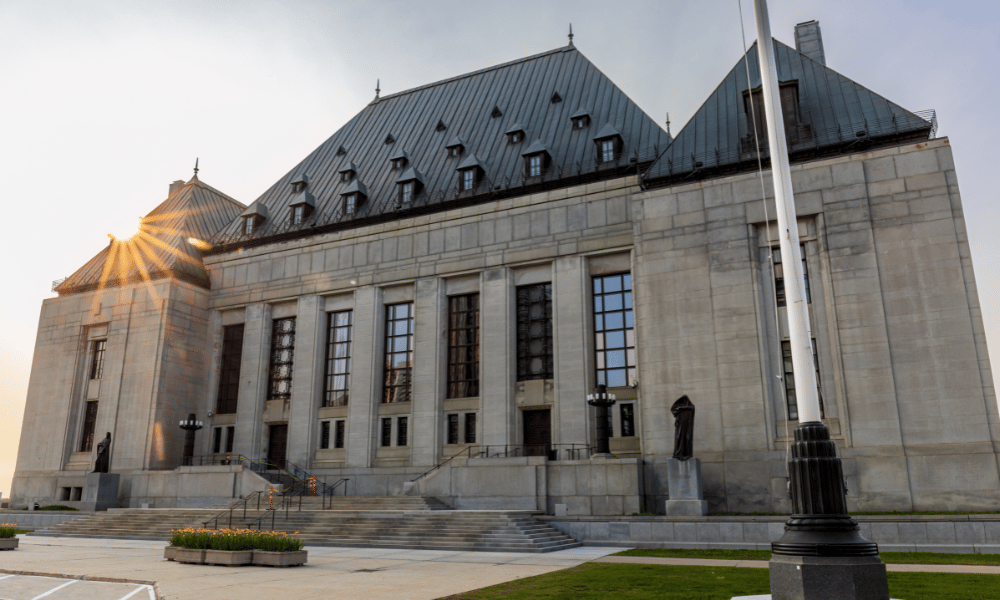
"This entire application is a huge strategic error on behalf of the judges," says Adam Dodek, a law professor at the University of Ottawa. "In a time when public judges are under attack and finding fewer and fewer defenders, this ill-advised challenge is likely to further decrease public confidence in the administration of justice."
The federal government and more than 1,000 federally appointed judges are at odds over an ongoing salary dispute — and the legal and political fallout is raising concerns on all sides, according to CBC News.
The government refused last year to grant judges a salary increase of $28,000 to $36,000, as proposed by an independent commission. They currently earn between $398,000 and $510,000 per year.
Two associations of judges took the matter to Federal Court, arguing Ottawa did not adequately justify its rationale for refusing the salary top-up that was designed to attract better candidates for judicial appointments, according to CBC News. The Federal Court is scheduled to hold hearings in September.
It marks the first time a group representing judges has taken the government to court over the compensation regime put in place in 1999, according to the National Post.
‘Perception of justice’ at stake
The dispute has drawn criticism from multiple directions. Bloc Québécois MP Rhéal Fortin said the federal judiciary unfortunately finds itself acting as both "judge and party" in its dispute against the federal government, according to CBC News.
"I am very uncomfortable with this situation," Fortin said, criticizing both the government's refusal to endorse the commission's position and the judiciary's decision to take the matter to court. "Everyday people seeing this will ask serious questions about the trust we should place in our justice system.” The Bloc has proposed settling the matter in the House of Commons.
Trevor Farrow, dean at Osgoode Hall Law School in Toronto, said both sides need to tread carefully.
"It puts the judges in an awkward position to have to do this, it puts the government in an awkward position to have to defend it and it puts the public in a weird position to have to understand it," he said, according to CBC News. "What's really at stake here is perception of justice, trust in the judiciary and trust in the rule of law."
Dodek, the former dean of the University of Ottawa's common law section, is urging the judges to drop the case entirely, boiling down the issue to "judges determining the salaries of judges," according to the report.
Who should hear the case on compensation?
Beyond the substance of the dispute, the parties have also clashed over procedure — including who should even hear the Federal Court case.
The government argued that a sitting judge would face a conflict of interest, given that any salary increases would also apply to judges at the appeal level, including the Supreme Court of Canada, according to CBC News. Ottawa suggested the case be heard by a retired judge to "address any reasonable public perception of bias," according to the National Post.
The Canadian Superior Courts Judges Association (CSCJA) objected, arguing the government should have formally filed a recusal application, according to CBC News. The association had earlier proposed sending the case directly to the Supreme Court, but Justice Minister Sean Fraser declined, according to the National Post.
Ultimately, the Federal Court appointed former Ontario Court of Appeal judge Alexandra Hoy, who retired in 2023, to hear the case this fall, according to CBC News.
Nearly 1,200 judges involved
The independent Judicial Compensation and Benefits Commission — active since 1999 and designed to protect judicial independence — found last year that a salary of nearly $400,000 was "inadequate" and did not make the job attractive to top applicants, according to the National Post. It recommended a $28,000 raise for most judges and $36,000 for the Chief Justice of the Supreme Court.
In its formal response from November 2025, the government said recent economic developments — including U.S. tariffs, a slowing labour market, and significantly increased defence spending commitments — militated against new fiscal obligations. Ottawa noted that just under 1,200 federally appointed judges would have been in line for the raises, according to the National Post.
The government also pointed out that statutory indexing of judicial salaries has, in most years, already provided increases exceeding the cost of living — noting that judicial salaries went from being 7.3 per cent behind the federal Deputy Minister DM-3 comparator in 2011 to being 2.3 per cent ahead today, according to the government's official response to the commission.



