Global minimum standards, flexibility and ESG popular with employers: survey
When it comes to benefits, the wider application of global minimum standards is a new, unexpected trend for 2024, according to Daniel Drolet, senior partner, group benefits at Normandin Beaudry.
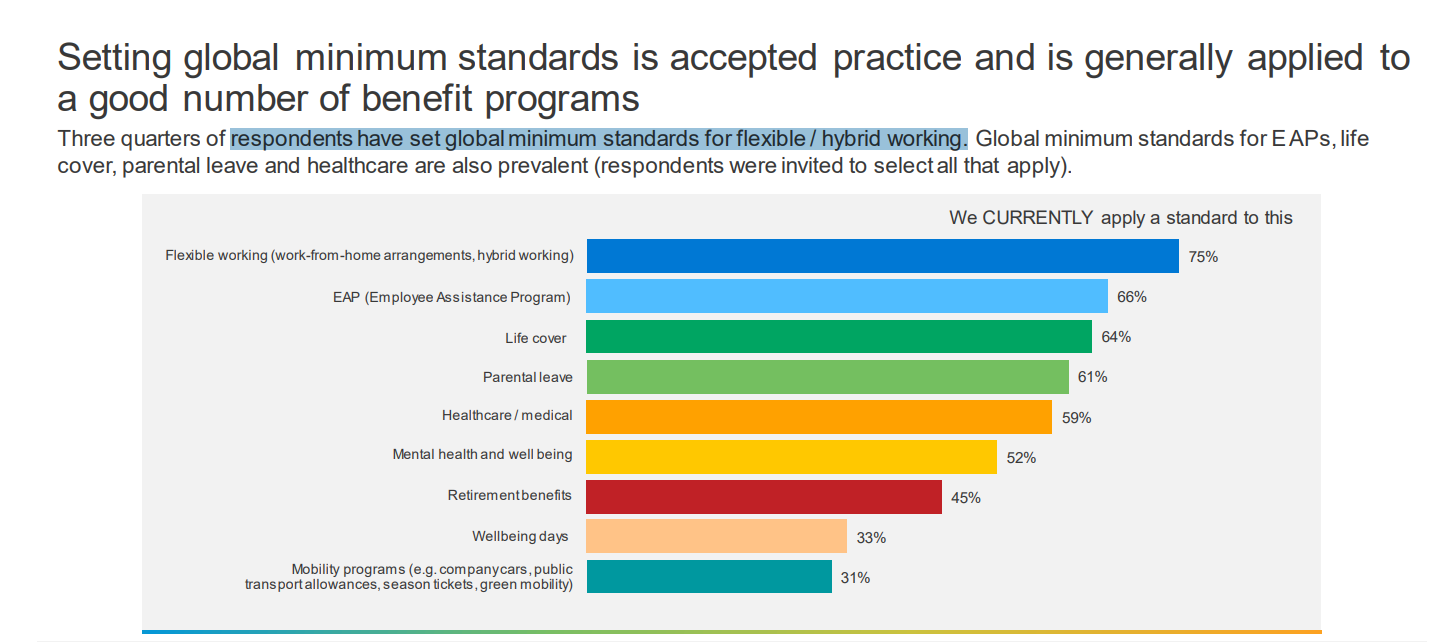
We noticed a significant application of global minimum standards, more than we anticipated," said Drolet, in discussing the results of MBWL International’s 2024 Global Benefits Forecast Survey.
Seventy-five per cent of respondents are setting global minimum standards for flexible/hybrid working, followed by 66 per cent setting global standard minimums for EAPs.
This expansion likely comes from companies looking at what they can do globally to adapt to each different market where they have employees, partly because employers are looking for consistency in all aspects of their business, Drolet said.
“Companies are looking for more consistency in whatever they do, and this also applies to the external image of the company, which I think is great. It's a great place to be right now, so that's most probably why companies are looking more into global minimum standards,” he said.
However, with different insurance company requirements in different countries, global minimum standards may be challenging to put into practice. Companies will have to adapt to these different requirements if they are to treat employees the same way regardless of where they are in the world, he said.
Flexible benefits popular
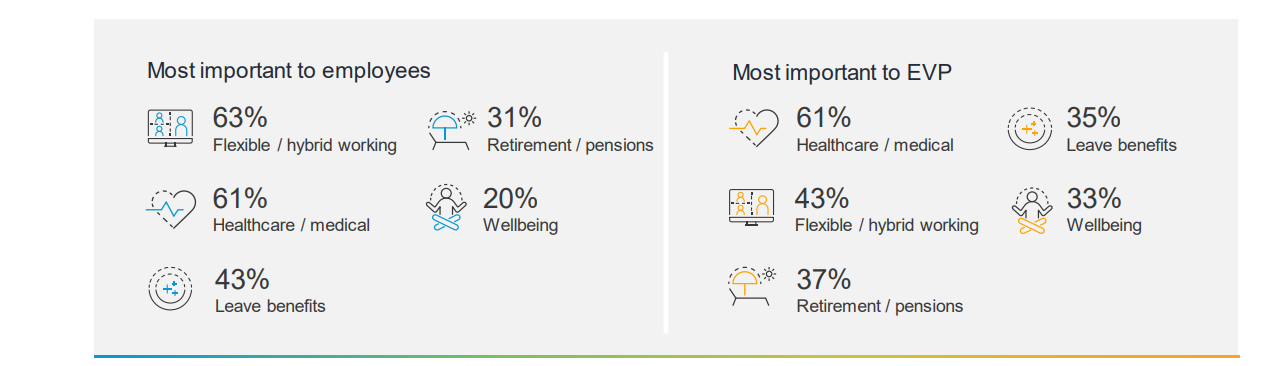
Minimum standards go hand in hand with the theme of individualization in benefits, which are becoming more pronounced, with employees seeking plans that cater specifically to their life or health situations. Drolet points out the shift in strategy from stacking solutions to optimizing what is truly meaningful to employees, who reported flexible/hybrid working, healthcare and leave benefits as the most valuable benefits.
"Instead of merely adding new features like cognitive behavioural therapy or other health and wellness options, companies are now looking to ensure their offerings are meaningful and well-integrated," he said.
The survey's insights into employee benefits revealed a continuing trend towards flexibility, which has been greatly accelerated by the pandemic. Forty-one per cent of employers are currently offering benefits choice or flexible benefits, with 26% not yet offering them but would like to offer this in the future. Meanwhile, 63 per cent of employees valued hybrid / flexible working the most, in comparison to 43 per cent of employers.
Higher numbers of Canadian employers offering or wanting to offer flexibility is more prevalent across North America than globally. Drolet attributes this to the advanced nature of these companies when it comes to flexibility.
"Flexibility was already there, but now it's a focal point of the employee value proposition. Employers recognize its importance and believe that their employees value this flexibility highly," he said.
Benefit challenges
According to Drolet, expectations are rising among employees, which he describes as being 'really high' and likely to remain so. These expectations include enhanced support for health and well-being and filling gaps left by public health services.
"Employers are facing high expectations from employees, and cost is seen as the number one barrier when considering enhancements to their plans," he states.
Amid these trends, the challenge of adequate communication persists. Drolet underscores that while many employees are aware of the benefits they use, they are often uninformed about other available options.
This is in part due to lack of resources within HR departments, who wear many hats when managing workforces, not just managing benefits. Sixty-three per cent of survey respondents said that limited resources get in the way of effective global benefits management and governance at their organisation, followed by complexity at 43 per cent.
Organisations need to look for more meaningful communication, so employees know where and how to access their benefit services – a portion where, organizations need to invest more in their plan, optimizing it and allowing employees to find an answer to their needs, Drolet said.
"We see that employee comprehension of overall offerings in benefits programs is not that great. People know what they use in their plans, but they don't know the rest; more than a third of respondents felt there was inadequate communication about their benefits plan," he said.
What should organizations do next?
According to the survey, organizations should ensure governance is fit for purpose, do more to understand and predict benefit costs, prioritise ESG, DEI and flexibility in governance protocols, consider fresh benefit reviews and communicate better.
Drolet emphasizes the importance of moving beyond benchmarking to create distinctive and meaningful employee value propositions.
"Benchmarking sets the stage, but it's the communication of 'why' and the deeper engagement with employees about their well-being that differentiates a company," he said.
Looking forward, Drolet sees the emphasis on flexibility continuing to grow, alongside the need for simplification to avoid overwhelming both employees and HR departments with complex benefit options.
"Organizations are pushing for operational efficiency and greater impact from their health and well-being initiatives. They are looking for tangible outcomes that demonstrate the effectiveness of their investments in employee benefits," he said.