Explore key types of organizational structure, how Canadian HR teams should adapt to culture and outside forces, and build setups that work today
- Understanding organizational structure and its importance
- Why is organizational structure important in HR?
- What is organizational culture in HR?
- The interplay between structure and culture
- HR’s strategic impact on organizational structure and culture
- External factors that influence org structure and HR strategy
- Why organizational structure needs the right support
Think of a junior hockey team with no clear positions and no chemistry. Players skate in circles, everyone chases the puck, and one kid’s staring at the stands. No one’s talking and nothing gets done.
Some workplaces look like that too. They are disconnected, scattered, and missing structure.
From startups in Halifax to public offices in Whitehorse, how a workplace is set up affects everything. This article looks at the basics of organizational structure and how HR helps shape it from the inside and out to build a stronger workplace.
Understanding organizational structure and its importance
Organizational structure is how a company arranges its teams, roles, and reporting lines. But a chart on paper is a far cry from real team cohesion. The way people work together depends not just on titles, but on how clearly the structure supports collaboration and clarity.
Today’s businesses operate in different ways, across time zones, sectors, and digital tools. That variety is why the one-size-fits-all approach no longer holds. Structure now depends on a company’s size, industry, and growth plans.
What are some examples of organizational structure?
Here are five kinds of organizational structure models found in today’s workplaces in Canada:
1. Hierarchical structure

This is the classic pyramid model. Employees report to a manager, who reports to a director, and so on. It works well in big companies that need clear authority and job separation.
2. Functional structure
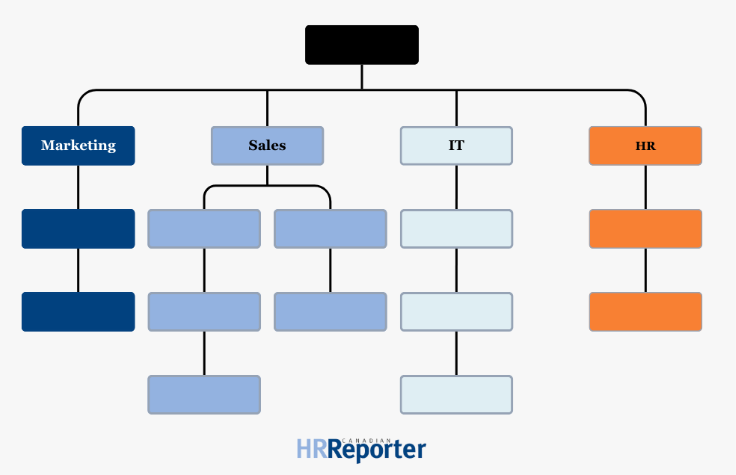
People are grouped by job type like marketing, HR, or sales. A functional manager oversees each team. It encourages specialization but can create silos between departments.
For more on the downsides of working in silos, a recent report shows the need for better connection between HR, finance, and IT to improve alignment and data sharing.
3. Divisional structure

This splits the company by product line, region, or market. Each division has its own resources. This organizational structure works for large companies that need local flexibility or product-specific teams.
4. Matrix structure
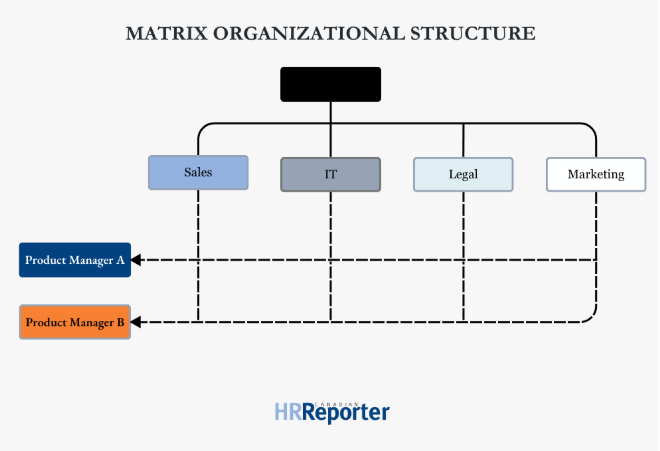
Employees report to two managers, usually one by function and one by project. This allows teams to be flexible and collaborative, but it can be confusing if roles aren't clear.
Read next: How to use the RASCI matrix for HR projects
5. Flat organizational structure
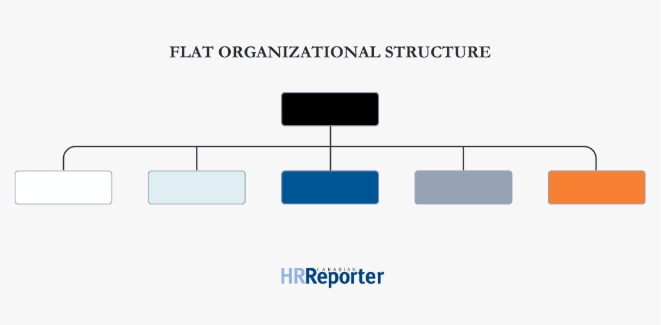
Also known as a horizontal org structure, a flat organization has fewer management levels. Everyone works more closely, with less distance between leadership and staff. This model encourages open communication and fast decision-making.
There are other varieties of models too, such as the hybrid organizational structure, which blends two or more of the above. There are also models like the network structure or the team-based structure.
Centralized and decentralized setups
Some organizational structures are centralized, meaning decisions come from the top. Others are decentralized, giving more power to teams. These aren’t structure types on their own, but they do describe how decision-making works within any model, like hierarchical or flat setups.
As companies grow or shift direction, they often rethink this balance. There’s no single model that works for every business. HR plays a key role in helping leaders choose the setup that supports both strategy and people.
Why is organizational structure important in HR?
Org structure matters in HR because it sets the stage for how teams are built and how work is organized. It shapes the way culture is lived out across the company, from leadership down to frontline teams.
This can even make it easier for HR to spot strong performers and include them in recognition programs. Without structure, many workers get missed, and most programs are already failing because they lack purpose and don’t feel personal. This is why a combination of a good company structure and culture is needed.
What is organizational culture in HR?
In HR, organizational culture means the shared values and habits that guide how team members work together. It is the internal, unwritten system that sets the tone for how people behave at work. It affects how teams communicate, solve problems, and stay motivated.
The role of HR in organizational culture
The HR function helps build and protect workplace culture. This includes:
- setting fair policies
- offering training
- guiding how people treat one another
For example, HR professionals play a key part in preventing bullying and harassment (B&H). They must work with leaders and staff to make sure everyone feels safe and heard.
In British Columbia, it's already a legal requirement under the Workers Compensation Act for employers to prevent and address workplace B&H. These efforts are most effective when HR structures support a strong, respectful culture.
When culture fails: How misconduct erodes trust
Even strong workplace culture falls apart when misconduct goes unchecked. When complaints are ignored or managed internally with no transparency, it signals that leadership and reporting lines don’t work.
Many workers fear raising issues due to poor handling by HR or managers. Without an organizational structure that clearly defines how and where issues are addressed, culture can't hold up and trust collapses.
The interplay between structure and culture
Organizational structure and culture are two sides of the same coin in any workplace. Structure defines roles and responsibilities and the chain of command, while culture is how values and workplace behaviour are upheld.
When aligned, they create a cohesive environment that supports both organizational goals and employee well-being across all areas of expertise and skill sets.
HR’s strategic impact on organizational structure and culture
Human resources isn’t just about hiring. It also plays a strategic part in guiding how the team operates, supports people, and lives out its values.
Designing workplaces that work for everyone
HR has a unique position in the organization because it connects leadership, staff, and strategy to build both a strong structure and healthy culture. Here’s how HR leads the way:
- reinforces values in meetings, hiring practices, and internal communication
- guides leadership behaviour through coaching and accountability
- shapes structure to reflect company values and support real people
- builds DEI policies that support inclusion and retention
- responds to workforce realities, like menopause, hybrid work, or burnout
Toxic culture is often cited to be one of the main reasons that people leave their jobs. That makes culture-building more than just words on a company website, it’s business-critical.
A workplace without proper structure and trust pushes people out. HR’s role is to make sure both exist and work together.
Meeting real employee needs through flexibility
A rigid organizational structure is an inflexible system where:
- roles are too narrowly defined
- decisions only come from the top
- teams can’t adapt quickly to change
- communication stays locked in silos
This can stifle employee well-being and innovation. It may also lead to inconsistent compensation and benefits across roles and teams.
It can discourage open communication, which can all lead to a disengaged workforce. Conversely, a flexible structure that adapts to cultural needs can foster collaboration and inclusivity.
For example, organizations that recognize the importance of supporting employees through life stages, such as menopause, demonstrate how culture can influence structural adaptations.
A recent study highlights that untreated menopause symptoms can lead to major career impacts for women, who already represent a growing segment of the workforce. This shows the need for employer-led support.
To support these kinds of needs, companies require policies and a setup that can adjust and respond quickly. This includes training managers to understand and support employees' health needs, adjusting workloads, and providing access to relevant resources.
By doing so, organizations not only retain valuable talent but also promote a culture of empathy and understanding.

A well-designed organizational structure supports and reinforces a positive culture, while a strong culture can inform and refine structural elements. Together, they create a dynamic and supportive workplace where employees can thrive.
And HR is at the centre of this. That means designing systems that reflect life stages, work styles, and identities. Whether it’s supporting women through menopause or helping hybrid teams stay connected, HR has the tools to build better workplaces from the inside out. But what about the outside forces?
External factors that influence org structure and HR strategy
Workplaces don’t exist in a bubble. Outside forces can redefine how organizational structures are built and run. These include shifts in the economy, new technology, changing laws, and more:
Economic conditions
Tough economic times can trigger major structural changes. Roles may be cut, teams merged, or layers of management removed to reduce costs. This affects talent acquisition as well.
Leaders often respond by flattening the org chart or slowing hiring. HR helps manage these shifts by:
- mapping out new org charts that reflect the updated headcount and structure
- re-evaluating roles and responsibilities to avoid overlap or gaps
- supporting redeployments so existing talent fills priority areas
- communicating changes clearly to maintain trust and morale
- considering boomerang hiring as a way to fill roles quickly with known, trusted talent
HR should also advise leadership on how to retain critical skills during restructuring and how to avoid burning out remaining staff when teams shrink.
To stay current on shifting wages, job vacancies, and tenure trends, HR leaders can refer to the monthly Strategic HR report, available through a CHRR+ subscription.
Technological advancements
Tools like AI, automation, and cloud platforms allow companies to streamline operations. It can also reduce layers and shift roles.
This often leads to leaner teams and new reporting lines, which can even reshape the organizational structure as a whole. HR plays an important role in managing these transitions by:
- assessing which roles are impacted by new technologies
- facilitating reskilling or upskilling programs for affected employees
- supporting change management initiatives to ease the transition
One example of the complexity HR faces is a current lawsuit against Workday, a major HR software provider, over claims that its AI hiring tools discriminate against older applicants.
Read more about the risks of automated hiring and why human oversight still matters in this article.
Legislative changes
New laws may require companies to adjust team structures, especially when new laws affect hiring, safety, or employee rights. In Ontario, the Working for Workers Acts have introduced several updates. For instance, employers must now disclose the use of AI in hiring processes and include pay ranges in job postings.
These changes require HR to adjust recruitment strategies and ensure compliance with the new standards. HR can support these shifts by:
- reviewing and updating policies to align with new legislation
- training managers and staff on compliance requirements
- adjusting organizational structures to meet legal obligations
To stay informed and maintain compliance, HR leaders can refer to Canadian HR Reporter's Workplace Compliance Centre. It offers resources like safety posters and legislative updates.
Demographic shifts
An aging workforce and increased immigration push companies to rethink how teams are built and supported. To respond to these shifts, HR may:
- adjust roles to meet changing skill levels and needs
- offer flexible work to support diverse lifestyles
- build mentorship programs to support multigenerational teams
These shifts also highlight the need for inclusive structures that show the changing makeup of Canada’s labour force. One example is their effect on a geographical organizational structure, where teams are grouped by region. Adjusting to these changes can help companies better serve diverse communities as Canada’s population changes.
Social expectations
More workers now expect meaningful work, work-life balance, and fair treatment. These values push companies to rethink how they’re structured. HR can respond by designing policies and setups that support flexibility, inclusion, and ethical leadership.
Why organizational structure needs the right support
A strong company structure isn’t just a chart. It’s the system that keeps teams clear, connected, and working well.
HR helps build and adjust that system so it fits real people, real needs, and real changes. From culture to the economy, many forces shape how work gets done. But with the right HR support, an organizational structure can flex without falling apart.
Sign up to CHRR+ today to access premium content, industry-leading research, and expert analysis on employment law cases