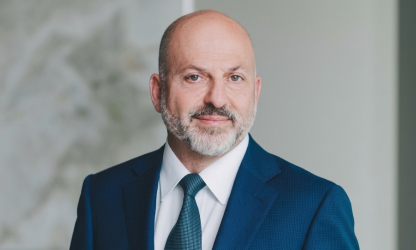
'Trust now is built differently. We have to build those connections in new ways'

Hybrid work is exposing outdated leadership habits and making coaching skills essential for managers, according to one Canadian leadership expert.
Currently, many leaders are still trying to manage hybrid teams with pre‑pandemic tactics that relied heavily on physical presence in the office, notes executive coach Nancy Dewar in talking with Canadian HR Reporter.
“In many organisations, leaders are trying to use old strategies and tactics in a world that has changed,” she says. “We’re relying on ways that we used to control our metrics and control our employees… where we could count on understanding what the output is because we saw people in the office.”
Before COVID‑19, performance was often equated with visibility, Dewar notes. “We could see people working from eight in the morning until 10 at night, and so they were considered hard workers. There were all of these metrics that we would use as leaders to help us gauge if work was getting done,” she says.
With hybrid and remote work now embedded in many organisations, she argues that this model no longer works and must be replaced with a coaching‑oriented approach. “Leaders need to recognise we’re not going back to old ways and we’ve got to really think about new skill sets, new strategies, new ways to do that,” Dewar says.
One of those skills is coaching, she says. She notes that it’s important that employers understand how to build trust differently, “to engage differently, to empower my team differently, and have different metrics and ways to measure output.”
Coaching redefined for hybrid environments
As co-author of the upcoming book Lead for Growth, Dewar defines coaching as supporting individual development while connecting it directly to business outcomes. Coaching, she says, is “looking at the individual and supporting their development and really looking at what’s important to them and helping them really make the connection between the work that they’re doing, the value that they’re providing, and them also feeling like they’re growing and developing and that you care about them.”
She contrasts that with directive management styles that remain common in many workplaces. “When we tell people what to do, people are not as motivated, they’re not as engaged, they’re not as empowered,” she says. “When we work with someone from a coaching perspective, we say in coaching, we ask, not tell.”
Dewar says coaching is well‑suited to hybrid environments and does not lose effectiveness online.
“Coaching can happen virtually. The world of coaching has moved virtually, so I think it’s just as effective,” she says. The key, she adds, is setting aside deliberate time for one‑on‑one conversations that go beyond task lists.
Making sure there’s some structured time to talk about not only what workers need to do, but “actually also speaking to the person about how they are doing, what is the support they need” is important, she says.
Visibility, micromanagement and other common pitfalls
Currently, several common employer practices are undermining performance and engagement in hybrid settings, Dewar warns . One is the continued reliance on visibility as a proxy for productivity.
“The old metric of, ‘Oh, I see them sitting at their desk from eight in the morning till 10 at night, they must be working really hard’—what we really want to see is what is the output of that particular employee,” she says.
Another risk is the use of micromanagement and control systems to compensate for the lack of in‑person oversight.
She adds that many leaders still depend on informal, in‑office contact to stay informed and connected. Some managers, she says, believe that they know exactly what they’re workers are doing because they can see them. In hybrid settings, that assumption no longer holds, says Dewar.
Trust as the foundation of hybrid leadership
Trust, Dewar stresses, is central to effective hybrid leadership. “Strong leaders build really strong relationships and connections with their teammates or their employees,” she says.
Trust is built when the employee is able to deliver, trusting that they have the skills to get the job done, empowering them to do what needs to happen, giving the right guidance and coaching as to what it is the expectations are, making sure they’re clear, she says.
When any of those elements are missing, Deward adds, “there is a lack of trust… and that erodes trust.”
Hybrid work has changed how that trust is developed, she says, because casual, in‑office contact can no longer be relied on. “Trust now is built differently. We have to build those connections in new ways,” she says. That includes “strategies to have meetings outside of the office, those one‑on‑ones virtually, those connections, maybe it’s a coffee… making sure that you have those personal connections built into your strategy as a leader.”
Dewar recommends that teams have regular time together, whether in person or online, with a clear intent. Leaders, she says, should be asking, “What are you going to do during that time to build further trust and connection?”
Recently, Canadian HR Reporter reported that Burger King is introducing real‑time, in‑ear coaching for front‑line staff.
Building coaching capability at scale
Dewar urges organisations to formally invest in coaching capability. “It’s really important that organisations recognise that coaching is a skill. We need to learn how to be good coaches,” she says. Leaders, she adds, “need specific examples of how to be good coaches… using different frameworks and different methodologies, but giving some specific examples.”
She says leaders who have never experienced coaching themselves may struggle to adopt a coaching style.
“If they haven’t had a coach themselves, if they had a coach, it would probably help them through understanding how to be a better coach within an organisation, within my team, within this hybrid workspace—how I can utilise these skills to actually help myself be more effective and my team be more confident and also get to those results faster,” she says.
Ultimately, Dewar says organisations that adapt their leadership practices to hybrid work—by focusing on coaching, outcomes and trust—will be better positioned to drive performance and retain talent.
“When we work with someone from a coaching perspective, we make them feel like they’re a big part of why the organisation is doing well,” she says.
Francois Gilbert, vice-president of human resources at Lilly Canada, previously shared how important coaching is at their organisation.