
There's a lot more employers can do beyond posting well-meaning statements of support
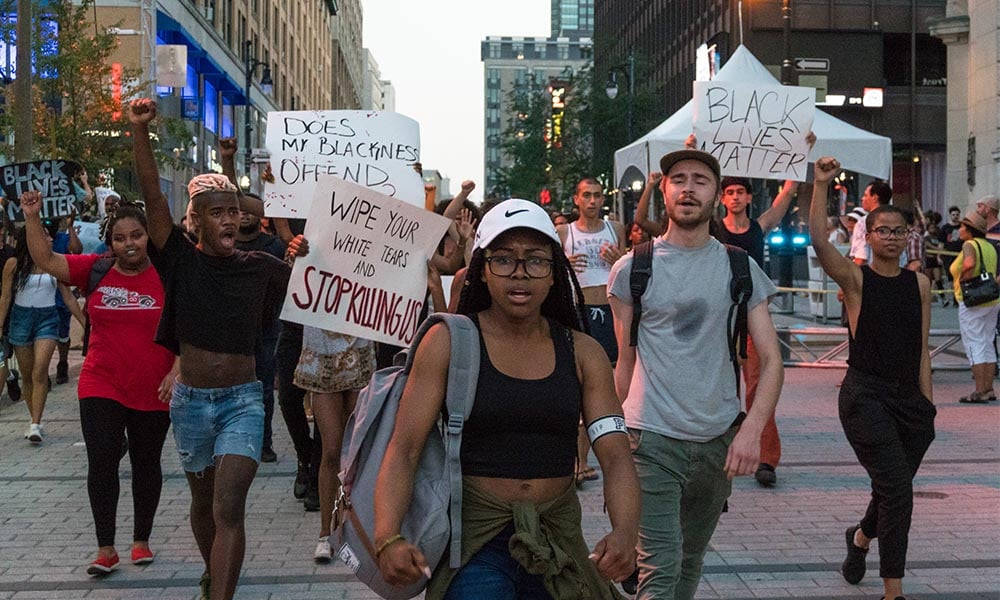
After the wave of protests around the world addressing systemic racism and police brutality, many employers put out statements supporting the cause. But when it comes to the workplace, do these kinds of gestures really make a difference? Diversity experts say there’s a lot more work to be done.
It's great to for employers to step up and say, “This is what we’re doing right now,” but it's about continued action, says Ann Divine, CEO of Ashanti Leadership and Development Services in Halifax.
“Once you start this journey, its the process of continuous learning. It's not just for today; there has to be a commitment, there has to be a dedication and a willingness. And, sometimes, it means going against the grain.”
The words of support are certainly helpful, says Tomee Elizabeth Sojourner-Campbell, managing director and principal consultant at Tomee Sojourner Consulting in Toronto, “but, in terms of looking at their employment systems, understanding fundamentally how anti-Black racism and how racism and systemic discrimination either lives in their workplaces or is around them, they need to be more cognizant of that as they go forward in the type of services to deliver, the type of employment environment that they offer.”
What we’re seeing from employers is an example of performative allyship, says Karlyn Percil, CEO of KDPM Consulting Group in Toronto.
“A lot of companies are now doing the whole performative thing and ‘Well, yes, we do care; we do want to be a part of the conversation.’ But just placing the tweet without any further information… simply saying that you stand in solidarity or ‘Black Lives Matter’ is just really a Band-Aid on the structural, the institutional, the interpersonal act of racism that has been around for so many years... without looking at the systemic barriers, looking at your hiring practices, looking at your advancement or even how you retain Black employees.”
Reaching true analysis
Employers are in a unique position to create a future of work where Black lives really matter in the workplace, but also to model what it looks like to create an equitable workplace, she says.
“A lot of companies look at inclusion as having D&I [diversity and inclusion] strategies of ‘Let's support a racialized or Black community group, let's create a group within our workplace,’ but it doesn't go beyond that, it doesn't go to equity.”
Employers need to look at how they are collecting race-based data within their organization, says Percil.
“How is the information being used to address the emotional tax or the challenges that Black employees face in the workplace?” she says. “[It’s about] actually taking action: What does accountability look like? And what does it truly mean to be an inclusive leader?”
It’s about deepening the analysis and using an anti-racism, anti-oppression perspective to ask tough questions, says Sojourner-Campbell.
“Are we, our employees and our clients, dealing with microaggressions? Do we have an understanding of what and how we root out systemic forms and individual forms of racism and other forms of discriminatory behaviour, actions, practices, beliefs so that we can truly live up to the expectations that we set out in our diversity and inclusion strategy?’”
Diversity initiatives must be tied to performance management, says Divine.
“What are you doing in terms of promoting? What are you doing in terms of engaging people from diverse backgrounds, and not just putting in place individuals who look very much like yourself… unknowingly, unconsciously giving that person preferential treatment as opposed to the person who doesn't come from the same background as yours?” she says. “We like to use the words ‘the right fit.’ Now, what does that mean? It means somebody who looks like me, somebody who behaves like me.”
Support Black employees
It’s important for employers to create a space and a permanent voice for employees at the decision-making table, says Sojourner-Campbell.
“I don't see how an employer can address anti-Black racism and not have Black employees present to talk about what their experiences are. Not only that, to draw on their expertise and their knowledge, so that it's not simply ‘my story’ but it's ‘My story as a trained professional in this environment’… so it's not a generalist perspective, it's a very specialized set of knowledge.”
If you want to attract the best talent, you've got to have management take concerns seriously, says Divine.
“And that means for your staff to have this place where they can speak to each other, where they can be free and where they can feel it’s a space where they feel valued.”
The real work starts not just with a Black employees’ network but making sure they’re an equitable partner, says Percil.
“Are you leveraging that group when it comes to advancement or retention or truly understanding the leadership journey or getting feedback on a specific program?” she says. “If your organization doesn't have this space or a way to listen to the stories to the leadership journey of your Black employees, if you do not have representation on your boards, on your senior leadership team in your pipeline, then it means that you really have not started doing the work of inclusive leadership, which translates to inclusive allyship.”
Have leadership step up
It is essential for leadership to model the behaviour that they're asking employees to do, says Sojourner-Campbell.
“When they're dealing with either overt or covert racist statements — whether it's said in a meeting online or in different formats — it would be very important for the leader, the CEO, to stand up and to comment back and recognize but also name what the racist comments were, in terms of identifying ‘Was it anti-Black racism?’ Because I think sometimes what will happen if there was an incident that was very uncomfortable or [racist], people don't necessarily know what that means. So, it’s talking about… ‘Here are the steps that we're going to constantly take in order to address this matter.’”
It’s also about looking at white privilege and fragility, and how it has contributed toward a culture of anti-Black racism, says Percil.
“If your CEO, your HR leaders, your people leaders have not gone through anti-Black racism training, if they do not know what a covert racist act or overt racist act or what is unconscious racial [bias]… if they don't have a knowledge of racism or the tenets of racism, then how can you ensure that your leaders have been inclusive?”
Make training effective
While the intent of racial bias training is well meaning, it has to be integrated into the fabric of a person's job so it makes sense to them, says Sojourner-Campbell.
“A theoretical, abstract conversation about race and racialized identities and the history of racism — it's great to inform people, but if you actually want them to change, you need to create an environment where they know how to put those skills into practice and it translates into real change.”
And employers have a responsibility — under various human rights codes — to provide a workplace free from discrimination, she says.
“There's a legal element to this that I think sometimes gets lost when we think of it or we couch anti-racism or anti-oppression or dealing with systemic racism issues as more of a ‘How do we do this as a society?’ as opposed to looking at the legalities and some of the legislative obligations that employers and employees have.”
It’s also important to acknowledge that all human beings are biased, says Divine.
“When we become aware of how bias impacts our decision-making on a daily basis, when we go through this training, we should be able to go back to our organization and say to a senior level or staff or leaders ‘We need to do something different.’ By that difference, I mean look around in your boardroom, look around in your office and see who are being promoted, who have been given the [top] projects, who are being called upon to take forward initiatives within the organization.”
RACISM A SERIOUS PROBLEM FOR MANY IN CANADA
47%
Number of Canadians who think racism is a serious problem in Canada (compared to 69% in 1992)
23%
Number of people who have been victims of racism (compared to 16% in 2005)
25%
Number of visible minorities who see racism as a serious problem (compared to 13% of whites)
50%
Number of visible minorities who are victims of racism (compared to 19% of whites)
Source: Ipsos



