
Survey of 1,900 adults shows generational, gender differences — and productivity experience — of WFH

When it comes to working remotely, feelings of unhappiness and the struggle to balance the demands of work and life are the biggest challenges, according to a report.
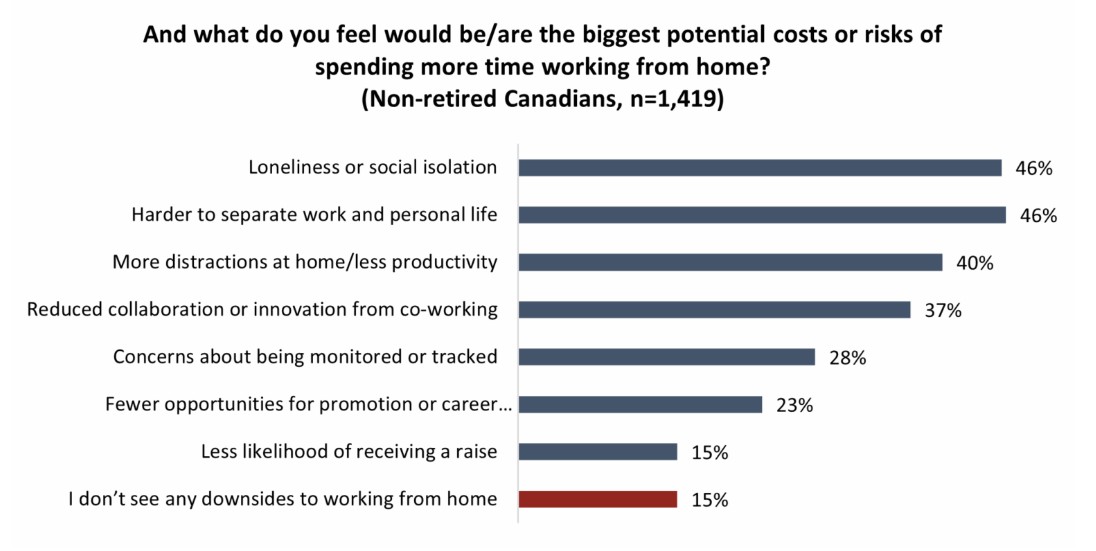
More than two-fifths of Canadians cite social isolation (46 per cent) and the lack of division between work and personal life (46 per cent) as their biggest struggles in this arrangement, reports Angus Reid.
Other concerns include having more distractions at home than in the office (40 per cent) and reduced opportunities for collaboration (37 per cent).
Generational differences with WFH
However, there are generational differences in the perception of the challenges of working from home.
“For 18- to 24-year-olds, an age group who came of age during the pandemic and saw many in-person social opportunities replaced with screentime, social isolation is a higher concern (56 per cent) than for other age groups.They are also the least likely to prefer full-time remote work (19 per cent),” according to the Angus Reid report.
One-in-seven (15 per cent), including one-quarter of those older than 54, say they don’t see any downsides to working from home.
The shift to remote work has revolutionised the workplace, offering employees flexibility and convenience. However, it has also introduced significant challenges for employers, particularly in training, supervising, and managing employee performance, according to a previous report.
The experience of working from home
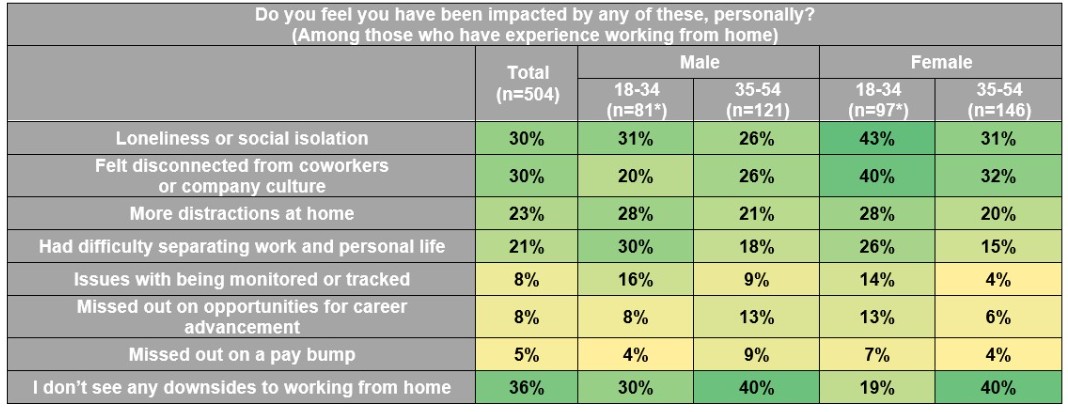
Among Canadians with experience working from home at some point in their career, three in 10 (30 per cent) have felt disconnection and loneliness, according to Angus Reid’s survey of 1,918 Canadian adults conducted in July.
These sentiments are particularly acute among younger women. Among them:
- 23 per cent have experienced “disconnection” from coworkers
- 22 per cent have worked through more distractions at home
- 21 per cent have experienced difficulty separating their work life from personal life
Notably, younger workers are also more likely than those aged 35 and older to say that they have concerns about having their activities tracked.
Productivity in working remotely
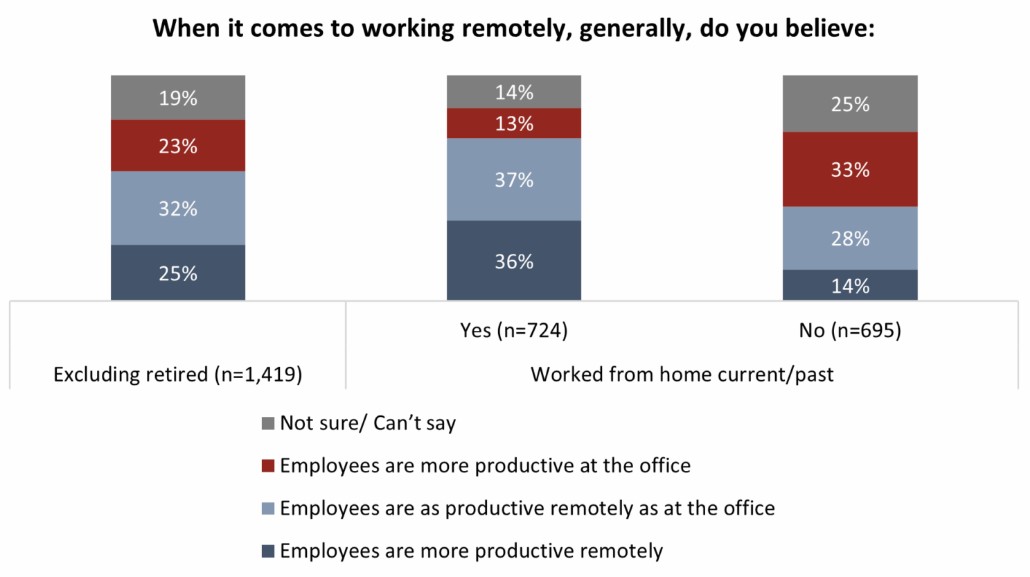
Despite the difficulties, 57 per cent of working-age Canadians say they believe workers are just as, if not more, productive at home compared to on site.
Among those with experience working from home, this is overwhelmingly the view.
Here are some ways employers can make remote workers happy, as Johnny Duncan, small business consultant, shares via Bonusly:
- Provide a platform for effective communication.
- Recognise great work.
- Clarify goals.
- Place an emphasis on what’s produced, rather than when.
- Keep coordination of job functions in the forefront.
- Emphasise culture.
- Assist with time management.
- Get to know your remote employees.



