
For many employers, 'it was never about doing the right thing — it was about looking like they're doing the right thing,' says HR leader
There has been plenty of pushback south of the border when it comes to diversity, equity and inclusion (DEI) initiatives. Many educational institutions, politicians and private employers have walked back efforts in this area, claiming quotas don’t make sense and the programs can be discriminatory.
More recently, the CEO of tech startup Scale AI touted the hiring principle of “MEI,” which stands for merit, excellence, and intelligence.
"That means we hire only the best person for the job," said Alexandr Wang in a blog. "We treat everyone as an individual. We do not unfairly stereotype, tokenize or otherwise treat anyone as a member of a demographic group rather than as an individual."
No group “has a monopoly on excellence,” he said.
“A hiring process based on merit will naturally yield a variety of backgrounds, perspectives, and ideas… We will not pick winners and losers based on someone being the 'right' or 'wrong' race, gender, and so on.”
His message was praised by other leaders, including Tesla CEO Elon Musk on X. Do these developments mean HR leaders are abandoning or downgrading their DEI efforts?
Inauthentic DEI programs ‘not sustainable’
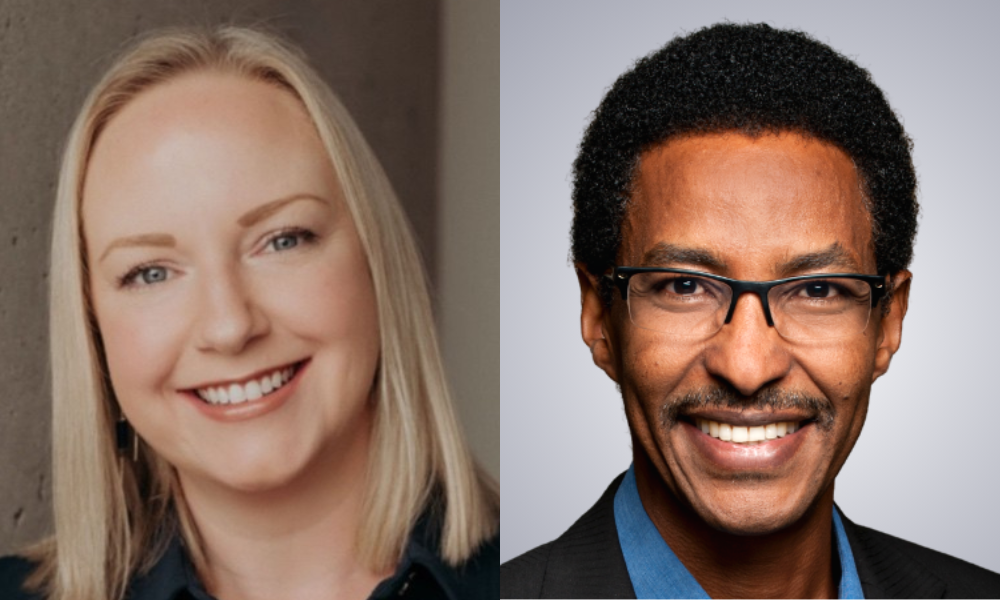
Not for Christine Tatham, who says she understands where some of the backlash is coming from.
“I think a lot of companies over indexed on DEI in a way that wasn't authentic, and where the numbers for them were more important,” says the vice president of people and culture at Redbrick, a portfolio of disruptive digital companies.
“The optics and the visuals were more important than the actual meaning behind it.”
Those programs are not sustainable, she says.
“They're the programs that make companies who are focusing on DEI for the right reasons look bad. And now they're proving everyone right because they're pulling back that spend because, for them, it was never about doing the right thing — it was about looking like they're doing the right thing.”
The employers that are rolling DEI back are the ones that rolled out initiatives three years ago after the George Floyd incident because the spotlight was on them, says Tatham.
“They were doing it for all the wrong reasons… And now they're scaling back because they're finding that it hasn't provided the ROI that they intended or it's not working, for whatever reason.
“But they haven't evolved. And if you haven't evolved your program, that's never going to continue to work. Because every year, the world we live in changes, the people are different and things are going on in the community, across the globe, and this is something that has to be a continual evolution.”
Canada different from U.S., says academic
Awad Ibrahim says there are several reasons why the pushback in the U.S. won’t necessarily resonate in Canada.
For one, we need to remind ourselves that Canada is not the U.S., says the full professor and vice-provost, equity, diversity and inclusive excellence, at the University of Ottawa.
“We have a particular history; we have a particular way of thinking and ways of being that are not necessarily theirs. There are joinders with the U.S., but we're not the U.S.”
And to make a blanket statement, the U.S. “either doesn’t want to or is incapable of dealing with [its] history,” he says.
“We have the ethical and moral responsibility of dealing with it whereas in the U.S., there is an arrogance of not needing to deal with that history.”
Yes, Canada has had white nationalists and the KKK, but that’s not the “prominent narrative,” says Ibrahim, citing as an example the Truth and Reconciliation Commission of Canada.
In addition, while Canadian governments may not have set in stone certain DEI policies, the DEI narrative has “seeped” into many people’s minds and many institutions – despite being a continuous process that has its struggles, he says.
“It's becoming almost the law of the land… if you go on the ground, in other words, if you go to institutions, like universities, like the government, all of this EDI has almost become relatively established rules.”
C-suite, HR leaders committed to DEI
Encouragingly, a recent survey out of the U.S. suggests the pushback against DEI may be overstated: Nearly three in four C-suite and human resources leaders there say they plan to boost their commitment to DEI.
“Not only do business leaders recognise the value of DEI, they are prepared to invest in it," said Tory Clarke, co-founder and partner at Bridge Partners, which did the survey of 400 C-Suite and HR decision-makers in the United States.
"It's encouraging to see that, despite the near-constant attacks on DEI programs in the last year, business leaders are still focused on the facts — that diverse teams, equitable hiring processes, and inclusive cultures are all valuable drivers of stronger organisations," Clarke said.
Misperceptions about workplace diversity initiatives
Many of the misperceptions about DEI came about because of companies doing things in the wrong way and being inauthentic, says Tatham.
“I think the companies that are doing it right have employees that really understand the benefits that it brings,” she says.
“But for people who don't really get it or understand it, and don't take the time to understand it, they're going to continue to have this perception that all companies are just trying to hit quotas, and some of them are, but not all of them are doing it for that reason.”
Redbrick measures the effectiveness and success of its programs by listening to employees, says Tatham.
“For us, it's about having a culture in a workplace where people feel like they belong and they're valued, for whatever background they come from… We continually look across the team and make sure that things are equitable in the team, people are paid fairly, consistently, that our hiring practices are bringing in diverse talent that is representative of the customers that we're supporting and the world we live in.
But the company won’t prioritize metrics over talent, says Tatham.
“The best talent always trumps a quota; we're not going to hire someone just to meet a quota. So when we're looking at things, the ROI is important, but for us, it's more around the qualitative metrics and really listening and making sure that we're hearing our people,” she says.
“For us, diversity, it's not just about race or cultural background, it's about everything, every little thing that makes somebody different, and what they bring to the table.”
DEI about ‘looking at the work that you’re doing’
For many, DEI is still seen as an add-on to other initiatives, says Ibrahim.
“Not only does the research show this is useless but it does more harm if it's perceived that way. Because then you're turning EDI [into] a workshop, something that people just do and they're given a certificate for it.”
And research shows this becomes a piece of information that you can easily forget, he says.
“In the long run, it's harmful precisely because it gives leeway, it gives permission for people to revert back to what they already know — as opposed to seeing EDI as a lens through which you're looking at the work that you're doing.”
DEI is not about changing the work that you're doing but it’s about looking at “the way in which you're continuing to do the work that you're doing,” says Ibrahim, which means asking questions such as “Am I making not only the right choices but what am I leaving out? Is it by ignorance or by choice? Those are two different questions.”
ROI of DEI
Employers that aren’t prioritizing DEI are missing out, says Tatham.
“When they're neglecting to ensure that their hiring practices, for example, are… reaching all sorts of different populations, they are missing bringing great people into the funnel. If they're focused just in Canada, they're missing international talent that could be a great addition to their team, and they're missing that ability to bring those fresh ideas and perspectives.”
Employees with a different background because they come from another country, for example, tend to have different ways of thinking because their culture and ways of doing business are different, she says.
“They bring not only their fresh ideas, but they offer ideas ideating in the team so that people start to think of doing things differently. And companies that don't want to do that are missing out… on innovation, they're missing out on changing things up and they'll become stagnant, in my opinion.”



