'There's this informal, chilling effect — you want to make sure you’re not out of step': legal, cultural and organizational complexities facing HR

"A lot of what companies do here in Canada is voluntary … if they’re worried about perceptions in their home base in the United States, they may change their practices in Canada, though strictly speaking, none of Trump’s orders apply in this country.”
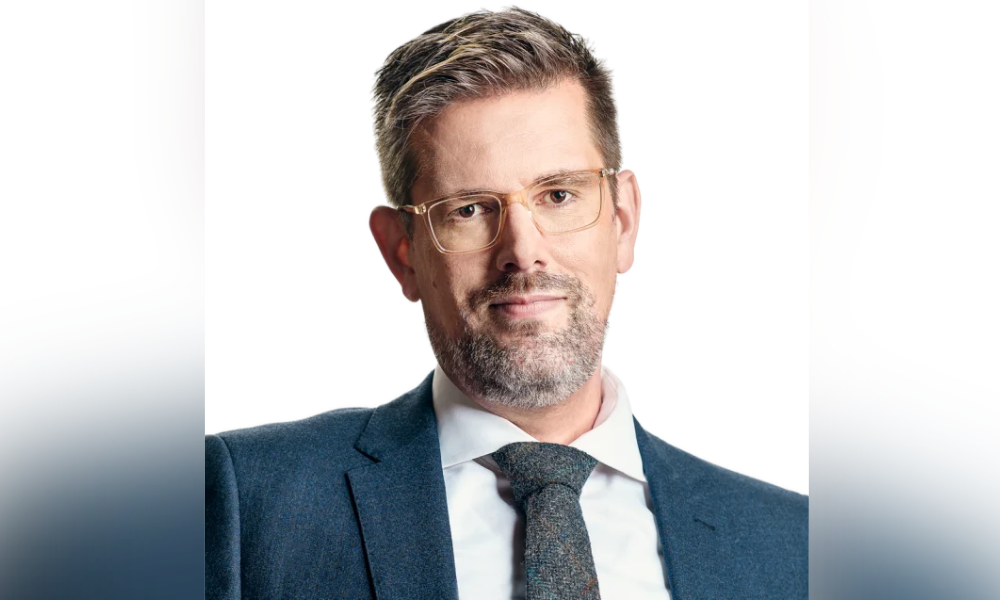
So says Kevin Banks, director of the Centre for Law in the Contemporary Workplace at Queen’s University, on the impact that Donald Trump’s DEI-related executive orders may have on Canadian subsidiaries of American-based firms.
Recent orders by Trump, aimed at dismantling federal diversity, equity, and inclusion (DEI) offices and programs, highlight complexities of cross-border operations, with Canadian subsidiaries of U.S.-headquartered corporations facing unique challenges.
How employers and HR leaders respond to pressure from HQs below the border will depend largely on the culture and leadership of each individual case, Banks says. While Canadian companies are ruled by human rights and labour laws, there is still room to withdraw support for DEI.
Cultural and organizational challenges
Even when Canadian operations remain legally distinct, the broader cultural influence of U.S. policy shifts can have an impact, says Burkard Eberlein, professor of public policy at the Schulich School of Business.
"There’s this informal, chilling effect—you want to make sure you’re not out of step,” he says.
The corporate headquarters of Walmart Canada, for example, may not want to be “out of lockstep” with the general corporate policy out of the U.S., says Eberlein.
“They can step back … It’s just a commitment. It’s not a legal requirement,” he says. “It’s not as simple as, ‘Well, Walmart Canada now has to follow what Walmart U.S. does …’ There’s this informal pressure to align. But everything that is voluntary, they can step back."
Balancing compliance with values: autonomy or alignment
In addition to ethical or policy concerns, organizations can have deeply entrenched values systems. Banks explains that changing cultural norms within the company without considering those values can have detrimental effects to employee morale and productivity.
“There are corporate values that matter, both to the company management in terms of what they believe the business stands for, and also to the workforce and the morale of the workforce,” he says.
“The role of human resource people is often to make sure that their practices, their hiring and promotion practices, and their distribution of advancement opportunities align with those values: ‘Who do we say we are as a company, and what do our workers think is fair?’”
Sometimes there are many different voices within an enterprise, says Banks.
“But, I would say if you have a DEI initiative that is broadly accepted and aligns with your corporate values and seems to be working, there isn't any reason in this country to dismantle it.”
Shifting values away from inclusivity also risks alienating younger workers who are just entering the workforce, he adds, “if you move aggressively to dismantle a program.”
Understanding autonomy of Canadian subsidiaries
According to Eberlein, understanding the autonomy of Canadian subsidiaries is crucial for employers.
While Canadian branches of U.S.-based corporations are legally distinct entities with their own governance structures, their operations can still be influenced by broader corporate strategies.
"These are not franchise models … These are different entities, right? They are legally different entities. They have their own governance structure, their own board, their own directors,” Eberlein says.
“In theory, they could do quite different things if they wanted to. But of course, at the end of the day, I think it’s more a political relationship that they have with the headquarters, and a bit of a negotiation between the two to make that work as a relationship."
Eberlein acknowledges that informal pressures from U.S. headquarters may still influence decision-making, and that usually it is the bottom line that dictates decision making.
"At the end of the day, if Walmart Canada increases its market share in the Canadian space, we are happy. We are not too concerned about how much DEI they are doing or not, and we respect that."
Navigating organizational and legal complexities: advice for HR
For HR leaders in Canada, maintaining compliance with Canadian laws while addressing pressure from U.S. headquarters requires a strategic approach. Eberlein emphasizes that drastic changes are as yet unlikely for most Canadian operations.
"At the level where you work, things do not necessarily change now. You have established policies, you are in compliance with what’s ever required locally, and you’re running programs with a more long-term perspective around hiring, around promotion, around training.
“You’re not just going to say, ‘Oh, this is a new executive order. Do we need to stop? Should we stop all our training? Should we change the narrative to do all that?’ I don’t think at that level, it’s really what’s going to happen for them."
Broader cultural shift: what’s at stake for Canadian companies?
As U.S. policies increasingly challenge DEI and ESG initiatives, Canadian HR leaders should be mindful of the broader cultural and political trends influencing their industry – American politics might seem removed, but Eberlein reminds Canadian employers to be pragmatic.
"We shouldn’t be naïve. I think we see those more conservative trends also coming north to us. I mean, we’ve seen that in other areas,” he says.
"I think with DEI, it’s not a simple alignment — Canada is not simply going to follow, and that’s for various reasons … but I don’t think there’s this appetite in Canada to roll all of this back, culturally speaking, like we’re seeing in the U.S. So many more people in this country care about this and will stand up to protect what we have at the moment with employment equity and human rights legislation and jurisprudence."
As Banks puts it, even if political shifts do cause a shift away from DEI policies in Canada, public opinion will still reflect the realities of social inequalities.
“The facts on the ground haven’t changed all that much. There’s still a fair bit of disadvantage to racialized people and women and people with disabilities that they experience on a day-to-day basis,” he says.
“And at some point, the pendulum will swing back, and public sympathy will return to these kinds of disadvantages because they undermine basic socially accepted ideas of equal opportunity."