Academics explain Canadian multiculturalism's blind spot, polite racism: 'The art of saying no with a smile'
Although Canada has long been perceived as multicultural “mosaic” where different nationalities can co-exist in harmony, new research shows that this idea is far from reality.
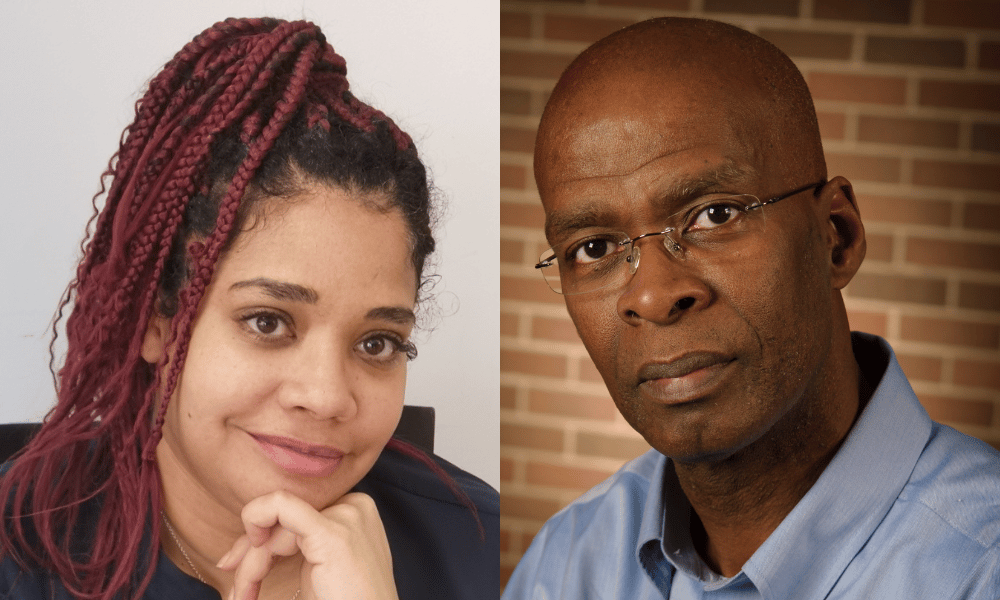
As University of Ottawa researcher Dr. Karine Coen-Sanchez explains, bubbling beneath the surface of Canada’s civility and DEI practices lies a subtler form of racial exclusion: “polite racism”.
This type of racism is “distinctly Canadian”, she says, because it hides behind the veneer of our trademark politeness: it’s harder to see and harder to name, but it still has the power to decide who gets hired, who gets promoted, and who truly belongs.
Understanding polite racism in Canada
According to Coen-Sanchez’s research, “Polite Racism and Cultural Capital: Afro-Caribbean Negotiations of Blackness in Canada”, Black Canadians (her research focuses on first- and second-generation Haitian- and Jamaican-Canadians in Ontario and Quebec) continue to face systemic barriers in hiring, promotion, and daily workplace interactions, despite high levels of education and professional qualifications.
These patterns persist even for those with strong educational backgrounds and professional credentials.
Instead of being about open hostility or explicit discrimination, polite racism is about how institutional politeness can be weaponized to maintain the status quo, Coen-Sanchez explains.
“In my research, I define polite racism as a distinctly Canadian form of racial exclusion — one that hides behind civility, bureaucratic neutrality, and institutional politeness,” she says.
“It is the art of saying no with a smile. It sounds like, ‘You’re not the right fit.’ It looks like praise without promotion. It’s the feedback that never mentions race — and yet race determines who gets in, who moves up, and who belongs.”
This form of racism is deeply embedded in the everyday practices and norms of organizations, she adds. This makes it difficult to identify and address, resulting in a workplace where racialized employees are often left feeling excluded, even as organizations tout their diversity credentials.
“Polite racism operates through what I call a duplicity of consciousness,” Coen-Sanchez says.
“Institutions publicly proclaim equity while privately centering whiteness as the measure of professionalism … diversity is celebrated symbolically [but] whiteness quietly defines competence and belonging.”
Carl James, professor and Jean Augustine Chair in Education, Community and Diaspora at York University, highlights the broader societal context that enables polite racism to thrive in Canadian workplaces.
“In the Canadian context we think of ourselves as multicultural, we think of ourselves as not like the U.S.,” James says.
“We think that we do not give attention to race in the same way [as] the U.S., and therefore race is not a deciding factor in people's relationships or what happens in our society.”
The impact on hiring and advancement
Coen-Sanchez’s research points to persistent disparities in employment outcomes for Black Canadians, and identifies common experiences by study participants. For example, Haitian-Canadians reported that the benefits of speaking both English and French, generally considered an asset in workplaces especially in Quebec, were cancelled out by discrimination; one responded said she was rejected from a job because of her accent, although she was bilingual.
“Institutional rejection is cloaked in seemingly neutral standards like ‘comprehensibility,’ but in practice, reflects a deeper discomfort with non-dominant forms of cultural expression,” the study states.
“The participant’s account also reflects the everyday reality of polite racism in Quebec, where exclusion is expressed through civility and framed as a technical concern rather than a racialized judgment.”
Polite racism is especially visible in hiring and promotion. As Coen-Sanchez explains, racial bias is hidden by polite but vague rejections such as not meeting “fit” expectations or being judged on their communication styles or personality.
“Euphemisms like ‘communication style,’ ‘demeanor,’ or ‘team compatibility’ disguise racial bias,” she says.
“In promotion, it often appears as delayed advancement — racialized professionals are told they are ‘almost ready’ but never ‘quite ready’” – these coded phrases serve to obscure the real reasons behind employment decisions, she says, making it difficult for affected individuals to challenge or the discrimination they face.
Polite racism not just an HR issue
James urges HR professionals to critically examine their own assumptions and the broader context in which they operate, through self-examination on an organizational level and also by individuals, looking at interactions with racialized employees.
“Do Black persons have the same kind of opportunities as a person of another racialized group or of a white person? We need to pay attention to that,” James says, explaining that managers should pay attention to their own reactions to candidates for hire or promotions. This self-reflection is a necessary first step in dismantling the subtle barriers that polite racism creates.
“I might need a particular kind of manager in a particular area, and then if all the managers I tend to see are of a particular background and this new person comes in … you might start wondering, how well will this person operate in that, because it's not something we're accustomed to.”
He emphasizes that education and change must be ongoing and society-wide, and that sustained, multi-level education is necessary to shift workplace culture and societal attitudes: “Not just simply human resources doing one training.”
The everyday experience of polite racism
Coen-Sanchez’s research documents the daily realities of polite racism for Black and racialized employees, whom it states, “Consistently reported navigating systemic barriers through strategies such as code-switching, informal networking, and intergenerational resilience.”
These experiences of navigating Canadian “polite racism” at work lead to what Coen-Sanchez calls racial ignominy: “The quiet, cumulative humiliations of being unseen in spaces that pretend to see you.”
This can manifest in ways such as a person’s name being mispronounced even after correction, an idea being ignored until a white colleague suggests the same thing, or being told to “be patient” when seeking promotion, she explains.
“Polite racism doesn’t break laws — it breaks spirits,” says Coen-Sanchez.
The Canadian context of diversity, with its emphasis on politeness and multicultural harmony, makes this form of racism especially difficult to address.
“Polite racism thrives in Canada’s national myth of multiculturalism — the belief that racial harmony has already been achieved,” she adds.
“Canada doesn’t deny racism exists; it denies responsibility for it. This self-image allows institutions to dismiss inequities as isolated incidents rather than as systemic design,” a denial of responsibility that can leave racialized employees feeling isolated and unsupported.
Moving from performative equity to structural repair
The research highlights that polite racism is not just a matter of individual bias, but is reinforced by institutional structures and policies. To address this, Coen-Sanchez says organizations must move beyond performative diversity initiatives and commit to real structural change.
“HR must stop managing diversity like public relations and start treating it like structural repair,” she says.
“The first step is developing anti-racist literacy — learning the language of racism as it truly functions. Not just ‘implicit bias,’ but polite racism. Not just ‘microaggressions,’ but racial ignominy.”
She suggests auditing hiring and promotion criteria to root out bias around hiring standards that rely on “fit” or “communication style” or “leadership style”.
“Embedding racial consciousness in evaluation frameworks so that cultural capital isn’t measured by white, middle-class standards. Creating brave spaces, not just ‘safe spaces,’” she says.
“Brave spaces ask participants to engage in difficult, sometimes uncomfortable conversations about race, power, and inequity, while still maintaining respect and empathy.”
She also stresses the importance of data-driven accountability, by collecting race and ethnicity data for recruiting and promotions and using that data to reveal hidden organizational inequities including polite racism.
“If we can measure profits, we can measure progress. If we can hold people accountable for budgets, we can hold them accountable for bias,” Coen-Sanchez says.
“The work is not to make racism less polite — the work is to make equity less performative.”