There's no playbook, says one lawyer, but there are nuances to these investigations that should be taken into account

In late February, a woman formerly employed by the Toronto Argonauts claimed she had been sexual harassed by the team’s star quarterback.
The strength and conditioning coach filed a lawsuit against Chad Kelly in the Ontario Superior Court of Justice, along with suing for wrongful dismissal for alleged violations of the Ontario Human Rights Code.
Kelly’s behaviour is said to have started with unwanted romantic overtures and escalated into incidents where the football player apparently used threatening language, according to The Canadian Press.
The worker reported Kelly’s behaviour to the team, but said the team did not act on it.
The quarterback has since denied the harassment allegations, according to CP.
This is a high-profile case of he said/she said, but it’s also a common scenario at many workplaces.
In Canada, 31% of men and 47% of women reported ever experiencing some form of harassment or sexual assault in the workplace, according to Statistics Canada.
And unlike other types of workplace investigations, such as those around safety or discrimination, there are nuances to sexual harassment, say the experts.
“There's no playbook for any kind of harassment investigation, and that especially goes for cases of sexual harassment,” says Jim Anstey, lawyer at Nelligan O’Brien Payne in Ottawa.
Too often, it’s a one-size-fits-all approach, says Howard Levitt, senior partner at Levitt Sheikh in Toronto.
“Generally, from both the employer standpoint and from the investigator standpoint, they don't get it.”
Emotional considerations with harassment allegations
One of the biggest differences with sexual harassment complaints is the emotional or psychological side, he says, so it’s about “understanding and being sensitive to their psychological reactions, which is not the same in basically any other type of harassment.”
And that can mean people take a long time to report the behaviour.
“They take a lot of courage and changes of view to make a complaint in the first place. And then, of course, they're assessed for lack of credibility because they've delayed, which might make more sense in most types of misconduct complaints, most harassment complaints, but it makes little sense in most sexual harassment complaints, because the victims often, for many reasons, just won't come forward initially, [because of] shame, fear of reprisal, fear of a person who they are complaining about doing it again, or attacking someone close to them,” says Levitt.
“Psychological anxiety, which can be crippling... fear of not being believed, to be accused of being ‘loose,’ for example [are involved]… and they might just not want to go through the process.”
Levitt recalls one person who went through a very serious sexual assault, but was never able to come forward.
“They're fearful of not being believed. The longer it goes on, the more they're fearful of not being believed. They find it traumatizing. They don't want to revisit it, and therefore, probably will never report.”
Emotional support amid sexual harassment allegations
Given the emotional tool of sexual harassment allegations, the person bringing forward the complaint may want to have a support person on hand – and that’s OK, says Anstey.
“If the business is federally regulated, it's mandatory to ask the complainant if they want to have a support person with them; if the business is provincially regulated, there's no such obligation — however, making the complainant feel comfortable in the situation is really best for everyone.”
But that support person should only be there for emotional support, says Levitt.
“[They] cannot participate and involve themselves, cannot give counsel, cannot give advice, cannot participate in any way. They're just there for emotional support to give the person, essentially, a hug.”
Canadians reporting workplace harassment or sexual assault at work
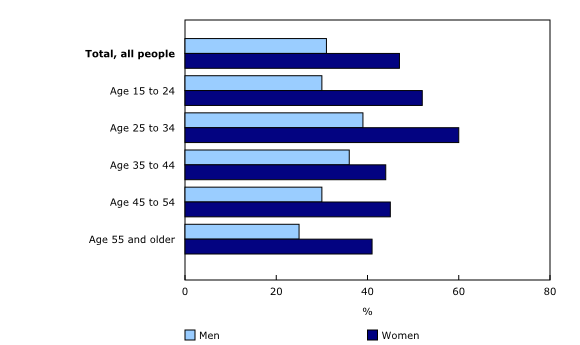 Source: Statistics Canada
A lot of employers also have an employee assistance program (EAP) so recommending that to the person claiming harassment is also advisable, says Anstey.
“Also, there are cases where employers want to be extra generous and they may provide a budget for the complainant to seek assistance if they want some counseling or something of that sort.”
However, the support people should be experts in dealing with traumatized sexual harassment victims, says Levitt.
“It’s not any psychologist, it's not any trainer, it's not any therapist... it's not any EAP provider, not unless they have a specialized team. But you should be offering psychological support — and it doesn't prejudge the outcome as some people claim.”
Why ‘expeditious’ investigations matter
While a person may be delayed in bringing forward a complaint, the employer should be prompt in responding to such allegations, says Levitt.
“I think an expeditious investigation is generally a good idea. My concern about lots of investigations — and I'm not just talking about sexual harassment in particular — is they’re elongated, it serves the investigators’ interest to elongate because their fees are higher.”
And it's better for the victim to have conclusions as soon as possible, he says.
“The worst thing is to have it hanging over their heads — they're already anxious, and now they've created a new set of anxiety while this is elongating. So no, it should not be rushed but yes, it should be expeditious.”
In addition, people’s recollections of events can falter as time goes on, including the complainant, the respondent and any witnesses, says Anstey.
Plus, the likelihood of evidence such as video being lost or overwritten also grows as time goes on, he says.
“So the more time that goes by, certainly it does make things harder.”
And often with sexual harassment, as the investigation dives deep, more complaints can arise against the same respondent, says Anstey.
“It's important that the employer understands that in a fair number of cases where you investigate sexual harassment, the investigation gets bigger because we have more complainants that come forward. ... And that would slow things down in terms of when the investigation gets completed.”
Relationships, credibility in spotlight
For sexual harassment allegations, it’s best to get to the bottom of the issue in an appropriate manner, and to get the right result so that any problems in the workplace are dealt with properly — especially if there’s a perpetrator harassing other employees, says Anstey.
“You also need to look at the relationships between the people, so between the complainant and the respondents, and any witnesses that get pulled into the investigation. You would do that in a regular harassment investigation, but for a sexual harassment investigation, I would say you have to dig into the details and try to understand that relationship from a historical basis, as well, as what's happening in that relationship around the time of the alleged misconduct.”
There's not usually a witness when it comes to sexual harassment, says Levitt — especially since the days of Anita Hill or Gian Ghomeshi — since people better understand how egregious this behaviour is and how reputation destroying it is.
“They're not going to do it in a way that's visible, so credibility is more difficult to assess because not only are they going to not do it in a visible way, they're going to do it in a way where there's deniability, a conscious.... situation of deniability,” he says.
“So by the time [people] complain, they've gone through many stages of grief, and might well be very delayed, and that should not be held to their disadvantage in terms of the credibility assessment in the same way it would be another type of complaint.”
Heightened sensitivity to power dynamics
There are two key areas where investigations of workplace sexual harassment incidents differ from other workplace investigations, according to Emily Shaffer, senior director of research at Catalyst, who co-wrote a paper on the topic.
For one, there’s “heightened sensitivity to the power dynamics that exist in society,” she says.
“Sexual harassment investigations involve sensitive and often emotionally charged issues related to gender, power dynamics and personal boundaries — especially when the harasser holds a position of authority over the victim.”
Secondly, there’s the “outsized potential impact on workplace culture,” says Shaffer, as incidents of sexual harassment can significantly impact workplace morale, trust and culture.
“All organizational leaders investigating sexual harassment incidents need to be mindful of these considerations and apply extra care, empathy, and understanding, as these are highly charged workplace and societal issues.”
Who should investigate sexual harassment?
It’s recommended that the organization retain an independent investigator who has experience doing these types of investigations, says Anstey.
“The person doesn't necessarily have to be a lawyer, but a lot of independent investigators are, and they're of course well aware of due process and making sure everyone in the investigation — including the complainant, the respondent, the witnesses — are all treated appropriately and fairly.”
Levitt says he is generally against outside investigators, but it depends on the severity of the claims.
“I'm particularly against lawyers as investigators because that gives the employee the right to bring a lawyer to the investigation themselves. Whereas if the employer is investigating, the employee has no right to bring their own lawyer, and lawyers are going to object, they're going to intervene, they're going to make it harder to, frankly, get a full statement from the employee in question.”
The skill set of lawyers, such as cross examination, are also not well suited to workplace investigations, and can be quite expensive, he says.
Overall, in-house investigations are preferred, says Levitt.
“They know the company, they know the culture… They don't have to get up to speed for a few days, just reading everything, learning everything. They know who the personnel are, they know what the relationships are. There’s just a lot less to learn.”
But it depends on who’s involved — if a secretary accuses the CEO of harassment, for example, you’d want to use an outside investigator “because there isn't the sense of impartiality with somebody who reports to the CEO investigating the CEO,” he says.
“And the more public relations impact a case might have — and sexual harassment falls within that category more than most — the more you want to be able to say you had an outside professional do it rather than doing it in house.”
If an employer does retain an external investigator, there needs to be a point person at the organization, says Anstey.
“Typically, it’s someone in HR. But it's good to ensure that someone is designated as managing this incident from the business perspective and not just leave it to the investigator.”
Often, with sexual harassment complaints, there may be a fair number of people involved, which sets off the rumour mill, he says, “so having someone who's managing it closely at the business — whether or not they have an external investigator — is important, because they'll know about what's happening in the workplace. And if they need to take measures to maintain confidentiality, they can do that.”
Being proactive to prevent harassment
Of course, preventing sexual harassment in the first place is the best option, and best practice includes having a policy in place, making it clear to everyone that harassment of any sort is not welcome in the workplace, following your obligations to make sure you're reviewing the workplace for risks, and having a framework in place for employees to make complaints, says Anstey. “That goes a long way.”
Offering numerous reporting channels is also a good idea, which includes annual check-ins with every single employee, suggestion boxes and building relationships, says Levitt.
“The more channels the better, and the better the company is able to defend its position saying, ‘Look, here are all the opportunities they had to let us know about and avail themselves of it.’ It makes the company look better than if the employee said, ‘I've had a difficult time telling the company about this, and there's really no way to do that that was easy and accessible,’” he says.
“And of course, you should give the relevant assurances to the employee when they come forward, and then every step of the way.”