HR organization says it will appeal decision ‘to the highest courts in the land’ -- employment lawyer shares lessons from case

The Society for Human Resource Management (SHRM) — the world’s largest HR association — has been hit with a US$11.5-million jury verdict in a racial discrimination and retaliation case brought by a former employee in a U.S. federal court in Colorado.
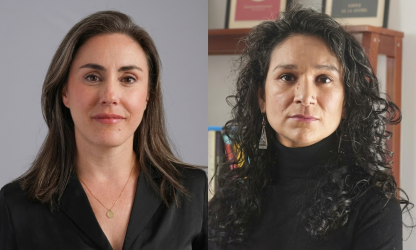
The jury found SHRM liable for racial discrimination and retaliation against former instructional designer Rehab Mohamed, who worked at the organisation from 2016 to 2020. The award includes US$1.5 million in compensatory damages and US$10 million in punitive damages, according to Business Insider.
SHRM has opposed the decision and said that it will appeal “to the highest courts in the land.”
“All employers should follow a simple, principled approach to the law: If you’re wrong, make it right. If you’re right, stand firm. In this case, we are right — and we will continue to advocate with integrity for the correct outcome,” the organisation said in a statement.
It added: “This claim has no merit. None. Today’s decision does not reflect the facts, the law, or the truth of how SHRM operates. We have acted with integrity, transparency, and in full alignment with our values and obligations. We remain steadfast in our mission, undeterred in our focus, and resolute in our commitment to stand up for what is right.”
Details of the complaint
Mohamed sued SHRM under 42 U.S.C. § 1981 and Title VII of the Civil Rights Act of 1964, alleging discriminatory treatment and retaliation based on race and colour. She sought back pay, front pay, compensatory and punitive damages, and legal costs.
In a complaint filed in the U.S. District Court for the District of Colorado in 2022, Mohamed, a brown‑skinned Egyptian Arab woman and former SHRM employee, alleges that the organisation “knowingly allowed race/color discrimination and unlawful retaliation to fester within its own workplace” even as it publicly promoted its commitment to eliminating racism at work.
Mohamed was hired by SHRM in 2016 as an e‑learning products specialist and later moved into an instructional designer role, according to the filing. The complaint states that throughout more than four years of employment she “was a consistently high-performing employee with a documented history of stellar job performance,” receiving overall ratings of “meets expectations,” “solid performer” or “role model” on formal reviews.
In January 2020, SHRM promoted Mohamed to senior instructional designer, a role in which she reported to instructional design manager Carolyn Barley. Here are Mohamed’s complaints, according to the filing.
The complaint alleges Barley “systematically favoured the white employees she supervised over their non-white colleagues,” including Mohamed and fellow senior instructional designer Ebony Thompson, who is Black. Further details on the complaint include:
-
Mohamed claims Barley subjected her to “undeserved scrutiny and unreasonably strict supervision,” made her ghost‑write emails that Barley sent to vendors, insisted on attending all her vendor meetings, and “frequently took credit for Ms. Mohamed’s work.”
-
The complaint further alleges Barley regularly withheld key project information from Mohamed while giving white colleagues greater independence and flexibility.
-
Mohamed says she formally complained of race and colour discrimination on June 3, 2020 to Barley’s supervisor and repeated her concerns in later meetings.
-
According to the filing, “promptly after” Mohamed raised race and colour concerns, Barley began retaliating by trying to exclude her from meetings and opportunities for advancement within SHRM.
-
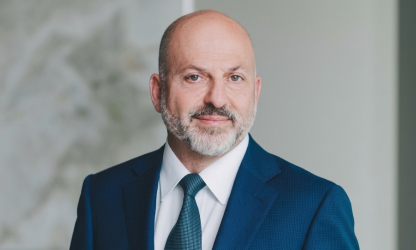
The complaint states that Mohamed escalated her concerns to CEO Johnny C. Taylor Jr. and CHRO Sean Sullivan, and raised issues of discrimination and retaliation “over a dozen times throughout the summer of 2020.”
-
The filing alleges SHRM later imposed an “inflexible and unrealistic” end‑of‑month August 2020 deadline on two major projects Mohamed led, while white colleagues were “allowed to freely miss or extend similar deadlines.”
-
Mohamed claims she asked for more time or support due to expanded project scope and unresponsive vendors but was refused.
-
According to the complaint, SHRM prepared Mohamed’s termination paperwork on Aug. 31, 2020, and on Sept. 1, 2020 Barley terminated her, allegedly for failing to complete the two projects by the Aug. 31, 2020 deadline.
Court proceedings against SHRM
The case went to trial over five days in a Colorado federal court. While testifying on Dec. 4, Taylor said he was not involved in Mohamed’s termination, according to the Business Insider report. Another former SHRM employee, Mike Jackson, testified that he was responsible for investigating Mohamed’s complaint and that it was the only discrimination claim he had ever investigated.
Jackson told the court he became a certified HR professional while at SHRM and had undergone one training session on HR investigations a few months before the events cited in Mohamed’s lawsuit. When asked what he had learned from that training, he said he could not recall any specifics, the publication noted.
SHRM has consistently rejected Mohamed’s allegations. In September, it asked the court to bar her from introducing evidence or argument that SHRM is a specialist in HR best practices, but U.S. District Judge Gordon P. Gallagher denied the request. The judge ruled that SHRM’s asserted expertise in human resources was integral to the case and could not reasonably be excluded.
In his testimony, Taylor said SHRM’s work includes advising HR professionals on best practices, including the investigation of internal complaints of discrimination and retaliation. He added that SHRM has curricula on best practices for investigating employment complaints.
When SHRM announced it would feature anti-DEI influencer Robby Starbuck at its flagship conference, the move sparked controversy.
Lessons for HR professionals
“The themes in this case surface in workplaces of every size,” said a post by employment lawyer Eric B. Meyer, with Pierson Ferdinand, following the decision on the SHRM case. “Employers do not need to take a side to learn from what happened,” he said.
He shared the following lessons that HR professionals should take note of from the case:
- Lesson 1: Once an employee reports discrimination, retaliation risk becomes central; any negative action soon after a complaint must be backed by clear, pre‑existing, well‑documented reasons, because juries often focus on suspicious timing.
- Lesson 2: Performance management must be even and well documented; unclear or shifting expectations and inconsistent oversight between employees can fuel perceptions of unfairness and drive litigation.
- Lesson 3: Internal investigations must be thorough and credible — prompt, impartial, carefully documented, and clearly communicated — as they are both a chance to resolve issues early and key evidence of fairness later.
- Lesson 4: Publicly stated values (such as fairness, inclusion and accountability) shape how juries view an employer’s conduct; if internal practices diverge from public messaging, that gap can hurt the employer’s credibility.
- Lesson 5: Juries focus heavily on credibility and consistency, weighing whether an employer’s explanation of events is steady, well supported, and believable over time.
“Whether this verdict stands on appeal or not, the underlying lesson will not change,” said Meyer.
“Employers must take internal complaints seriously, document clearly, investigate thoroughly, and avoid retaliation at all costs. Trials expose process weaknesses with brutal clarity. Prevention is always cheaper than a courtroom education.”