Spotlight on inclusivity in trades as Ontario mandates construction sites provide sanitary bathrooms, free menstrual products

Ontario became the first province to propose legislation earlier this month that will require larger construction sites to have clean and sanitary bathrooms as well as provide menstrual products.
The proposed changes to the Occupational Health and Safety Act (OHSA) will apply to projects with over 20 workers that will last over three months.
The changes were proposed as a measure to address the labour shortage in Ontario, says Minister of Labour, Immigration, Training and Skills Development David Piccini. “That’s why our government is introducing first-in-Canada changes to encourage women to start a career in the skilled trades and reach their full potential. Because an economy that doesn’t work for women, doesn’t work at all.”
The proposed changes to the OHSA will also include adding virtual harassment to the definitions of workplace harassment and workplace sexual harassment.
“Today’s announcement is another example of action our government is taking to make careers in construction and the skilled trades more inclusive and welcoming for women,” said Charmaine Williams, Associate Minister of Women's Social and Economic Opportunity in the May 6 announcement.
“By further protecting their health and safety at work, the Working for Workers bill will increase women’s access to rewarding careers that both pay well and help create the stronger, more diverse workforce we need to build a better Ontario.”
It is a positive step and hopefully one that will be echoed in other provinces, say experts, but there is still a long way to go before more women feel welcome at construction sites and other-male dominated areas.
Microaggressions a main problem for women in trades in Canada
A lot of the problems boil down to microaggressions that are so subtle and intrinsic that even women themselves sometimes don’t recognize them as aggression, says Lisa Weatherby, aircraft maintenance engineer and dean of academic services at the Southern Alberta Institute of Technology (SAIT).
Weatherby completed a doctorate last year with a research focus on women in male-dominated apprenticeship programs. She explains to Canadian HR Reporter that employers and governments should be focusing on developing transformational action in workplaces for women in trades, as opposed to affirmative action.
“Affirmative action is getting more women in the trades, and transformational action is about making the environment such that women can survive in it and be their authentic selves and just do good work,” says Weatherby, explaining the difference between affirmative “band-aids” such as hiring quotas versus transformational action like educating employees and management about what microaggressions are.
“[It’s about] having those conversations about gender microaggression and everyone understanding what they are, both men and women, and then understanding how to have conversations and how to stand up for themselves in a safe environment,” says Weatherby.
“A lot of women, especially if there's not very many of them on a jobsite, they're not going to stand up for themselves because they likely don't feel supported.”
Happy #MothersDay!
— Canada Trade (@CanadaTrade) May 12, 2024
Today, we celebrate all the mothers whose hard work helps us grow our homes and communities alike. 💼🌷
Learn about Canada’s efforts to reduce barriers for women in trade: https://t.co/TCSxneSdT5 pic.twitter.com/ErdYzqRenk
Implementing policies is good to do, but unless the people working on the ground or the job site or the factory floor understand and buy into the message, Weatherby says the policies won’t work – change has to happen at a more organic pace, led by management and supervisors.
“Change has to occur by addressing one incident at a time, or one gender microaggression at a time. It can't happen necessarily through policy, but it has to happen through conversations, it has to happen with the foreman who says, ‘Hey, you can't talk to her like that. That's not cool, and I'm not going to have it on my job site.’ That's what needs to be happening,” Weatherby says.
“But if the foreman is laughing at the jokes, then no amount of policy is going to fix the situation.”
Flexibility for childcare a large barrier for women in trades
In addition to prejudice in the form of “subtle behaviour and language”, women experience stigma in trades around the belief that they need extra time off or require more flexibility and accommodations due to family commitments, says Seema Lal, partner in construction and infrastructure law at Singleton Reynolds in B.C. and president of Canadian Construction Women.
One indication that flexibility of hours is a barrier is that a large proportion of women in construction and other trades industries work in administrative or project management roles.
“I think it explains why women are increasing in prevalence on the administrative side, working on the project management piece of it, because in those roles there is a bit more flexibility in terms of working hours, and there's more of an ability to work from home,” she says, adding that clean bathrooms and menstrual products on job sites will help to address accessibility.
“That has been an issue that has taken a really long time for there to be a recognition that this is actually a pretty important element of the working conditions, I think for all people but women in particular,” says Lal.
“That's just not something that has ever really been considered, in understanding what support women need in terms of hygienic, sanitary, accessible bathroom facilities at a worksite.”
Thick skin syndrome: how women in trades perform masculinity to fit in
Transformational action includes teaching women, Weatherby says.
Citing research for her doctoral dissertation at the University of Liverpool, Weatherby says that women who identify themselves as being “tomboys” are less likely to recognize gender-based microaggression when it happens to them, because they tend to have a mindset of “That’s just how it is, that’s what the culture is,” and that they “have to get used to it.”
She reports that many of her subjects, who were students in male-dominated apprenticeship programs, said their experiences were positive and they felt supported by the males in their class, but still reported incidents of microaggressions or other forms of discrimination or harassment.
“If we just keep expecting women to get used to it and grow a thick skin, we're not going to get more women in these industries,” Weatherby says, adding that the number of women in trades now is as low as it was over two decades ago (currently the number of women working on-site in trades in Canada is estimated at about four to five percent.)
This low percentage “doesn't represent an inclusive culture,” says Weatherby, “it represents the number of women who can cope in these environments.”
Coping is what women who are “successful” in trades have to do to fit in, she says, to the point where “being one of the guys” is seen as a badge of honour, contributing to even more discrimination against other women coming in to trades.
“It becomes tougher to support other women coming in,” says Weatherby, speaking of her own experience as well. “There's this weird thought process where, if we make it easier for the next woman to come up, it invalidates what we had to go through, or who we are in some way.”
Men also experience this sense of threat of women coming in to do the work they do, Weatherby says, explaining that many men in trades associate their masculinity with the work they do, “so when a woman comes to do that same work their masculinity can sometimes feel threatened.”
Women leave trades due to exhaustion from dealing with discrimination
Women who make it into the trades often end up leaving early in their careers, due to the stress and exhaustion from needing to start the process over every time they start with a new job, crew or company, Weatherby says.
According to a recent report, almost four in 10 (38%) of Canadian decision makers in construction believe there is a need to improve diversity, equality and inclusion (DEI) in the industry, but only 41% have a DEI policy in place.
“In the industry, women have to prove themselves every time they go to a new worksite because there's a different group of people. Now they have to go through the whole thing again, prove themselves again, and then figure out how to be with these people,” she says.
“I think that's why women need to be educated too, because that's a burden lifted when you realize what a gender microaggression is and what that means and why you kind of feel like crap driving home, even though someone was nice to you.”
Employers can address ‘chicken or egg’ by being intentionally welcoming of women in trades
Lal explains that a sort of “chicken or egg” scenario exists with women in trades, where companies want to hire women, but they don’t apply because they don’t see any other women doing the job they might want to do.
Employers have to go beyond writing “women welcome to apply” on job postings, she says, by creating welcoming environments for women and describing those efforts to potential applicants.
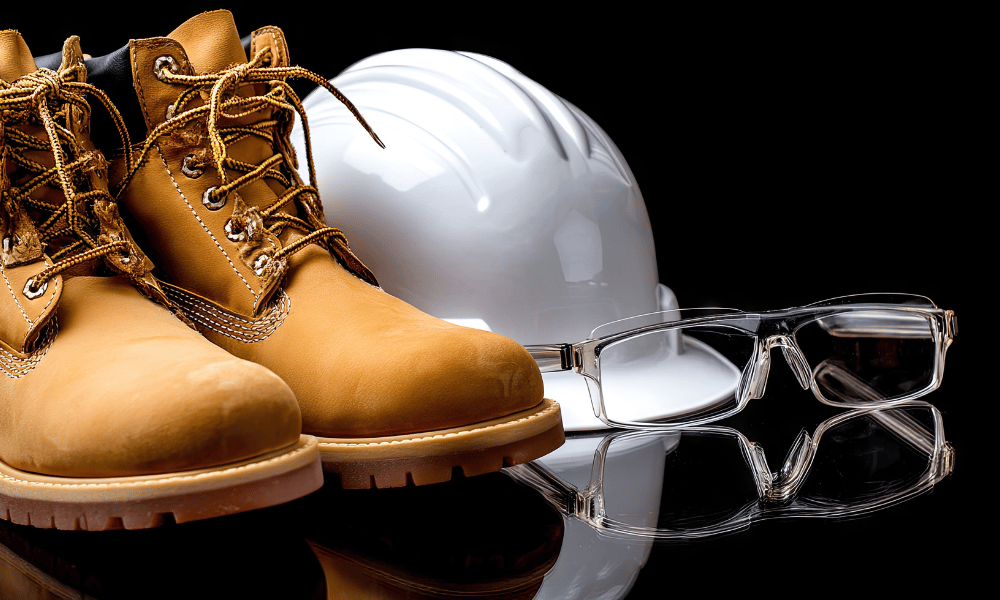
A good start is by promising tailor-made PPE that fits women, and then talking about it. They can also offer flexible work hours.
“I think if an employer is genuinely interested in having women engaged, then I think they have to look at their overall employment practices and what they're prepared to do in terms of addressing some of these obstacles,” says Lal.
“Employers have to think about what are the obstacles that are preventing women from even applying, and offering support to alleviate some of those obstacles, so women would look at an ad and say, ‘Actually, this sounds like somewhere I'd want to be. This sounds like a position that I would be interested in pursuing.’”