Employers should rethink succession planning as retirement patterns shift, say experts

How many of your employees plan to retire at 60 or 65? The answer will make a big difference when it comes to talent management and succession planning.
And yet many people aren't ready to leave the workforce: 66 percent of unretired Canadians expect to keep working in retirement to support themselves financially, and nearly half worry about outliving their savings, found a recent survey.
The disconnect between retirement aspirations and economic realities is even more drastic for non-homeowners, who are more worried about paying rent; as the research notes, only 38 percent of non-homeowners listed saving for retirement as a financial priority, compared to 54 percent of homeowners.
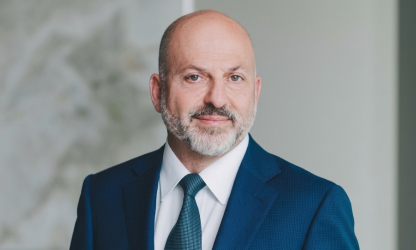
As a result, organizations should adapt their succession planning strategies to reflect the new realities of work and retirement, according to Wendy Cukier, professor of entrepreneurship and innovation at Toronto Metropolitan University.
This includes establishing trust with employees and communicating about retirement plans proactively.
“Considering age and preferences of the workforce is critical,” she says. “Many organizations have strong pipeline planning and understand where the gaps are, but most do not.”
Unretiring, self-employment, and the new normal
The survey released by Healthcare of Ontario Pension Plan (HOOPP) paints a stark picture:that most Canadians see pensions as key to retirement security, with 62 percent agreeing that workplace pensions are of greater value amid global uncertainty.
However, economic pressures and evolving workplace norms have given rise to new patterns of “unretiring” and later retirement overall; according to StatsCan, more and more people are working past their mid-60s due to financial realities, including inadequate retirement savings.
As a starting point for strategic retirement planning, Cukier recommends sensitivity to employees’ individual preferences and warns against "suggesting that employees are past their ‘best before date’ or should be retiring – otherwise you open yourself to significant risks.”
She also highlights the importance of workplace quality in succession planning, noting that industry and personal circumstances play a role as well as economics. This means employers and HR being cognizant of messages they send employees.
“Some industries, like advertising, tech and media, are seen as seeming to place a premium on youth rather than experience,” Cukier says, pointing out that retirement decisions are not solely financial – they’re also shaped by workplace culture, personal satisfaction, and the presence or absence of age bias.
“Ageism is rampant in the workplace. Understand as well the drivers and impediments to retirement. In some cases financial security gives people more choices, and we saw significant exits of people in recent years who simply had had enough.”
A recent analysis of seniors in the labour market by StatsCan showed that workers aged 65 to 74 are disproportionately found in a cluster of service and client-facing sectors, as well as professional, scientific and technical services and transportation and warehousing.
Cukier reflects that self-employment is also more common among seniors now – making up around 30 to 40 percent of some areas, such as consulting and owner-operator work.
Succession planning and knowledge transfer: a new imperative
In a 2024 report, StatsCan projected the over-55 labour force would continue growing as baby boomers finish retiring, by immigration and participation among older workers – “particularly among women.”
However, recent changes to immigration policy, lowering permanent-resident targets and curbing temporary-resident volumes, add another layer of complexity to succession planning, particularly in those sectors and regions where older workers are a significant part of the workforce.
To counter this unpredictability, Cukier offers concrete steps for organizations including codifying organizational knowledge and other structured tactics:
- Map critical roles and skills.
- Maintain a rolling “risk register” of roles held by late-career employees.
- Start overlap coverage early – 6–12 months out where possible.
- "Un-silo" tacit knowledge through playbooks and SOPs, checklists, and short video walkthroughs; store in a searchable knowledge base.
- Implement structured mentorship and paired work; tie KPIs to mentoring hours and use reverse mentoring for cross-pollination (for example with AI tools).
- Run brief shadowing and rotations for successors into peak-risk processes (such as payroll, compliance, client transition) to reduce single-point-of-failure risk.
- Maintain a vetted contractor pool of recent retirees as an alumni/retiree network for surge support and periodic refreshers.
Retirement is a gendered issue: education and equity
The HOOPP survey highlights that having a pension improves Canadians’ outlook: 59 percent of those with a defined benefit (DB) pension plan believe they’ll meet their financial needs in retirement, compared to 30% of those without retirement benefits.
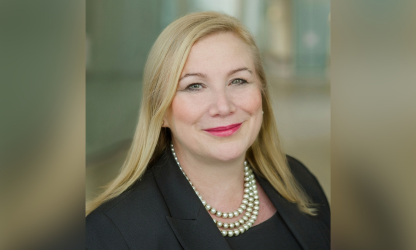
This finding suggests that access to secure, predictable retirement income plays a critical role in shaping Canadians’ confidence about their future; yet, as Ashraf Al Zaman, associate dean of the Sobey School of Business, stresses, the retirement experience is not uniform across the population.
Gender and sectoral differences continue to shape who retires, when, and under what circumstances; for many women, retirement decisions are closely tied to family dynamics and the timing of a partner’s retirement.
“Females live longer, yet their retirement accumulation, as of now, is lower than average males,” he says, noting that current Canadian pension programs are gender-neutral in design, but not in effect, as they do not account for career interruptions due to caregiving responsibilities that disproportionately affect women.
“How are you going to say they are equitable?” he says, adding that old age poverty is more prominent among women.
“I can only contribute if I make money. If I don't make money, I cannot contribute. And from that side, females tend to be a bit behind.”
Cukier adds that employers can take immediate steps to address wage gaps, provide targeted financial planning support, and foster an inclusive culture that challenges ageist and sexist assumptions.
“Women used to retire earlier than men, sometimes because if they were married and their husband was older and they had children and grandchildren, but those gender differences have all but disappeared,” she says.
“For many years, they are too young to be taken seriously; then, if they choose to raise families, they are too unreliable; then for a few years, they are considered the right age for leadership but not for nearly as long as men.”
Supporting employees: education and equity
Beyond financial planning, employers must also focus on preserving organizational knowledge as retirement patterns shift.
As Al Zaman explains, organizational capital, while intangible, must be intentionally built and maintained, which relates directly to leadership and employee retention.
“Organizations that are always forward looking, they appreciate their employees … looking at the changes in the market landscape and being agile enough to adjust,” he says, and stresses that this necessarily includes upskilling older employees who are staying on longer than they planned.
He suggests that companies offering financial education or access to advisors can help employees make better decisions, improving both employee well-being and the organization’s reputation.
Addressing inequities requires both policy changes and proactive employer support, Al Zaman says; while regulatory reforms may be slow to materialize, employers can take immediate steps to support women and other vulnerable groups by offering flexible work arrangements, paid leave, and targeted financial education.
“Change is hard. Technology is changing. We have to change. If we do not change, we are not going to keep up. We are not going to be able to survive."