
Probationary employees, retention bonuses
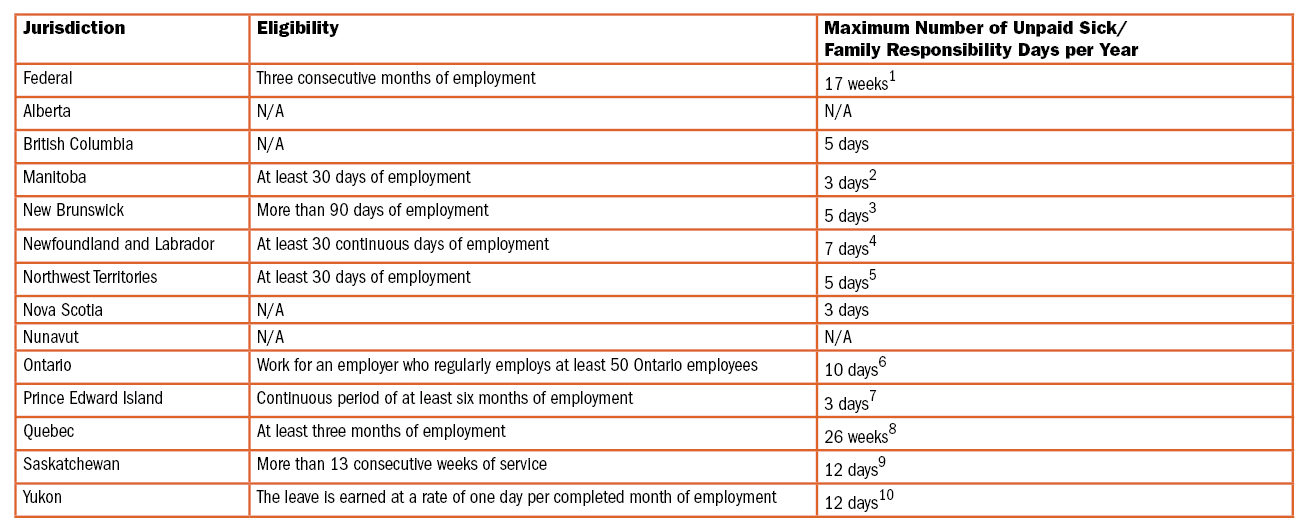
Sick days for probationary employees
QUESTION: Are new employees who are still on probation (employed less than three months in this case) entitled to paid sick days?
ANSWER: It is important to distinguish between paid sick days that employers provide employees under a company sick leave policy and job-protected time off work for sickness that governments legislate under labour standards laws.
With the exception of Prince Edward Island, there is nothing in law that requires employers to provide employees with paid sick days. In P.E.I., employees who have worked for their employer for more than five years of continuous employment are entitled to one day of paid sick leave and up to three days of unpaid leave each calendar year of employment.
In other jurisdictions, it is up to employers to determine the eligibility requirements, the amount, and the duration of any paid sick days they offer, provided that human rights requirements are met. (Employers with collective agreements must, of course, abide by the terms of the agreement for paid sick days.)
Many jurisdictions provide employees with a specified number of unpaid sick days (or family responsibility days) per year, as the table above shows.
NOTES
1 Employees must provide their employer with a medical certificate if the employer requests it in writing within 15 days after they return to work.
2 For a serious illness or injury, employees with at least 90 days of service may take up to 17 weeks off work without pay in a 52-week period.
3 If the absence is for four or more consecutive calendar days, the employer may require a medical certificate certifying that the employee is unable to work. Employees may also take up to three days off without pay each year to meet responsibilities related to the health, care or education of a person in a close family relationship with them.
4 Employees off sick for three or more days must give their employer a certificate from a qualified medical practitioner.
5 If an employer requires it, employees who expect to be off for more than three consecutive days must provide a medical certificate attesting to the illness or injury.
6 Employers may require “reasonable” evidence for the absence.
7 Employers may require employees to provide a medical certificate stating that they are unable to work due to illness or injury if they request a leave of three consecutive calendar days.
8 Employers may ask employees to provide documents verifying the need for the leave if the length of leave warrants it or if an employee has a history of requesting the leave. Employees may also take up to 10 days of unpaid leave each year to tend to the care, health or education of their child or their spouse’s child or because of the state of health of their spouse, parents, siblings or grandparents. Other leaves provided under the act respecting labour standards allow eligible employees to take time off work if a family member has a serious illness or accident or the employee or his or her child is injured due to a crime.
9 The period of leave applies for illnesses or injuries that are not serious. For serious illnesses or injuries, employees may take up to 12 weeks off work in a 52-week period. In the case of a serious illness or injury where the employee is receiving workers’ compensation benefits, the employee may take up to 26 weeks off work in a 52-week period.
10 Employees are entitled to one day’s leave without pay for every month of employment, up to a maximum of 12 days per year. Employers may request a doctor’s certificate as a condition of entitlement.
For more information on sick days or on other health-related leaves, contact the applicable labour standards board.
Retention bonus versus retiring allowance
QUESTION: We are laying off some employees this summer. We have given them notice, but we have asked them to stay on until July 31 to finish a project. We will pay each employee an extra amount (beyond their usual pay) for remaining on staff until the termination date. Is this type of payment a retiring allowance?
ANSWER: No, because it is not a retiring allowance.
A retiring allowance is a sum of money paid on or after termination of employment (including retirement) in recognition of an employee’s long service or as compensation for loss of office or employment.
The extra amount you are paying to employees who stay on the job is a retention bonus. The cash payment of the bonus is subject to C/QPP contributions, EI and QPIP premiums and income tax deductions.



