
The roots for Canada’s current income tax system go back to First World War
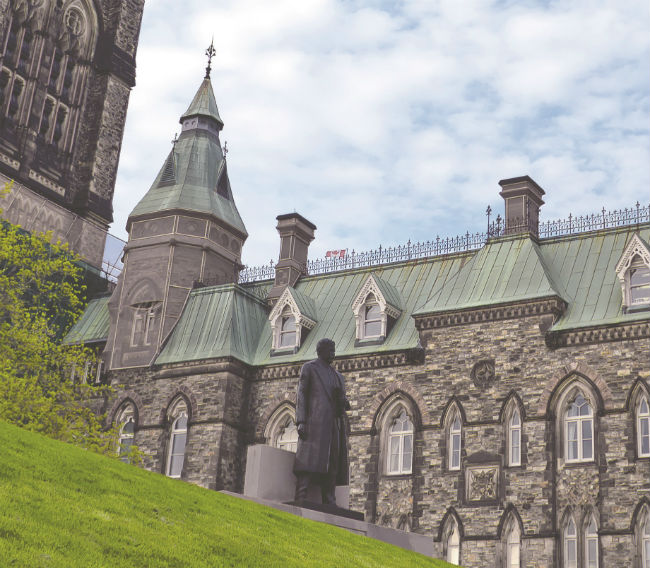
While Canadians will celebrate Canada’s 150th birthday this year, there is another milestone happening in 2017 over which some people may not rejoice. Federal income tax turns 100 this year.
Income tax deductions are such an integral part of employer source deductions and remittances today that it is hard to imagine a time when they did not exist. However, up until 1917, Canadians did not pay federal income tax.
Provincial and municipal income taxes existed in some jurisdictions, but today’s system of paying and reporting income taxes to the federal government was not in place then.
The catalyst for federal income tax was the First World War.
According to Library and Archives Canada, the war “placed an unprecedented drain upon the financial resources of the Dominion of Canada.”
Besides rationing food and everyday items, Prime Minister Robert Borden’s government issued war bonds, increased tariffs on imports, and implemented a number of new taxes to help pay for war costs.
Initially, the government limited the new taxes to goods and services (tobacco, alcohol, tickets, etc). By 1916, it had added a tax on business profits, but House of Commons records from the time show that Borden’s government was not keen on implementing an income tax.
There were concerns that income tax would be costly to administer because Canada was a large and sparsely populated country, that it could discourage immigration, and that it would impose a new tax on Canadians who had already been generous in donating money to war funds.
In the government’s April 1917 budget, presented only three months before the income tax bill was tabled, Finance Minister Thomas White ruled out income tax for the immediate future. He said the tax would not raise enough revenue because many Canadians had seen their income decline during the war. In addition, he said a federal income tax would be a burden for those who were already paying provincial and municipal income taxes.
“If such a tax is to be imposed, it seems to me that so far as the great majority of Canadians are concerned, it might better be levied in (a) time of peace, when the cost of living is again normal,” he said. “On the whole, it would appear to me that the income tax should not be resorted to by the Dominion Government until its necessity becomes clearly and unmistakably apparent.”
By July, however, White reversed his stance and tabled legislation that would bring federal income tax to Canadians. White told the House of Commons that even though he still had concerns about implementing income tax, the government needed the additional revenue to help fight and win the war.
“No matter what the cost may be in man-power or in treasure, I believe it to be the will of the people of this country that we should persevere unto the end,” he said in a speech tabling the bill.
“I am confident, Mr. Chairman, that the people of Canada whose patriotism during this war has been so often and so nobly proven will in the light of present conditions, which call for it, cheerfully accept the burden and the sacrifice of this additional taxation,” said White.
There was not a lot of opposition to the principle of income tax in the House of Commons at the time. The Liberal Party had been calling on the Conservative government to implement an income tax for some time to help raise revenues in a more equitable way.
When White dismissed the notion of an income tax in the 1917 budget, Liberal Member of Parliament Michael Clark said, “But, however, the hon. Minister thinks about it, either he or some successor of his will be compelled within the next half generation to get vastly more of the federal revenues from the wealthy men of the country than he has done by tariff legislation in the past.”
Another Liberal member, Frank Broadstreet Carvell, told the House of Commons, “I know of nothing as fair and just upon everybody as an income tax.”
There was even support for the tax among the public and in some newspapers.
“The Government’s income tax proposals were keenly discussed everywhere in business circles to-day,” The Toronto Daily Star reported in its July 26, 1917 evening edition. “There was general satisfaction that the principle of an income tax had been adopted.”
An article in The Globe newspaper stated, “The Government proposals, though they can hardly be called a real ‘conscription of wealth,’ are a long step in advance towards equalizing the financial burden and sacrifices of the war.”
The article noted that in tabling the income tax bill, White was “bowing to the insistent public demand that those who don’t fight should be made to pay.”
A chief concern with the income tax bill, both in the House and in the newspapers, was that the tax rates proposed for wealthy Canadians were not high enough. Critics also complained that a tax charged to those who made profits from the war would go down rather than increase with the new income tax law and that there was not a big enough difference in the amount of tax that married men would pay compared to unmarried men.
After amendments were made to address some of the concerns, Parliament passed the Income War Tax Act and it became law on Sept. 20, 1917. The new tax applied as of the 1917 tax year.
The act levied a four per cent income tax on Canadian residents with annual incomes exceeding $1,500 for unmarried men and widows or widowers without dependent children. For everyone else, the tax applied on annual incomes in excess of $3,000. Income included wages, salary and other amounts, such as stock profits.
In addition, the act levied a “super-tax,” on annual incomes exceeding $6,000. The rate ranged from two per cent to 25 per cent, depending on an individual’s income bracket:
$6,000.01 - $10,000.00 / 2 per cent
$10,000.01 - $20,000.00 / 5 per cent
$20,000.01 - $30,000.00 / 8 per cent
$30,000.01 - $50,000.00 / 10 per cent
$50,000.01 - $100,000.00 / 15 per cent
$100,000.01 and up / 25 per cent
The legislation exempted from income tax military and naval pay paid to Canadians who had been in active service overseas in the military or navy during the war for Great Britain or one of its allies. The act also instituted a four per cent income tax on corporations with annual income exceeding $3,000.
Employers had to deduct the four per cent income tax from employees and remit it to the federal government. They also had to send a “separate and distinct return” showing employees’ incomes and their names and addresses.
By Feb. 28 each year, employers had to send a return to the finance minister listing everyone they employed who received a salary or other taxable remuneration.
Corporations, associations and syndicates had to report all dividends and bonuses paid to shareholders and members.
Individuals also had to file a tax return by Feb. 28, showing their total income for the previous calendar year and providing an address in Canada to which the government could send notices and other documents.
The act required the government to let taxpayers know the final amount of income tax owing by Apr. 13 (regulations under the act could set another date). Individuals had one month to pay any income tax owing. Late payments were subject to interest charges of seven per cent.
The penalty for not filing an income tax return was steep for both employers and individuals.
The act gave the government the authority to levy a penalty of $100 for each day late. The maximum penalty for false statements on income tax returns was $10,000, six months in jail or both.
Although White did not specify how long the Income War Tax Act would remain in effect, he suggested that the government should review the need for the tax within one or two years of the war ending.
While White may have viewed the tax as a temporary measure to help the country through the war, other politicians of the time recognized that it would likely become a permanent revenue tool for government.
“It will never be abolished, because the good sense of the people of Canada will see that it is kept in effect for all time,” Carvell said during debate of the income tax bill.
Another Liberal Member of Parliament, Rodolphe Lemieux, told the House that although he wanted the tax to be a temporary measure, he thought it would likely become permanent.
“I really believe that the income tax has today entered into the politico-economic system of Canada, to stay there for many generations,” Lemieux said.
And, 100 years later, employers and employees are still remitting income tax payments and filing annual tax returns.
Note: This is one in a series of articles this year that will look at significant events in the history of Canada’s income tax system.



