Survey shows many workers struggle remotely – academics provide insights, answers for HR

It has been five years since the COVID-19 pandemic forced a seismic shift in how Canadians work. Remote work, once a necessity, is now a fixture in the employment landscape.
However, the issues of social isolation and loneliness among people working from home remain stubbornly unresolved.
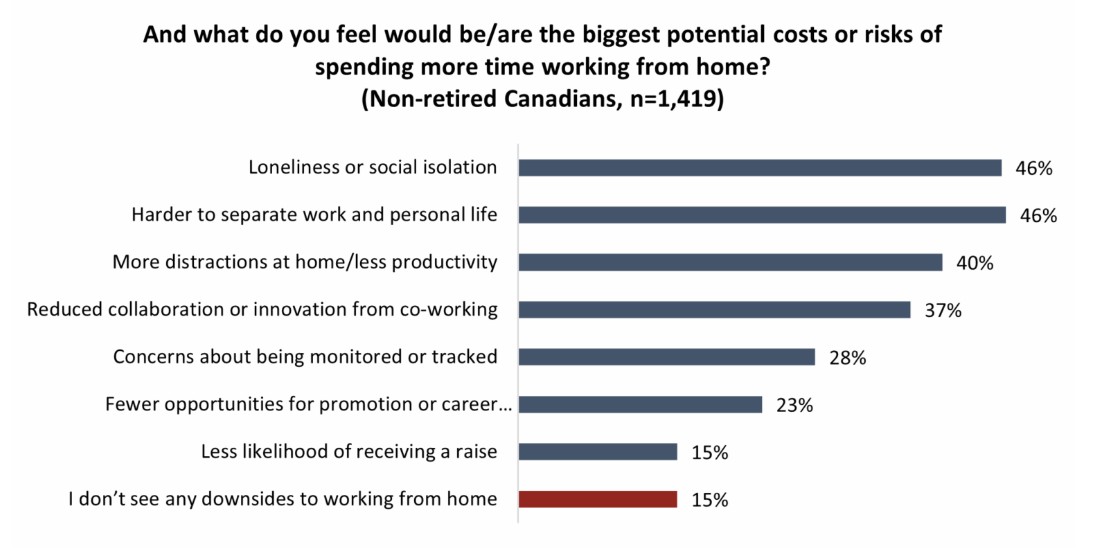
That’s evident in a recent Angus Reid survey that finds 46 per cent of Canadians working from home say social isolation is one of their biggest struggles, and an equal proportion cite the lack of division between work and personal life as a top concern.
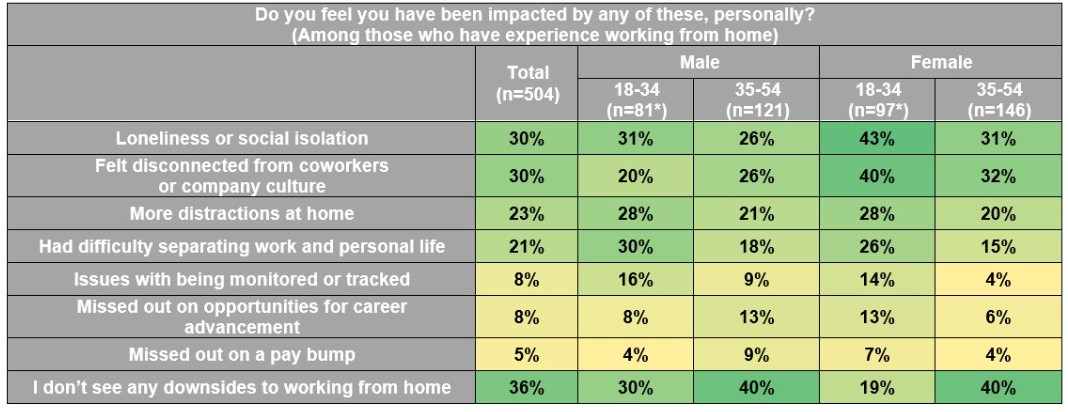
The survey also found that among those with remote work experience, three in 10 have felt disconnected and lonely, with these feelings particularly acute among younger workers and women.
There are no easy answers, according to two academics speaking with Canadian HR Reporter.
“We were able to solve the problem of the pandemic and the need for social isolation by creating sustainable structures that got the work done,” say Michael Ungar, director of the Resilience Research Centre at Dalhousie University.
“But I wonder if we’ve discovered that there were other systems that weren't being successfully dealt with, whether it's the psychological, the social, the inspirational, the team building.”
Multiple systems at play with social isolation
Ungar sees the problem as one of competing forces and incomplete solutions.
“I think sometimes these conversations tend to be focused on one-system or two-system thinking, so productivity or accountability or people taking responsibility for their jobs. In other words: ‘If we just focus on the workflow or the task [we’ll find a solution].’”
His advice is to take a broader, systems-based approach:
“The question I always have is ‘Which systems are the most relevant to this particular problem?’ And if you're talking about high worker absenteeism or loneliness, social isolation, then... it's not just a matter of saying, ‘OK… people have to come back to the office’ — again, one-system thinking.”
 The challenges relate to human nature and the complexity of our social systems, according to Ungar.
“[It’s about] opening up the conversation to soft skills or social relationships or creativity or psychological wellbeing — in other words, thinking about the other systems which are occurring at the same time that also need to be robust,” he says.
“If I come back to this idea of what makes us resilient to stress or to light stress, it’s multiple intersecting systems. So, getting an employee to be more productive on the job is going to be as much about the other co-occurring systems, from the design of their desk to the design of the space and the way it facilitates interaction and accountability to others.”
Fading of pandemic-era connections
In the early days of the pandemic, organizations scrambled to keep employees connected through virtual coffee chats, online events, and digital communities. But much of that energy has dissipated, according to Kara Polson, professor in the Department of Health Sciences at Lakehead University.
“Now that we're not in isolation, we're not seeing people connecting online like we used to have. In our organization, even, [we had] a concert series that you could pop online and watch — there were so many things available online, so you'd feel like you were connected to the greater community,” she says. “That sense of community has sort of faded with everybody kind of going about life, business as usual.”
She points to the loss of informal interactions as a key reason why wellbeing issues persist.
“We forget how important those little social breaks are. And humans are very social creatures. So, people who are working from home are really stuck in their own little bubble — typically with like-minded people — and you're just not getting those interactions that you got when you were forced to be in the workplace or out in the world.”
Polson also emphasizes that the experience of isolation is not uniform.
“People have very different social supports in their home too… You can have two people, but they have very different personalities or very different situations. If you don't have the social support or the social network [at] home when you're done work, that can impact things as well.”
Recognition and networking important with WFH
The Angus Reid survey also found difference by gender and age, with women and younger workers feeling a greater sent of loneliness or social isolation.
Polson also points to the value of “social capital” — the relationships that help employees thrive.
“Networking is so important when you're building a career,” she says, especially for younger workers and those at the start of their careers, which is why office interactions can make a difference.
Polson also sees a direct link between employee recognition and the risk of remote workers feeling overlooked.
“Recognition and reward, we found that in the literature as well, is something that remote workers feel like they're missing out on, particularly if they're a high achiever who wants to climb the corporate ladder, or they're really trying to build their career: ‘How can I make sure that my leader sees all the extra work that I'm doing?’”
She also warns that hybrid models can exacerbate these issues.
“It comes back to that leader always having connection with their people, so that people don't feel like they're missing out on the opportunity for a promotion because they're not being seen — out of sight, out of mind.”
Leadership and workplace culture for remote workforce
Both experts emphasize the critical role of leadership and organizational culture in combatting issues of wellbeing with work from home.
“Leadership has a huge impact, particularly for remote workers, because they are the person that's really conveying that organizational culture, what the organization is all about,” says Polson.
“And if you're not in the organization, you're never going to get a feeling of ‘What values does this company have, and what's the culture really like?’ So that comes right down from the from the leader.”
It’s also become apparent that clear leadership and expectations for the remote workforce is a challenge, she says.
“We see that in the literature too, they're not quite clear on the boundaries — if they should work late or what their expectations are: ‘If I’m done my work early, do I still need to sit at my desk and make sure my green bubble on Teams is always on, or am I going to get in trouble?’ So, it's really critical for leaders to be checking in with their people and have particularly clear expectations.”
Moving forward: awareness, adaptability, routine
Both Polson and Ungar agree that the solutions will require more than technology or policy tweaks—they demand a deeper understanding of human needs, organizational culture, and the complex systems that shape our work lives.
“We're going to have to think outside the box if we're going to crack that nut again, because it's [about] different personalities, but also self-awareness and maybe educating people,” says Polson. “You might love working from home, but socialization, isolation can be a problem, so let's think about how can you make sure that this isn't going to impact you negatively?”
There are also organizational factors that can help or hinder well-being, she says, such as job design and workload.
Ungar agrees that some jobs are better tailored to working from home, and structured differently, such as sales.
He also highlights the importance of routine in fostering a sense of belonging, which can be a challenge with hybrid work.
“One of the things that we look at in resilience is people habituate into patterns, and the habituation removes stress. It's kind of counterintuitive — we like to be on sort of automatic pilot a bit, it frees up space in our minds to do things.”
But overall, more research is needed, according to Polson.
“There really isn't any what we call longitudinal data in this area, where we actually follow people working from home over a period of time, and we can see like, ‘OK, well, how are things in the winter? How are things in the summer? How are things through your busy season? And what are the factors that might be influencing the outcome of your wellbeing, also taking into consideration age and some personality factors [such as] are you a resilient person?”