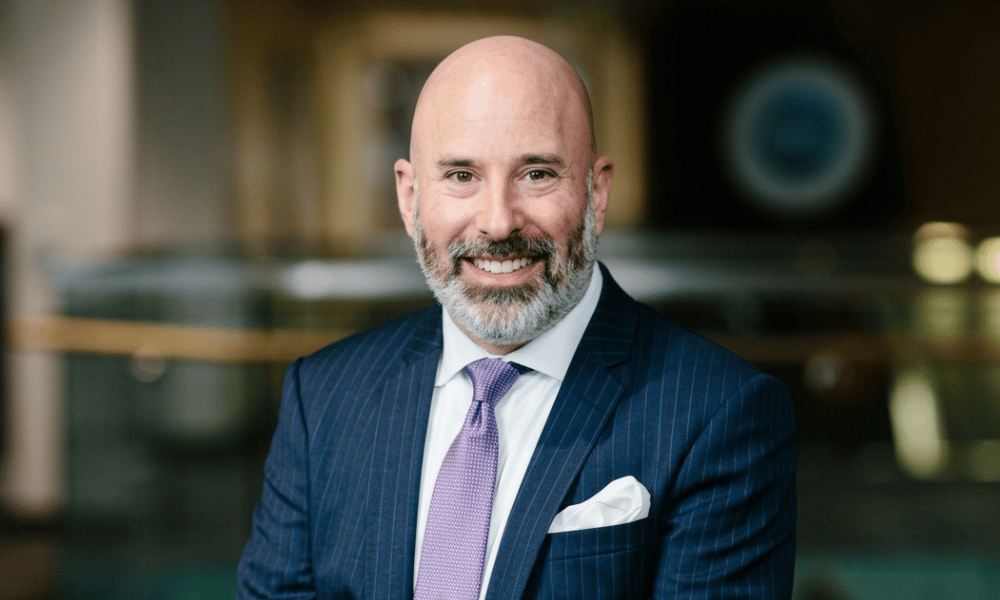
CERIC’s Keka DasGupta on why siloed programs no longer hold up and what to do instead

Sponsorship note: This article was produced in partnership with CERIC
Keka DasGupta sees a gap in the workplace that, frankly, is more of a chasm. While the future of work is changing at a dizzying pace, the structures in place to manage that change are decidedly old school.
Picture a traditional wristwatch, she says. If you open it up, everything ticks in tandem: one piece moves, another piece is activated, another one starts going. It all worked together. But imagine you take those pieces out of the watch. Everything changes. The watch won’t work.
So it is with the talent initiatives workplaces rely on — learning programs, mobility, mentoring, coaching, succession planning — each operating in isolation, with no regard to the sweeping evolution that includes the AI race to do more, faster, and seismic demographic and geopolitical shifts.
“The way we teach and the way we learn, all of that is being flipped on its ear; it’s changing completely,” says DasGupta, board chair at CERIC and founder of the Art of Life-ing. “Experimentation is the buzzword today. We have to be able to adapt, pivot, and constantly change to keep learning new things.”
Recognizing open skies ahead
Many programs employers rely on were created on a reactionary basis, or as DasGupta notes, they’re “fail-first.” They stand siloed — insulated from other pieces around them that might help them tick better — and as essentially band-aid solutions. That approach is no longer sufficient. Today’s workplace is surfacing too many new skillsets at once, and that volume demands infrastructure.
“People are teaching themselves these things on their own already, ChatGPTing it in the evening and then bringing that intel into the workforce,” DasGupta explains. “We must create the scaffolding that brings things together so that one leads into another. It’s an often-invisible challenge.”
CERIC and Challenge Factory, where DasGupta serves as Chief Marketing Advisor, recently released a playbook to help: Career Development as Strategy: A Practical Guide to Creating Internal Career Centres. It provides a step-by-step framework for building the kind of internal infrastructure DasGupta is describing. Getting there requires navigating territory most organizations haven’t mapped, she says, and Challenge Factory CEO Lisa Taylor has the metaphor for where things currently stand.
Before satellites and advanced mapping instruments, pilots would position their planes to follow pathways below them, such as roads or rivers. As the technology and aviation systems became more sophisticated, pilots realized they didn’t have to follow what already existed. They could take any route they wanted. People began creating new navigation channels that others could lean on.
“There’s a concept popping up in a lot of future of work conversations now called work redesign — it’s all about recognizing we have open skies,” DasGupta says.
The analogy extends further. A state-of-the-art airport with no runways is moot; it doesn’t do its job. And even the most sophisticated terminal is useless without signage telling people where to go. Career infrastructure works the same way. The runways and the signs must exist independent of any one person.
Right now, internal career pathways in most organizations depend heavily on who employees know and whether the right person happens to be aware of the right opportunity at the right time. Infrastructure changes that equation. The opportunity is in the system, not in any one person’s head — which means it’s there for everyone, regardless of their network.
“We need to create those pathways for people to move from place to place on their own in order to really have the greatest impact and get the greatest return from our efforts,” DasGupta says.
Anti-turnstile: giving people a reason to stay
DasGupta was fresh out of university when she got her first job at IKEA — “I had just gotten married, I needed furniture, and I saw they were hiring,” she explains — and decades later, she’s still impressed by how far advanced the company was for the time. It already had a version of what she’s advocating for now, albeit on the intranet, called Paddle Your Own Canoe.
Any IKEA employee could use it to check out company opportunities around the world. One of DasGupta’s colleagues was interested in global climate change and corporate social responsibility; he ended up moving to Sweden for a related role and became global head of that initiative for IKEA. Another colleague went from the Toronto store to supplier management in China, looking at global procurement.
DasGupta is often asked by senior organizational leaders why they should invest in career infrastructure if talent leaves in a year or two anyway — isn’t it a waste of time?
“If you think that way, you’re basically conceding that there’s no solution and you have to live in a turnstile world,” DasGupta says. “At CERIC, we say that’s a myth. That is not the case. If you help employees see where they could potentially go in the future, you’re giving them a reason to stay.”
The turnstile is a product of what DasGupta calls the fail-first structure, and it’s how most organizations still operate. Career development only enters the picture when something breaks — a position opens, a person leaves, someone is let go — and someone must be hired. But once they onboard them, the career conversation goes quiet.
The alternative, the playbook argues, is treating career development as a lifelong process rather than a reactive one. Build it into management meetings, annual reviews, even casual lunches. The premise is that employers actively seek to know where their people want to go and help them find those opportunities: they show them the runway in front of them.
And when gaps do appear, rather than defaulting to external hiring — a habit DasGupta traces to a pre-technology era and argues misses the assets right under an employer’s nose — organizations should look inward.
“The talent you have within your company knows the context, the brand, the challenges. There’s trust, tenure, familiarity. That’s a massive competitive advantage and a better ROI than bringing somebody brand new in. How do we keep our people? Don’t just offer a ping pong table — offer actual growth opportunity.”
The rise of infrastructure thinking
After 10 years with CERIC, DasGupta knows well the passion HR leaders bring to their work. When the industry comes together as a collective, with the intent to shine a spotlight on human ingenuity, “the tremendous possibilities will be exciting — that’s what I invite people to think about,” she says.
“It’s an invitation to change the way we see things, from how they always used to be to what they could be.”
That work doesn’t have to be done alone. DasGupta will make her case for infrastructure thinking in person in January: she’s a keynote speaker at Ottawa’s Cannexus27, which hosts 150+ sessions on career development.
While there are helpful YouTube videos and podcasts on the topic, this is a place where the curation has been done for you. Everyone descends on one location, including the foremost thought leaders in the country, creating a community of like-minded people that remind you you’re not in it alone.
“There’s power in numbers and this event is a validation of all the things you’re doing and thinking; you’ll carry it with you throughout the year,” DasGupta says. “We’re at the beginning and nothing is impossible. We can make this future whatever we want to build. We just have to keep exploring.”